

A diesel used to be the obvious choice for anyone who drove a lot or towed anything. That is no longer a safe assumption. The gas vs diesel decision now turns on three numbers: how much more the diesel costs to buy, how much more its fuel costs per gallon, and how many miles you drive with weight behind you. The short answer: buy a diesel if you tow heavy loads often or cover long highway distances, and buy gas if most of your driving is short trips, town traffic or light work. In Kenya, where diesel costs about the same as petrol, the diesel case is stronger than it is in the US today.
Table of Contents
Diesel and Gas at a Glance
Here is how the two compare on the things buyers actually pay for. The sections below explain each row and give a winner.
| Diesel | Gas (petrol) | |
|---|---|---|
| Distance per gallon | Typically 20% to 35% farther | Baseline |
| Fuel price | $6.35 a gallon (US average, 26 Oct 2026) | $4.27 a gallon |
| Purchase price | About $11,000 to $13,000 extra on US heavy-duty trucks | Standard engine |
| Torque for towing | Far higher (1,075 lb-ft in a Ram 2500) | Lower (429 lb-ft in the same truck) |
| Running extras | Diesel exhaust fluid, particulate filter, extra fuel filters | Spark plugs, little else |
| Best use | Long distances, heavy loads, towing | Short trips, town driving, light loads |
How a Diesel Engine Differs From a Gasoline Engine

A gasoline engine mixes fuel and air, squeezes it moderately and lights it with a spark plug. A diesel squeezes air much harder, to roughly twice the compression of a typical gas engine, until it is hot enough to ignite the fuel the moment it is injected. There are no spark plugs at all; glow plugs only help with cold starts. That high compression is why a diesel is more efficient and makes so much more torque at low revs, and also why its block, crank and injection system are heavier and dearer to build.
The fuel itself helps too. According to the US Department of Energy, a gallon of diesel holds about 13% more energy than a gallon of gasoline, so even an equally efficient engine would go farther on it. Add the efficiency of compression ignition and fueleconomy.gov puts the typical gain at 20% to 35% more distance per gallon.
Fuel Economy and Running Costs

Better mileage only saves money if the fuel does not cost proportionally more. In the US right now it does, which turns the usual advice on its head. Two things decide it: the gap in mpg and the gap at the pump.
The Real Mpg Gap
GM’s half-ton pickups are the cleanest comparison, because the same truck is sold with a diesel and several gas engines. A two-wheel-drive 2026 Sierra 1500 or Silverado 1500 with the 3.0 Duramax diesel is EPA rated at 25 mpg combined, against 19 to 20 mpg for the 2.7 turbo four or the 5.3 V8. That is a 25% to 30% advantage, right in the middle of the government range.
What It Costs per Mile Today
The US Energy Information Administration put the average price of regular gasoline at $4.27 a gallon and diesel at $6.35 in the week of 26 October 2026. At those prices the diesel Silverado costs about $25 per 100 miles and the 5.3 V8 about $22.50. Over 15,000 miles a year, the diesel spends roughly $440 more on fuel, before diesel exhaust fluid, which typically adds a few percent of the fuel volume again. With diesel nearly 50% dearer per gallon, it would need nearly 50% better mileage just to break even.
That gap is unusually wide, and it moves. In September 2025 the EIA had gas at $3.17 and diesel at $3.75, and at those prices the same diesel truck came out roughly $250 a year cheaper to fuel. If you are buying for the next ten years, look at the gap where you live over the past few years, not just this month.
Winner: Gas, at current US prices. Diesel wins wherever diesel costs about the same as gasoline, and on the highway miles where its mpg advantage is largest.
Purchase Price
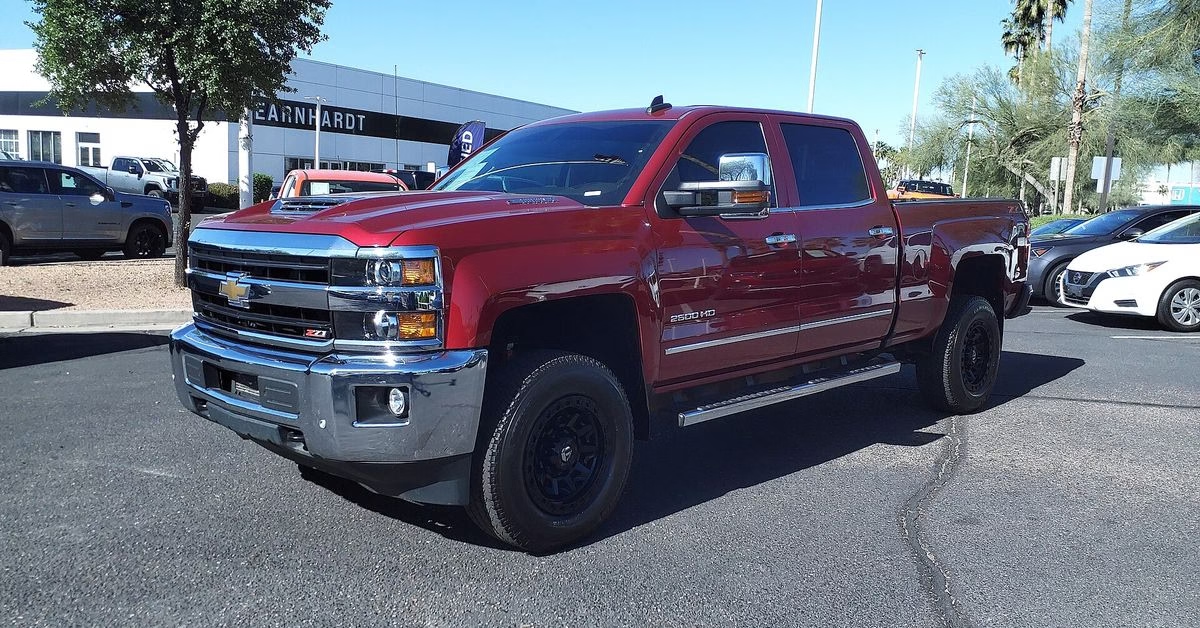
The diesel premium is easiest to see on US heavy-duty trucks, where the engine is a line on the order form. Ford charges $10,995 for the standard-output 6.7 Power Stroke over the 6.8 gas V8 on a 2026 Super Duty, and Ram lists the 6.7 Cummins at $12,995 over the 6.4 Hemi on a 2026 Ram 2500. At the fuel prices above, a diesel driven 15,000 miles a year would never earn that back on fuel alone.
Some of the premium comes back at resale, because used diesel trucks are in demand with people who tow, but that depends on the market and the truck’s condition. Light-duty diesels cost less extra to buy, but they also save less fuel in absolute terms, so the payback maths is similar.
Winner: Gas, clearly.
Towing and Hauling

This is where the diesel stops being an argument about fuel bills. In the 2026 Ram 2500, the Cummins makes 1,075 lb-ft of torque against 429 lb-ft from the Hemi, and Ram rates the 2027 diesel truck to tow up to 20,000 pounds against 17,740 pounds for the gas version. Ford’s high-output Power Stroke reaches 1,200 lb-ft. The gas engines can pull heavy trailers, but they have to rev hard to do it, and their fuel use climbs much faster under load than a diesel’s.
If you pull a fifth-wheel or a heavy equipment trailer every week, especially over hills, the diesel is the better tool and the fuel gap usually narrows or reverses, because a loaded gas engine is at its least efficient. If you tow a boat a few times a summer, the gas truck does the job for a lot less money.
Winner: Diesel, for anyone who tows heavy and often.
Maintenance and Reliability
Modern diesels are not the simple, unkillable engines of the 1990s. Their reliability now depends mostly on the emissions hardware bolted to them, and on how they are driven.
The Emissions Hardware Is the Weak Point
Every US diesel sold since about 2010 has a particulate filter that traps soot and burns it off at high exhaust temperatures, plus a system that injects diesel exhaust fluid to cut nitrogen oxides. Cummins puts typical fluid use at 3% to 5% of the fuel burned in its engines. The filter needs regular long, hot runs to clean itself, so a diesel driven mostly on short trips can clog it, run rough and end up at a dealer for a forced clean or a replacement. The same problem hit Toyota’s 2.8 GD diesels in their early years, in pickups and SUVs sold across Africa and Australia.
Servicing Costs More, but the Engine Can Last Longer
Diesels need extra fuel filters and water separators, and a set of injectors or a high-pressure pump costs far more than anything in a gas fuel system. Oil changes take more oil. In return, a well-kept diesel’s bottom end is built to take high cylinder pressures, and high-mileage work trucks often reach big mileages before needing major engine work. Gas engines have their own modern weak points, including carbon build-up on direct-injection engines and turbocharger wear, but nothing as costly as a failed particulate filter or a fuel-system contamination job.
Winner: Gas, for most owners. Diesel only if it gets the long, steady use it was built for.
Diesel or Gas in a Pickup Truck
Trucks are where most US buyers face this choice, and the answer splits by size.
Half-Ton Trucks
In a half-ton truck such as the Silverado 1500, the diesel is the economy option rather than the towing option: it tows about the same as the strongest gas V8 but uses a quarter less fuel. It makes sense for high-mileage highway drivers in areas where diesel is not much dearer than gas. For most half-ton owners, a gas engine or a hybrid such as the F-150 PowerBoost is the better buy at today’s prices.
Heavy-Duty Trucks
In a 2500 or 3500, the diesel is the towing engine, and the gas V8 is the one to buy for plowing, hauling gravel, carrying a camper on short trips or anyone who needs heavy-duty payload without heavy-duty towing. A sensible rule of thumb: if you are not regularly towing more than about 10,000 pounds, the gas truck is usually the smarter money.
Emissions and Cold Weather
Diesel produces more carbon dioxide per gallon burned: the EPA puts it at 10,180 grams against 8,887 grams for gasoline, about 15% more. A diesel therefore needs roughly 15% better mileage just to match a gas engine on CO2, which most do, but not by as much as the mpg figures suggest. Modern particulate filters and exhaust fluid systems have cut the soot and nitrogen oxides that gave older diesels their dirty reputation.
Cold is a diesel problem in the northern US and Canada. Untreated diesel starts to gel in deep cold, which is why winter blends exist, and diesel exhaust fluid freezes at about 12°F (minus 11°C), so trucks heat their fluid tanks. Gas engines start more easily in the cold and warm up faster.
Winner: Gas on cold starts and CO2 per gallon; close to a tie per mile for an efficient diesel.
Petrol vs Diesel in Kenya: Prado, Fortuner and Hilux
The maths looks very different in Kenya, because diesel is not a premium fuel here. EPRA’s capped pump prices for 15 October to 14 November 2026 put super petrol at about KSh 227 a litre and diesel at about KSh 228, almost exactly the same. All prices below use KSh 130 to the dollar, the CBK rate in early November 2026.
Prado 150: Petrol or Diesel
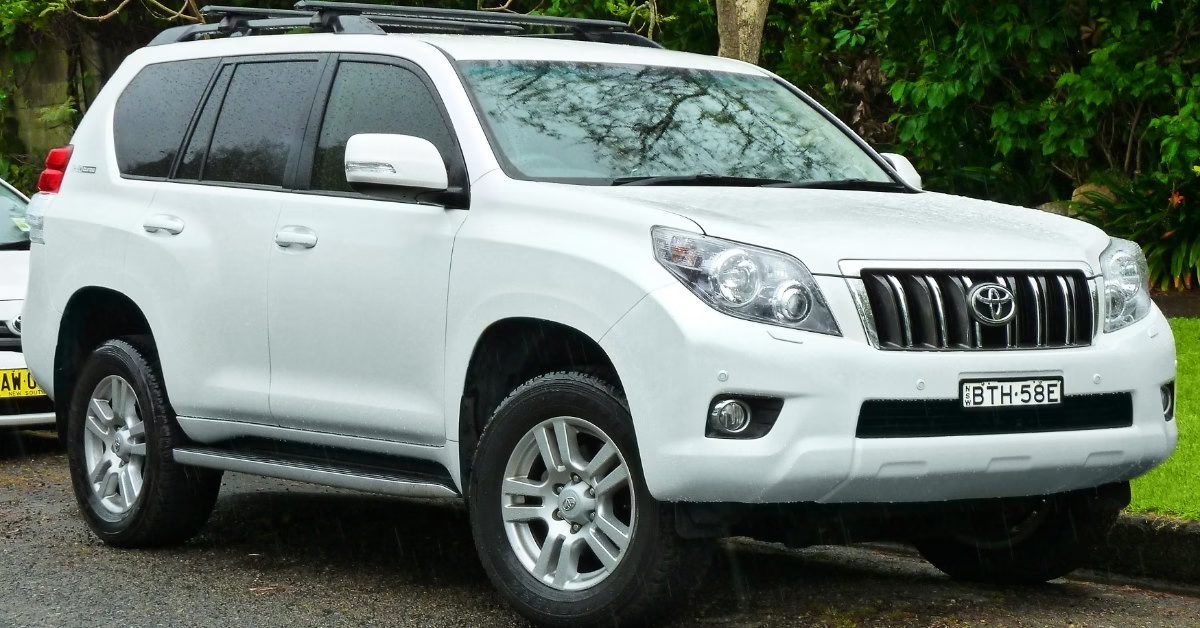
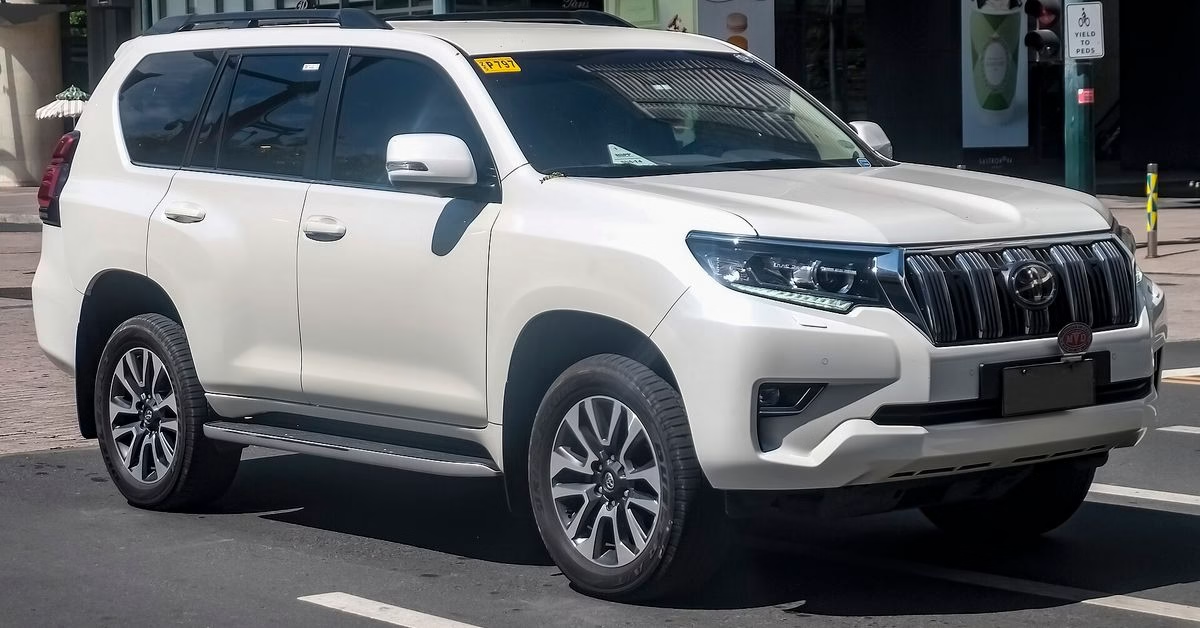
Most Prado 150 imports from Japan come with either the 2.7 2TR-FE petrol or the 2.8 1GD diesel. In Toyota Japan’s WLTC figures, the petrol does about 8.3 km per litre and the diesel 11.2. At current pump prices that is about $21 (KSh 2,735) per 100 km for the petrol and $15.60 (KSh 2,030) for the diesel. Over 20,000 km a year, the diesel saves about $1,080 (KSh 140,000). It also has twice the torque, 500 Nm against 246 Nm, which matters on murram, hills and with a full load.
The petrol still has a place. It has no particulate filter to clog in town traffic, it is simpler for any mechanic to fix, and it usually costs less to buy. If your Prado lives in town and rarely leaves tarmac, the petrol is the low-stress choice. If it does long upcountry trips, the diesel pays for itself.
Fortuner and Hilux
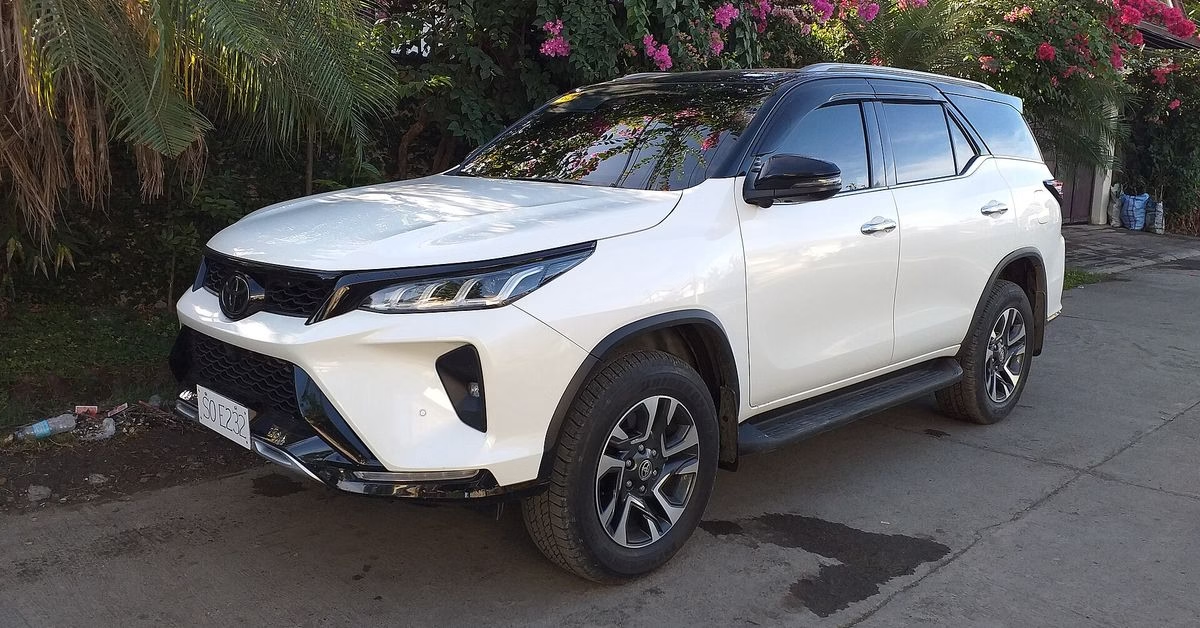
The Fortuner and Hilux sold in Kenya are overwhelmingly diesels, the 2.4 2GD and 2.8 1GD, and that is the right call for trucks that carry loads. Their main risk is the same particulate filter issue as the Prado, so pick a 2019 or later truck with the manual regeneration switch, and avoid one that has spent its life in short town runs. Diesel quality is the other variable: Kenya’s standard is 10 ppm sulphur, but a waiver has allowed up to 50 ppm since May 2026. Fresh fuel filters and a trusted station matter more than usual. If you are choosing between SUVs rather than engines, the used SUVs that hold up best here are ranked separately.

Which Should You Buy?
- Buy a diesel if you tow heavy trailers often, cover long highway distances, or live where diesel costs about the same as gasoline, as in Kenya.
- Buy gas if most of your driving is short trips or town traffic, you tow occasionally, or you are in the US paying today’s diesel premium.
- Consider a hybrid if your goal is simply lower fuel bills in a light-duty car or truck. It saves more in town than a diesel does.
Whichever you choose, the right engine for your miles matters more than the fuel badge. A diesel that never gets warm is a bad diesel, and a gas engine dragging a heavy trailer up a mountain every weekend is a bad gas engine.
Frequently Asked Questions
Is petrol vs diesel cheaper to run?
It depends on local prices. A diesel goes 20% to 35% farther per gallon or litre, so it is cheaper to run wherever diesel costs about the same as petrol, as in Kenya. In the US in late 2026, diesel cost about 50% more per gallon than gasoline, which wiped out the saving for most drivers.
Is a diesel or gas truck better for towing?
Diesel, for heavy and frequent towing. A Ram 2500 Cummins makes 1,075 lb-ft of torque against 429 lb-ft from the Hemi V8 and tows more. For occasional towing under about 10,000 pounds, a gas truck does the job for much less money.
Do diesel vs gasoline engines last longer?
A well-kept diesel bottom end is built for high cylinder pressures and often reaches big mileages, but modern diesels depend on particulate filters and exhaust fluid systems that can be costly to fix, especially if the engine is used mainly for short trips.
How much more does a diesel truck cost?
On 2026 US heavy-duty trucks, Ford charges $10,995 for the standard-output 6.7 Power Stroke and Ram charges $12,995 for the 6.7 Cummins over their gas V8s.
Should I buy a petrol or diesel Prado in Kenya?
Buy the 2.8 diesel if you drive long distances, carry loads or go off tarmac often: it uses about a quarter less fuel and has twice the torque. Buy the 2.7 petrol if the car stays mostly in town traffic, where the diesel particulate filter can struggle.
The Bottom Line
Diesel still wins on torque, towing and distance per tank, and in markets where it costs the same as petrol it usually wins on running costs too. In the US in late 2026, with diesel about $2 a gallon dearer than gas and diesel trucks carrying $11,000 to $13,000 premiums, gas is the better buy for most people. Work out your own miles, loads and local fuel prices before you pay for the diesel badge.