
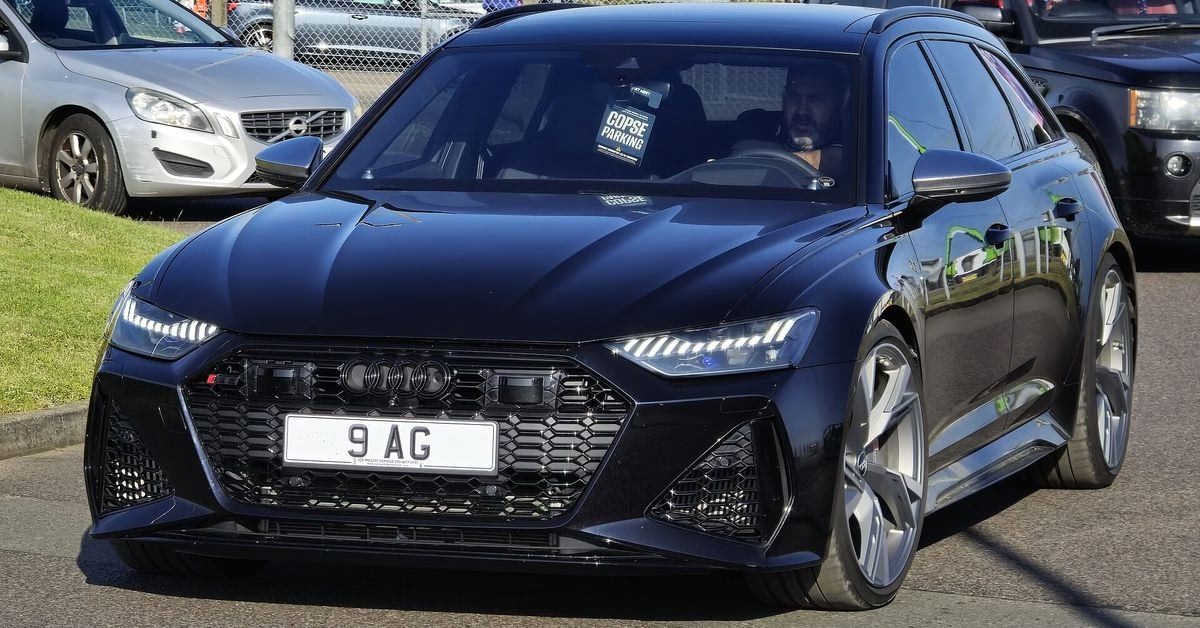
Every enthusiast reaches the same moment. The family grows, the two-seater stops making sense, and everyone tells you to buy an SUV. There’s a better answer. Performance wagons give you the same boot and the same back seats with less weight, a lower centre of gravity and, in the best of them, a ridiculous engine. We’ve ranked 10, from a sensible fast family car to a full-blown sleeper, mixing European icons with the Japanese turbo wagons that still turn up as imports. Each is rated on how well it handles family life, how much it makes you grin and how much it could cost you to keep.
Table of Contents
The Ranking at a Glance
Here’s the whole list before we get into each car. The countdown runs from the most sensible to the most outrageous, and the ratings compare these wagons with each other rather than with every car on sale. Half the list is Japanese, and four of those five were sold new only in Japan, so they come as imports.
| Rank | Wagon | Family-proof | Grin factor | Ownership risk |
|---|---|---|---|---|
| 10 | Skoda Octavia vRS Estate | High | Medium | Low |
| 9 | Subaru Levorg 2.0 GT-S | High | Medium | Medium |
| 8 | Toyota Mark II Blit iR-V | Medium | High | Medium |
| 7 | Toyota Caldina GT-Four | Medium | Medium | Medium |
| 6 | Mitsubishi Legnum VR-4 | Medium | High | High |
| 5 | Volvo V70 R | High | Medium | High |
| 4 | Nissan Stagea 260RS | Medium | High | High |
| 3 | BMW M5 Touring (E61) | Medium | Extreme | Extreme |
| 2 | Mercedes-AMG E 63 S Estate | High | Extreme | High |
| 1 | Audi RS6 Avant | High | Extreme | High |
10. Skoda Octavia vRS Estate
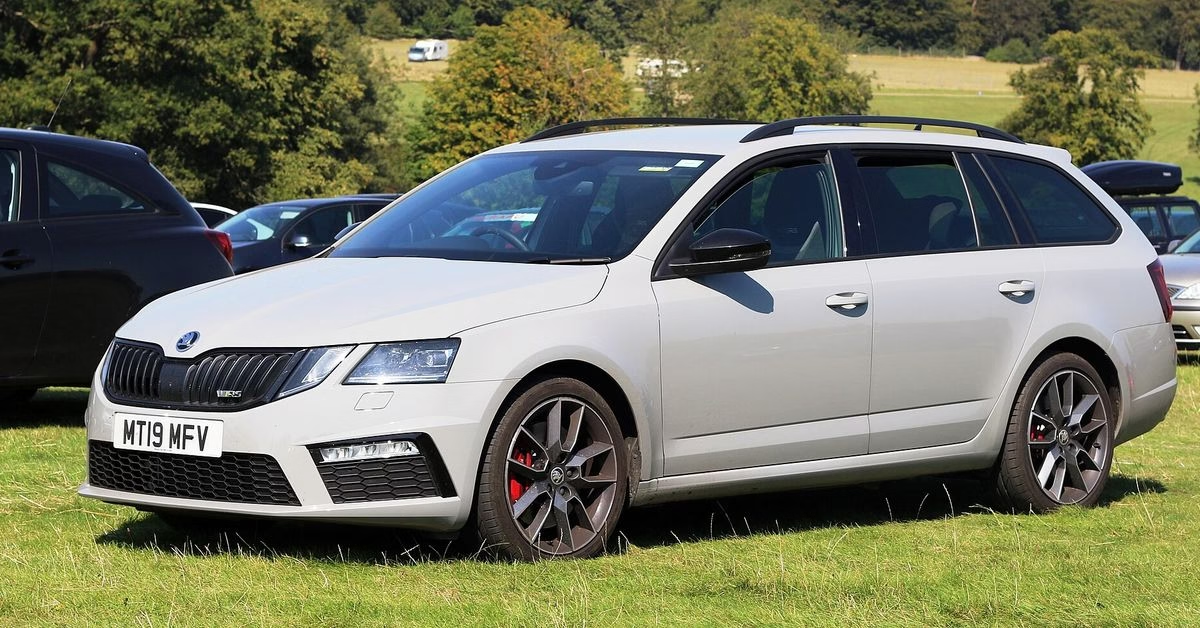
| Years | 2013–2020 (third generation); 2020 onwards (fourth) |
| Engine | 2.0-litre turbo four (TSI) |
| Output | 220–245 PS |
| Find one | Plentiful in the UK and Europe |
The Octavia vRS is the sensible end of this list, and that’s the point. The third-generation estate arrived with a 2.0 TSI rated at 220 PS, later raised to 230 PS and then 245 PS, with a manual or DSG gearbox, and the current car carries on with 245 PS. It has one of the biggest boots in its class and a cabin that swallows a family without complaint.
Why only tenth? Because it’s quick rather than thrilling. It’s front-wheel drive, it rides firmly on big wheels, and nobody will mistake it for anything exotic. It’s also the easiest car here to buy, run and fix, with Volkswagen Group parts and plenty of mechanics who know the engine.
On DSG cars, look for gearbox oil changes done on schedule, and on any 2.0 TSI check for coolant leaks around the water pump and thermostat housing, a well-known weak spot on this engine family. If you’d rather have something calmer and newer, the latest family estates are the place to look.

9. Subaru Levorg 2.0 GT-S
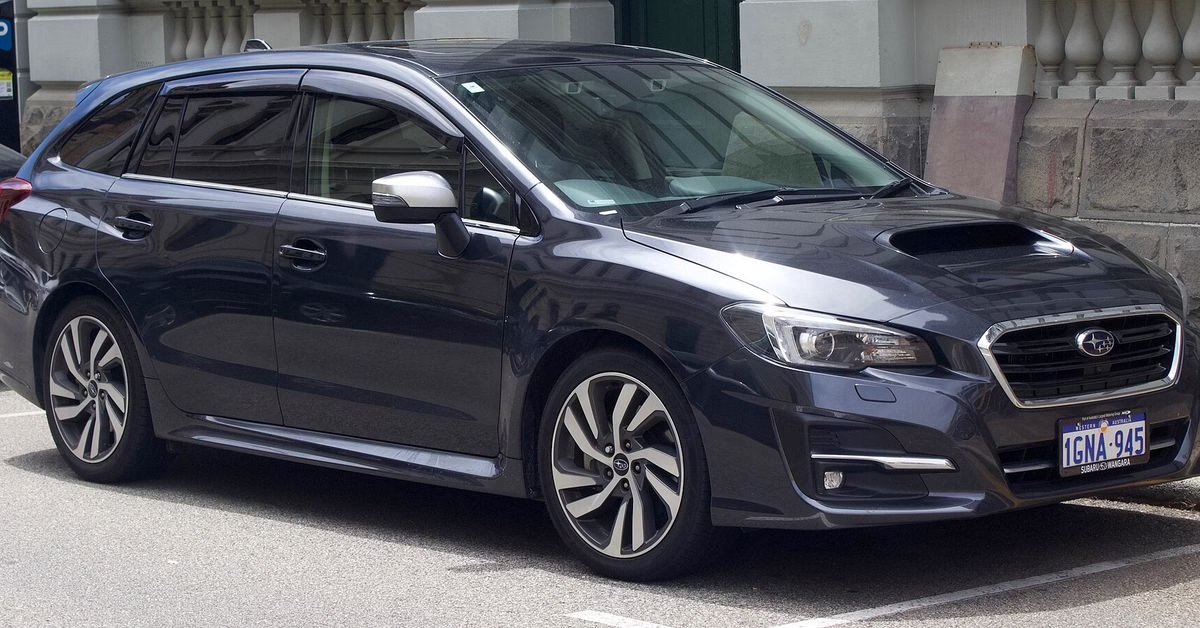
| Years | 2014–2020 (first generation) |
| Engine | 2.0-litre turbo flat-four (FA20) |
| Output | 300 PS and 400 Nm |
| Find one | Japan import |
Subaru built the Levorg as a more compact successor to the Legacy wagon in Japan, and the 2.0-litre version is the one to want: a turbocharged, direct-injected flat-four with 300 PS and 400 Nm, all-wheel drive and a CVT. It sold in Japan in GT-S form and later as an STI Sport, while many export markets only got the 1.6-litre turbo with 170 PS.
It earns its place by giving you much of a WRX’s pace in a body with a usable boot and all-wheel-drive traction for bad roads and bad weather. The CVT dulls the fun compared with a manual, and that’s the main reason it isn’t higher.
Check for CVT fluid changes, which plenty of owners skip, and be wary of tuned cars, because the 2.0 responds well to remapping and many have been pushed hard. Confirm you’re looking at the 2.0 and not the far more common 1.6, since the two look almost identical.
8. Toyota Mark II Blit iR-V
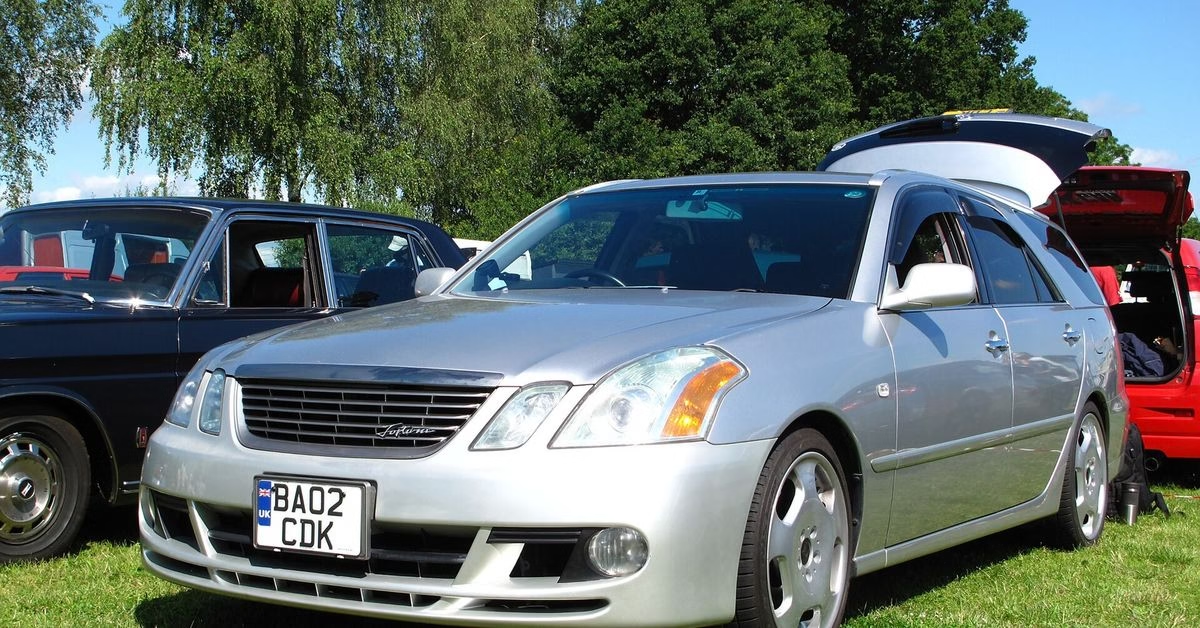
| Years | 2002–2007 |
| Engine | 2.5-litre turbo straight-six (1JZ-GTE) |
| Output | 280 PS and 377 Nm |
| Find one | Japan import |
The Mark II Blit was the wagon version of Toyota’s Mark II saloon, and the iR-V got the 1JZ-GTE turbocharged straight-six, rated at 280 PS and 377 Nm, the ceiling Japanese makers observed at the time. It sent its power through a four-speed automatic, with rear-wheel drive as standard and all-wheel drive offered on some versions.
For an enthusiast it’s a rare combination: a rear-wheel-drive family wagon with one of Toyota’s best-loved tuning engines. That alone earns it a place. It loses ground for the old four-speed automatic and for age, since even the newest examples are approaching 20 years old.
The 1JZ is tough when it’s been serviced, so the risks come with age: tired turbo seals, ignition coils, perished rubber and rust. Many have been modified, so ask what’s been done and by whom, and favour cars that are still close to standard.
7. Toyota Caldina GT-Four
| Years | 2002–2007 (GT-Four); 1997–2002 (GT-T) |
| Engine | 2.0-litre turbo four (3S-GTE) |
| Output | 260 PS and 324 Nm (GT-Four) |
| Find one | Japan import |
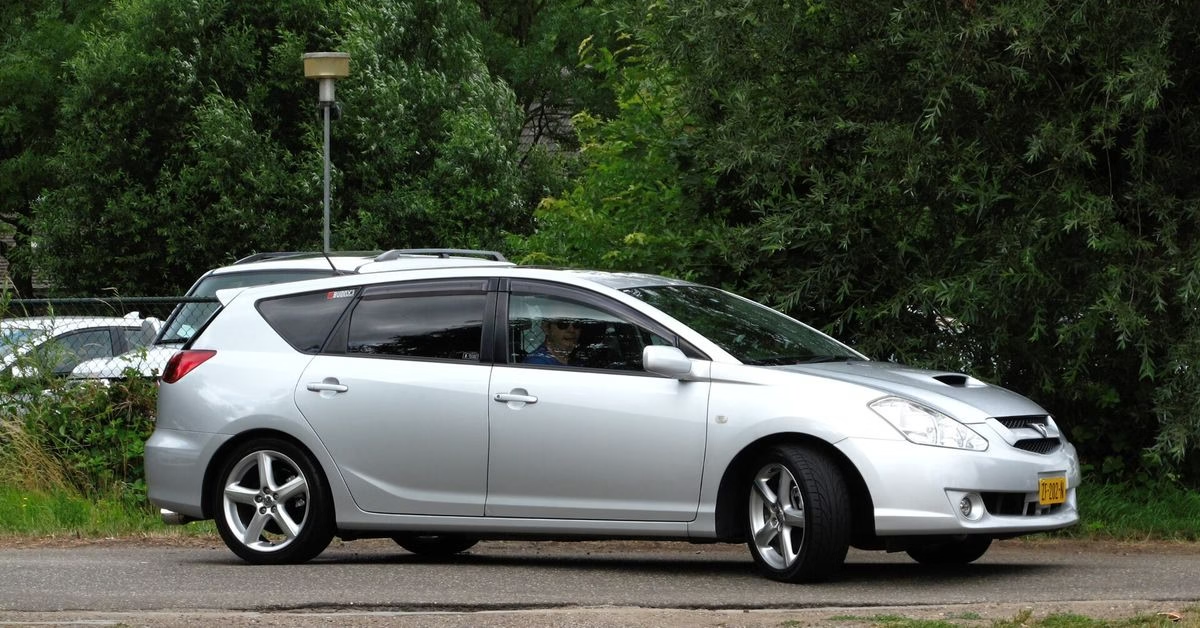
The Caldina GT-Four borrowed its name from the rally-bred Celica GT-Four and its engine from the same family. The third-generation car, launched in September 2002, used the turbocharged 3S-GTE with 260 PS and 324 Nm and all-wheel drive. The earlier Caldina GT-T, from 1997, had the same 260 PS and could be had with a five-speed manual.
The later GT-Four ranks seventh because it only came as an automatic, which takes the edge off a car built around a turbo engine. That engine is the star: the 3S-GTE has a long rally history and a deep pool of tuning knowledge behind it.
Check the turbo and intercooler pipework, listen for a smooth idle and look for signs of overheating or head gasket trouble on tuned cars. If you want a manual, hunt for the older GT-T instead and accept that it will be older still.
6. Mitsubishi Legnum VR-4
| Years | 1996–2002 |
| Engine | 2.5-litre twin-turbo V6 (6A13TT) |
| Output | About 280 PS and 363 Nm |
| Find one | Japan import |
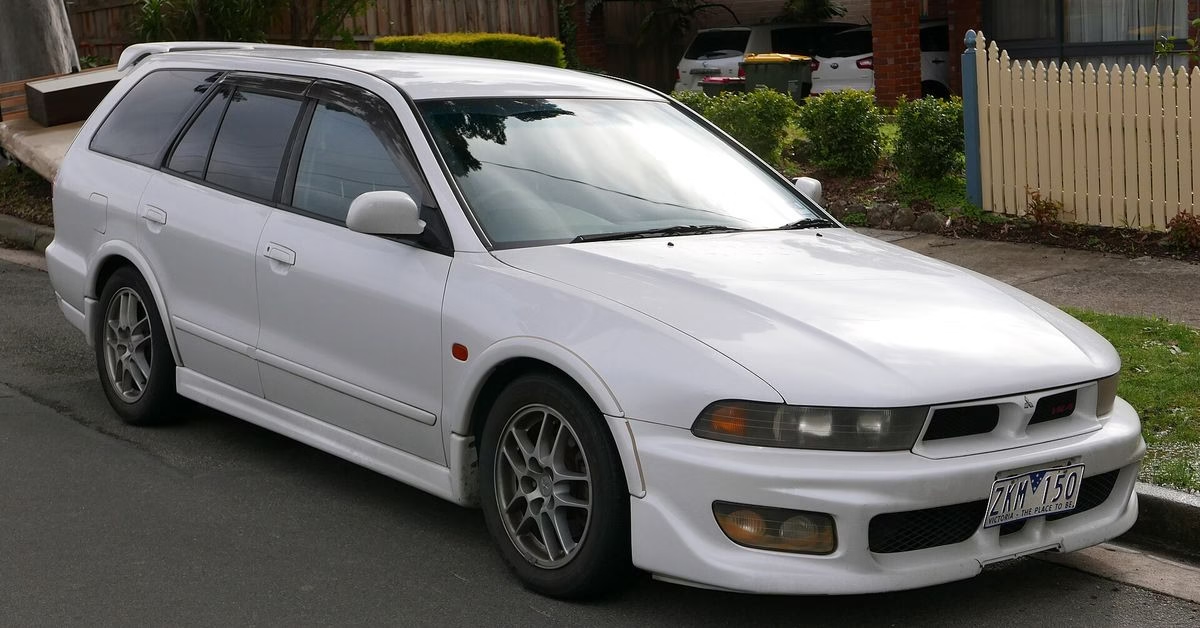
The Legnum was the wagon version of the eighth-generation Galant, and the VR-4 packed a 2.5-litre twin-turbo V6 with about 280 PS and 363 Nm, all-wheel drive and a choice of five-speed manual or automatic. Pre-facelift cars also got Active Yaw Control, the torque-shifting rear differential Mitsubishi used on the Lancer Evolution.
It was one of the quickest wagons of its era and remains one of the most overlooked. It sits sixth because it’s now hard to live with: parts for the twin-turbo V6 and its all-wheel-drive hardware are getting harder to find, and the newest cars are well over 20 years old.
Work on the V6 is cramped, so jobs like the timing belt cost more in labour than they would on a four-cylinder. Check that the Active Yaw Control works and has had its fluid changed, buy the best example you can find with paperwork, and line up a Mitsubishi specialist before you need one.
5. Volvo V70 R
| Years | 2003–2007 |
| Engine | 2.5-litre turbo five-cylinder |
| Output | 300 PS and up to 400 Nm |
| Find one | UK and European imports |
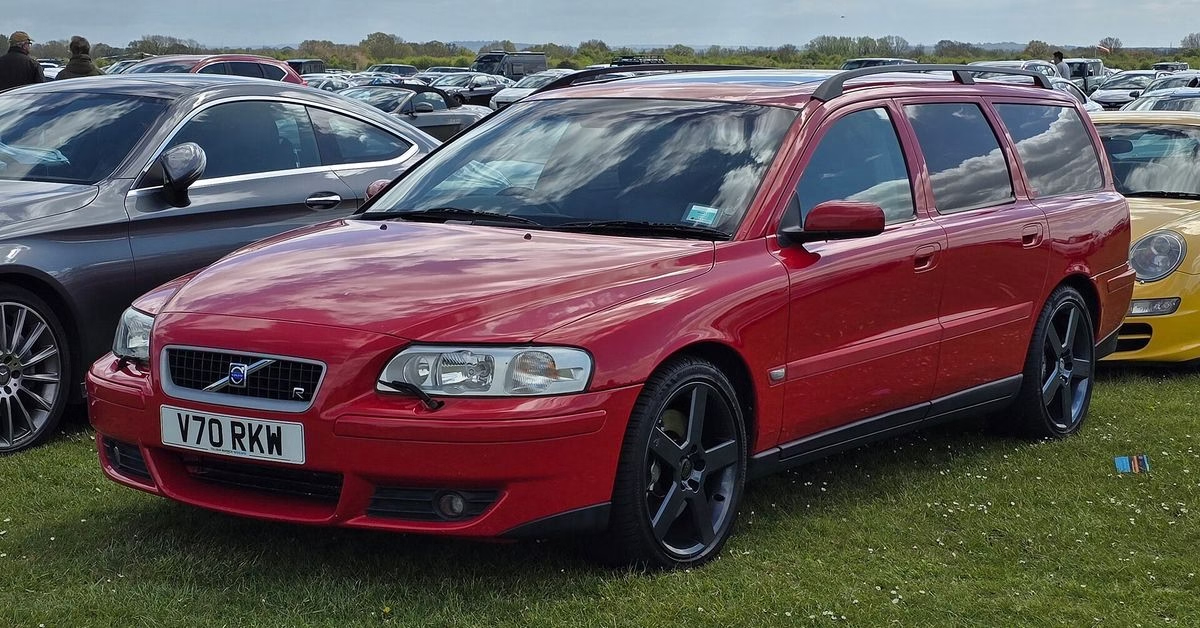
Volvo’s V70 R took the brand’s turbocharged five-cylinder to 300 PS and up to 400 Nm, sent it to all four wheels through a Haldex system, and added Four-C adaptive dampers developed with Öhlins, with three settings selectable from the cabin. A six-speed manual was offered alongside the automatic.
It’s the most innocent-looking car in the top half, which makes it a proper sleeper, and the manual makes it a real enthusiast’s choice. It ranks fifth because the all-wheel drive and adaptive dampers make it costly to keep healthy as it ages.
Ask about the angle gear and Haldex servicing, both known trouble spots on all-wheel-drive Volvos of this era, and check that the dampers change character in each mode, because replacements are expensive. The later V60 Polestar is the modern take on the same idea if you want something newer.
4. Nissan Stagea 260RS
| Years | 1997–2001 |
| Engine | 2.6-litre twin-turbo straight-six (RB26DETT) |
| Output | 280 PS (officially) |
| Find one | Japan import; only 1,734 built |
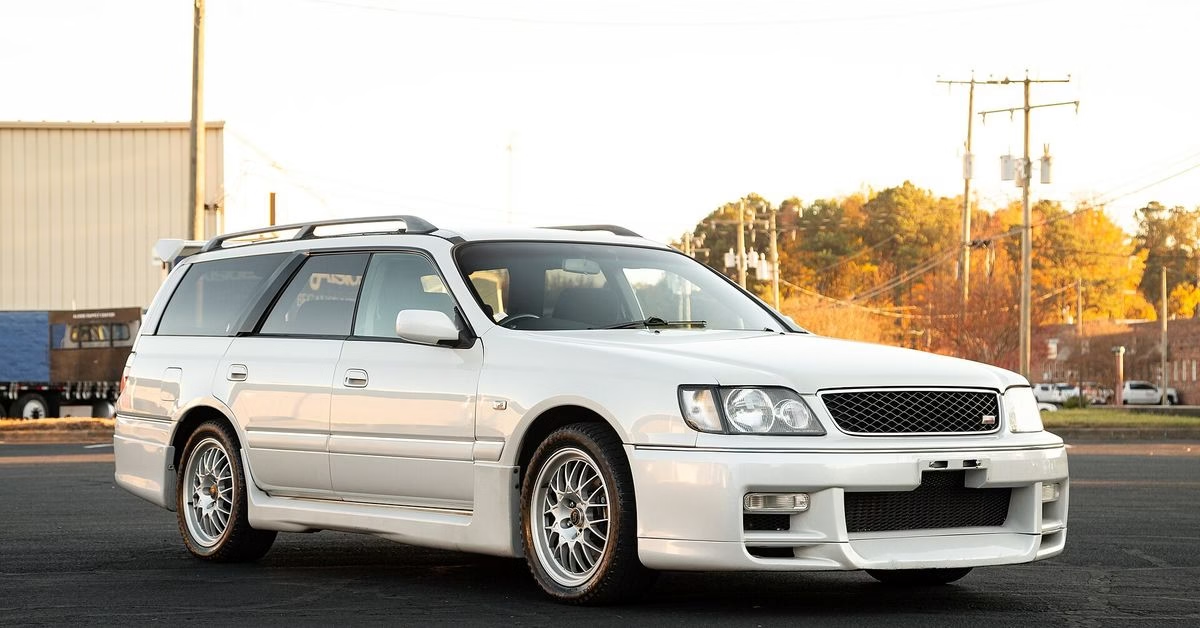
The Stagea 260RS is the closest thing to a Skyline GT-R wagon Nissan ever sold. Built by its Autech division, it used the GT-R’s RB26DETT twin-turbo straight-six, officially rated at 280 PS, the ATTESA E-TS all-wheel-drive system from the R33 GT-R and a five-speed manual. Only 1,734 were made.
It sits fourth because it’s the most special car on the list and one of the hardest to buy well. Prices have climbed alongside GT-R values, and a genuine, unmolested example is a rare find.
Check the paperwork and chassis details carefully, because ordinary Stageas fitted with RB26 engines are out there and are worth far less. The RB26 needs a specialist who knows it, and parts are priced like GT-R parts, because that’s what they are.

3. BMW M5 Touring (E61)
| Years | 2007–2010 |
| Engine | 5.0-litre V10 |
| Output | 507 PS and 520 Nm |
| Find one | UK and European imports |
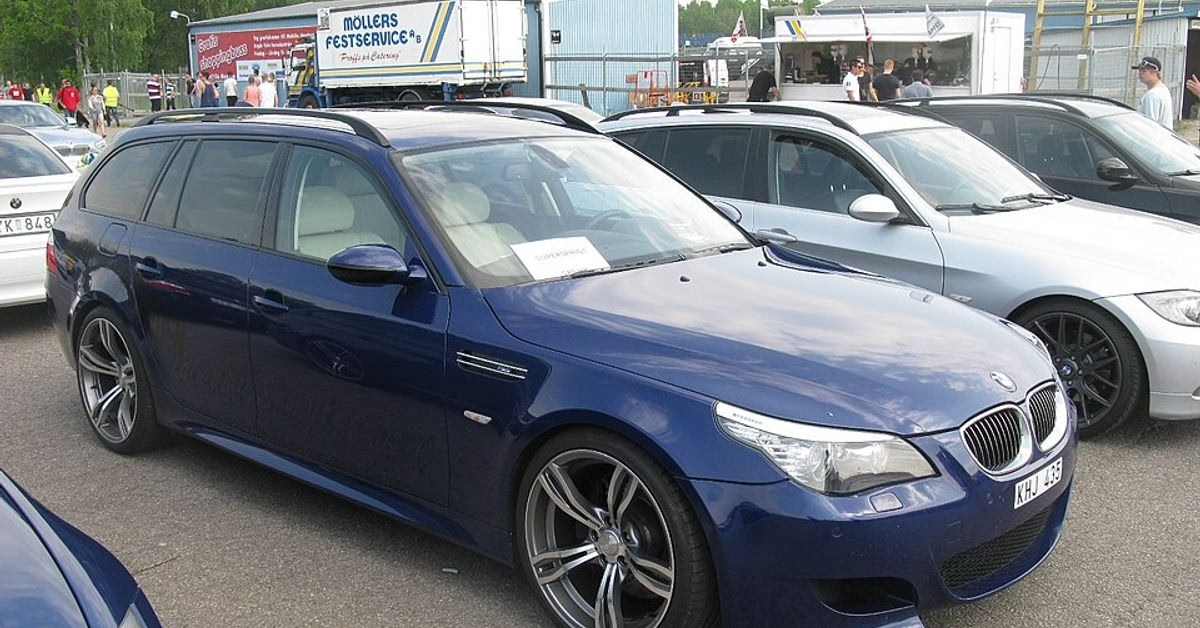
The E61 M5 Touring put the M5 saloon’s 5.0-litre V10, with 507 PS at 7,750 rpm, into a family estate and drove the rear wheels through a seven-speed SMG gearbox. It reached 100 km/h in 4.8 seconds, and it was never sold in North America, which makes it rarer still.
As an experience it’s arguably the best car here, with an engine that sounds and revs like a race car. It’s third because it’s also the riskiest to own: the V10 is known for rod bearing wear, and the SMG gearbox’s hydraulic pump and the engine’s throttle actuators are common and costly failures.
Buy only with a full service history and evidence of rod bearing replacement or a specialist inspection, and keep a fund for SMG repairs. This is a car for an enthusiast with savings, not one stretching to the purchase price.
2. Mercedes-AMG E 63 S Estate
| Years | 2017–2023 (S213) |
| Engine | 4.0-litre twin-turbo V8 |
| Output | 612 PS and 850 Nm |
| Find one | UK and European imports |
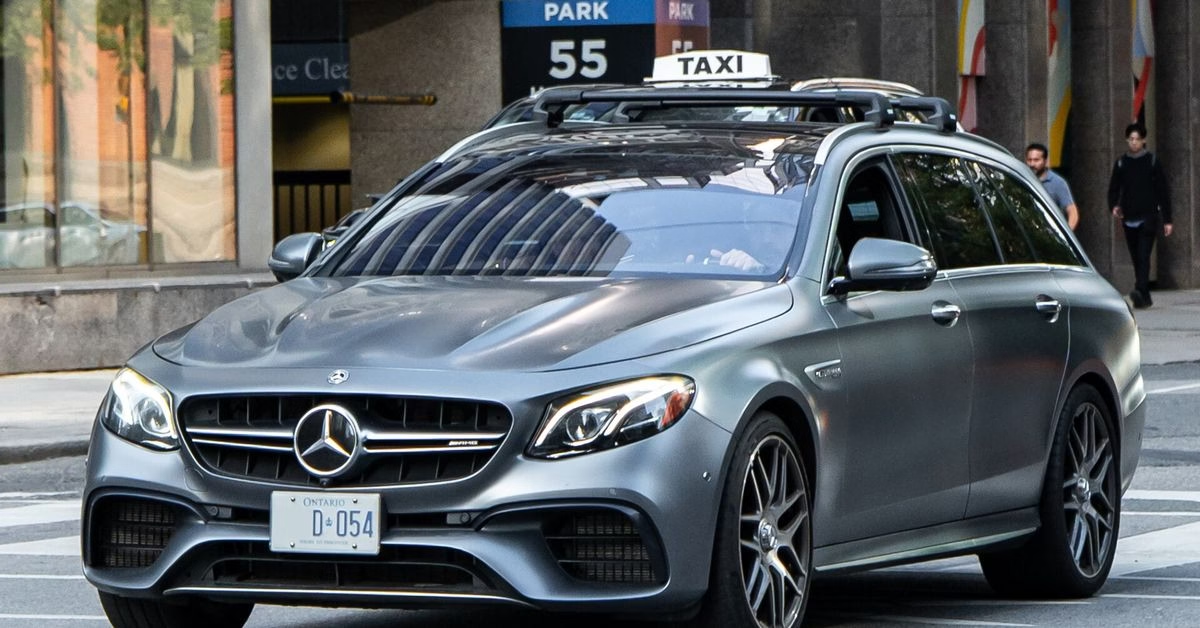
The S213 E 63 S Estate arrived in 2017 with a 4.0-litre twin-turbo V8 making 612 PS and 850 Nm, a nine-speed AMG transmission and 4MATIC+ all-wheel drive, which varies torque between the axles and even offers a drift mode. Mercedes quoted 0 to 100 km/h in 3.5 seconds, the quickest figure on this list.
It’s a genuinely practical family estate that will embarrass most sports cars. It ranks second, just behind the Audi, because it costs more to run and its brakes, tyres and suspension take a beating from that much power and weight.
Budget for tyres and brakes accordingly, check the suspension carefully and buy with a full Mercedes or AMG specialist history. With the latest E-Class dropping the V8 AMG model, this generation is likely to be the last of its kind.
1. Audi RS6 Avant
| Years | 2002 onwards (four generations) |
| Engine | 4.0-litre twin-turbo V8 (current car) |
| Output | About 600 PS and 800 Nm (2019 car) |
| Find one | UK and European imports |
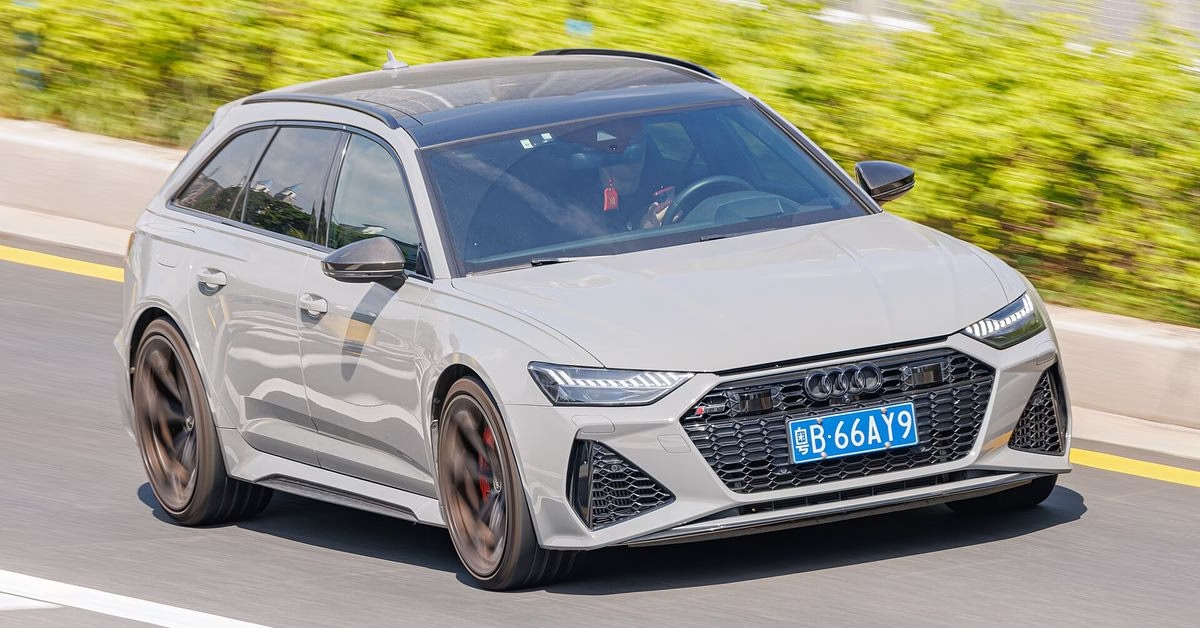
Audi has built the RS6 since 2002, and its history reads like an arms race: a 4.2-litre twin-turbo V8 with 450 PS in the first car, a 5.0-litre twin-turbo V10 with 580 PS in 2008, and a 4.0-litre twin-turbo V8 with 560 PS in 2013, according to Audi’s own history of the car. The current generation, launched in 2019, makes about 600 PS and 800 Nm.
It’s number one because it is the sleeper wagon. It looks like a wide, expensive estate, carries a family and the dog, and keeps pace with supercars, while quattro all-wheel drive makes that pace usable in any weather. No other car on this list has done the job for as long.
Older RS6s carry real risks. Earlier generations used hydraulically linked Dynamic Ride Control dampers that can leak and are expensive to replace, and every RS6 is hard on tyres and brakes. A well-kept 2013-on car is the sweet spot for value, and the current car is the one to have if the budget allows.
Honourable Mentions
A few more fast wagons deserve a mention, even if they’re too rare, too new or too far from most buyers to rank.
- Audi RS2 Avant: the mid-1990s original, developed with Porsche, and the car that started Audi’s fast wagon habit.
- Subaru Legacy GT wagon: the turbo flat-four Legacy that the Levorg replaced, and a common Japanese import in its own right.
- Cadillac CTS-V Wagon: a supercharged V8 American wagon, offered with a manual, and almost unknown outside North America.
- Porsche Panamera Sport Turismo: a shooting brake rather than a true wagon, with the price and running costs of a Porsche.
- Volkswagen Golf R Estate: a compact all-wheel-drive alternative to the Octavia vRS, quicker and more expensive.
Wagon or Sedan?
Most of the cars on this list also came as saloons, so the choice is a real one. A wagon gives you a longer load floor, room above the luggage and space for a dog, a pushchair or a bike, usually for a modest weight penalty. The saloon is a little lighter, often a touch stiffer, and in some markets it’s easier to find and cheaper to buy.
For a car that has to carry a family, the wagon wins on almost every count except kerb appeal, and that’s exactly why the fast ones make such good sleepers. Nobody expects the estate with a roof box to be the quickest car at the lights.
Frequently Asked Questions (FAQ)
What is the fastest wagon on this list?
The Mercedes-AMG E 63 S Estate, which Mercedes quoted at 3.5 seconds from 0 to 100 km/h, with 612 PS and 850 Nm. The current Audi RS6 Avant is close behind it.
Are fast wagons reliable?
The simpler ones can be. A well-serviced Octavia vRS or Caldina GT-Four is no harder to own than a normal family car. The BMW M5 Touring, Mercedes-AMG E 63 S and Audi RS6 need specialist care and a healthy repair budget.
Can you still import JDM wagons?
It depends on where you live. Some countries limit the age of imported cars. Kenya, for example, only clears vehicles first registered from 2019 onwards, which rules out the older Japanese wagons as fresh imports. Others work the opposite way: the US 25-year rule opens up older Japanese cars as they age.
Is a wagon or a sedan better for a family?
For most families, a wagon. It carries more, takes bulky items like pushchairs and bikes more easily and drives almost exactly like the saloon it’s based on, for a small weight penalty.
The Best Family Car Is One You Want to Drive
Having children doesn’t mean giving up on driving. It means finding a car that does both jobs, and a fast wagon does them better than almost anything else. Start at the sensible end if you need a car that just works, or go all the way to the RS6 if you want the school run to come with a soundtrack. Whichever you pick, buy the one with the best history rather than the best photos, and the boot full of shopping will never feel like a compromise.