

Many electric vehicle (EV) drivers waste money by making three key mistakes: buying overpowered home chargers, incurring high installation costs, or relying too heavily on expensive public fast-charging. This financial inefficiency often stems from not knowing the car’s maximum onboard charger rate.
This guide provides the real EV charging guide for every car model, built on technical data and real-world insights. This guide ensures you stop overpaying and start charging intelligently by detailing optimal choices for both BEVs and PHEVs.
Table of Contents
Understanding EV Charging Basics
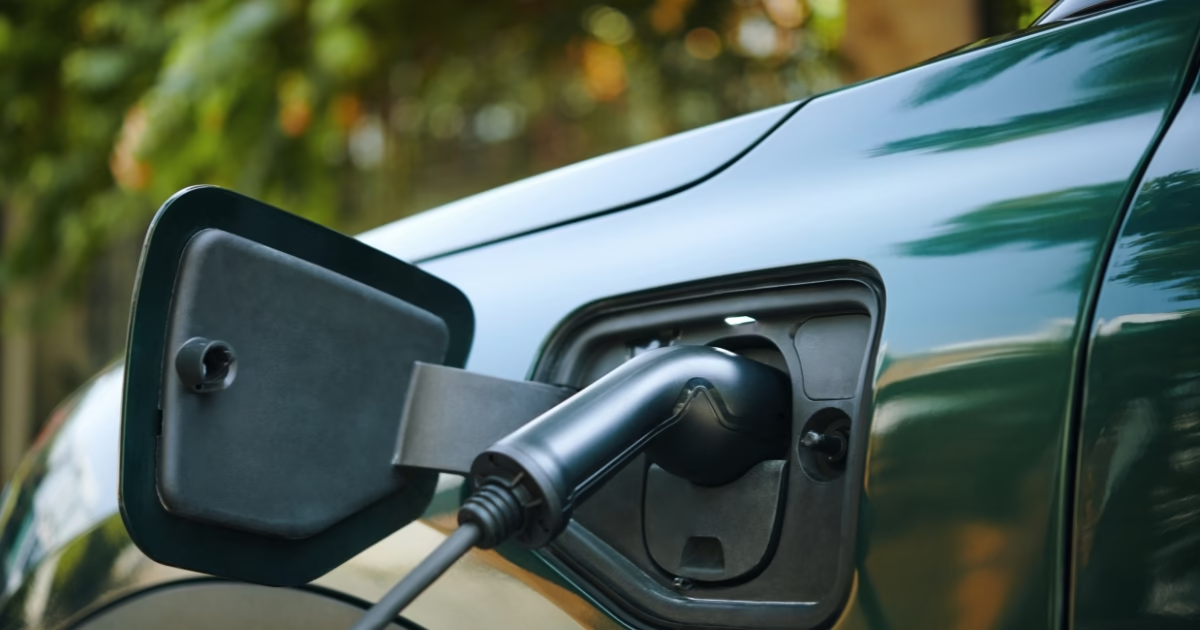
Before you optimize charging costs or select hardware, it is crucial to understand the foundational differences between EV models and the three primary charging levels.
EV Types and Battery Differences
| EV Type | Propulsion | Battery Size (Typical) | Charging Needs |
| BEV (Battery Electric Vehicle) | Electric only | 60−120 kWh | Requires daily or near-daily Level 2 charging |
| PHEV (Plug-in Hybrid Electric Vehicle) | Electric + Gas | 10−20 kWh | Often sufficient with Level 1 or occasional Level 2 |
A vehicle’s battery size (measured in kilowatt-hours, or kWh) dictates how much energy it can store, directly impacting charging time. The onboard charger rate is the single most critical factor: this is the maximum rate (in kW or Amps) that your car’s internal system can convert AC power into DC power for the battery. No matter how powerful your wall charger is, the car will never draw more than its onboard limit. Efficiency also plays a role, as a more efficient EV will require fewer kWh per mile.
Charging Levels (Level 1, Level 2, and DC Fast)
Charging is categorized into three levels, defined by voltage and output capability.
| Level | Voltage | Typical Use | Charging Speed (Range per Hour) | Cost Insight |
| Level 1 | 120V AC | Standard home outlet, PHEVs | 3–5 miles/hour | Free setup, very slow |
| Level 2 | 240V AC | Home (dedicated circuit), Public L2 | 15–40 miles/hour | Moderate equipment cost |
| Level 3 (DC Fast) | 400V+ DC | Public stations, highway travel | 60–300+ miles/30 min | Most expensive per kWh |
Level 1 charging is suitable for PHEVs or BEV owners who drive less than 30 miles daily and have ample overnight time. Level 2 is the sweet spot for the vast majority of BEV drivers, offering a full charge overnight. DC Fast Charging (DCFC) is exclusively for travel, emergencies, or when time is critical. Using DCFC for daily charging is both costly and may put unnecessary strain on the battery.
Know Your Car: Charging Compatibility & Max Rates
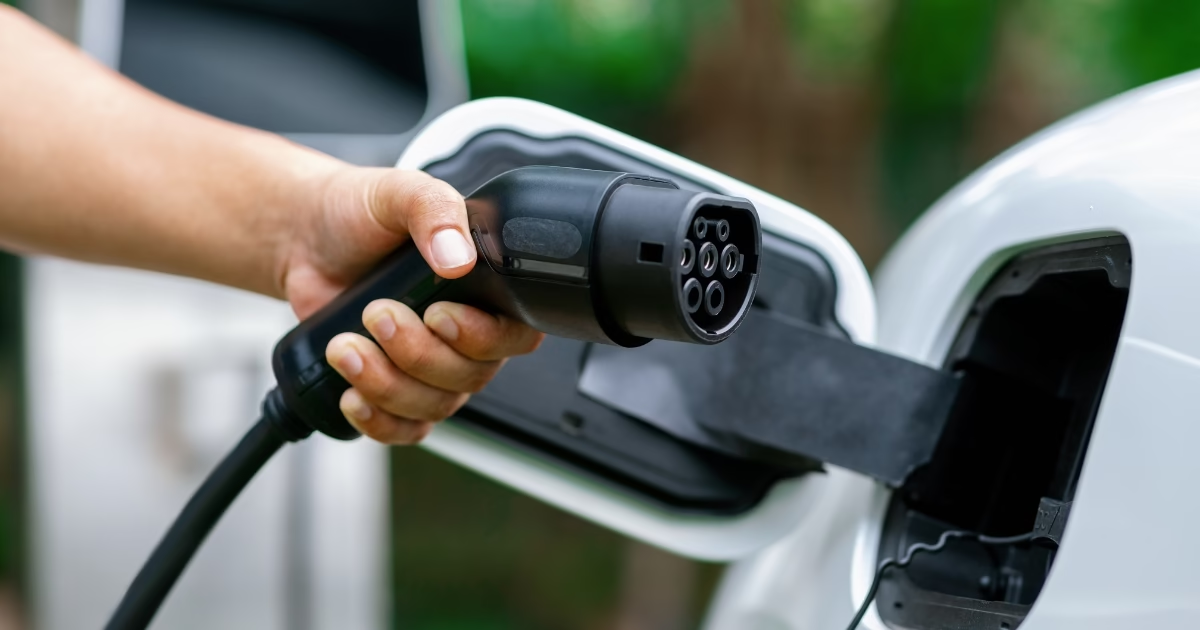
Understanding your specific vehicle’s physical plug type and, critically, its maximum power intake capability is the key to purchasing the right home charger and avoiding unnecessary installation costs.
Connector Types That Matter
The physical plug-in connection must match the receptacle on your car.
- J1772: The established North American standard for AC charging (Level 1 and Level 2) for nearly all non-Tesla EVs.
- NACS (Tesla): The proprietary connector developed by Tesla, which is now being adopted by nearly all major automakers (Ford, GM, Rivian, etc.) as the new North American charging standard.
- CCS/CHAdeMO: CCS (Combined Charging System) is the current DC fast-charging standard for most non-Tesla vehicles. CHAdeMO is an older DC standard primarily used by Nissan and Mitsubishi.
| Model | AC Connector (Current) | DC Connector (Current) | NACS Transition |
| Tesla Model 3/Y | NACS | NACS | Standard |
| Ford Mustang Mach-E | J1772 | CCS | Adopting NACS soon |
| Hyundai IONIQ 5 | J1772 | CCS | Adopting NACS soon |
| Nissan LEAF | J1772 | CHAdeMO | Likely transitioning to NACS/CCS |
The Hidden Number: Your Car’s Max Charge Rate
The most important factor in preventing overpayment is understanding your vehicle’s onboard charger limit.
For example, the Hyundai IONIQ 5 supports up to 11 kW AC charging in its optimal configuration (though single-phase setups may limit it further). Meanwhile, many early EVs such as the Tesla Model 3 RWD use a 7.7 kW onboard AC charger, and older Chevy Bolt models capped at around 7.2–7.7 kW (≈ 32 A) under standard Level 2 setups.
Key Takeaway
If your EV is limited to 32 amps, buying a 48-amp or 80-amp wall charger is pure waste. You will pay hundreds more for a charging station and potentially thousands more for a panel upgrade that provides zero benefit. Match your charger’s output to your EV’s onboard limit.
EV Charging Infrastructure Guide: Smart Use of Each Level
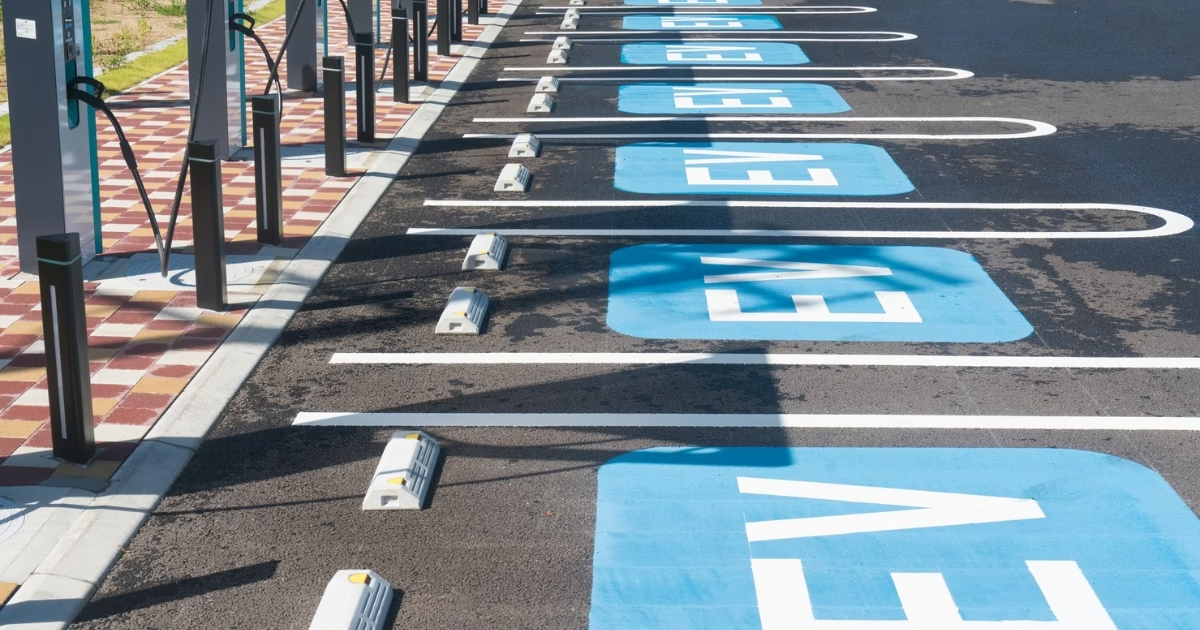
Effective cost management requires knowing when and how to utilize each of the three charging levels—Level 1, Level 2, and DC Fast Charging—for their optimal purpose.
- Level 1 (120 V): This should be viewed as a maintenance charge. It’s ideal for topping off small-battery PHEVs or for BEV owners who drive very short distances. It’s not a viable solution for daily commuters unless you have no other option.
- Level 2 (240 V): This is the residential standard. A 40-amp Level 2 charger (9.6 kW output) requires a dedicated 50-amp circuit breaker. A 48-amp charger (11.5 kW output) requires a 60-amp breaker. Higher amperage requires thicker wire, potentially more invasive installation, and a larger breaker, dramatically increasing the installation cost. For most drivers, a 32-amp charger (7.7 kW) is the perfect balance of speed and cost-effectiveness.
- DC Fast (L3): Save DCFC for road trips. Be aware of cost traps, such as high idle fees charged by networks (like Electrify America) if you leave your car plugged in after charging is complete, and the significantly higher cost per kWh compared to home charging. The average public DCFC rate is often 36 to 69 cents per kWh, versus a national residential average of approximately 17.5 cents per kWh.
Tip Box: How to Use Free or Discounted Public Stations
Many grocery stores, city parking lots, and malls offer Level 2 charging for free (or at a discounted rate) as a customer incentive. Utilize apps like PlugShare to find these locations. Avoid signing up for multiple network memberships unless you frequently use that specific network. Pay-per-use accounts are often sufficient.
Choosing the Best EV Charger for Your Car
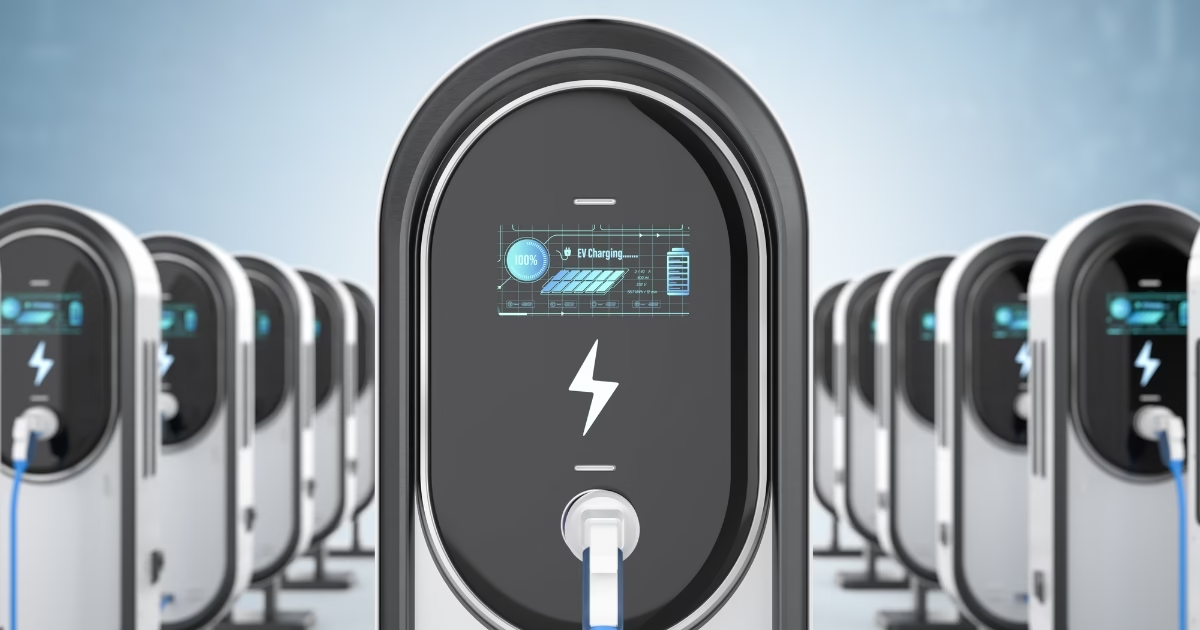
This section focuses on Level 2 chargers, which are the residential standard.
Recommended Chargers by Category
| Category | Example | Amp Rating (Max) | kW Output (Max) | Ideal For |
| Best Value (32 A) | Grizzl-E Classic | 40A (set to 32A) | 7.7 kW | 90% of EVs with 7.7 kW limit (Chevy Bolt, Model 3 RWD) |
| Best Overall/Smart | ChargePoint Home Flex | 16−50A Adjustable | Up to 12 kW | Drivers needing flexibility, tracking, and app control |
| Future-Proof (48 A) | Tesla Wall Connector | 48A Hardwired | 11.5 kW | Vehicles with 11.5 kW+ onboard limit (Tesla Long Range, Taycan) |
| Portable | Lectron J1772 | 16−32A Adjustable | 7.7 kW | Travelers, secondary charging locations (e.g., friend’s house) |
Features That Actually Matter
- Wi-Fi vs. Non-Smart: A smart (Wi-Fi connected) charger is crucial if your utility offers Time-of-Use (TOU) rates. These chargers allow you to schedule charging only during off-peak hours (e.g., 11 PM to 6 AM) when electricity is cheapest, often saving you hundreds of dollars annually. Non-smart chargers are reliable but must be controlled manually via the car’s settings.
- Cable Length: 20 feet is the bare minimum. Longer cables (25 feet) offer significantly more flexibility in your garage or driveway setup.
- Energy Star Certification: Look for this label. It indicates the charger meets strict energy efficiency guidelines, ensuring minimal energy loss during the charging process—a small saving that adds up over the charger’s lifespan.
- Safety & Build: Always verify the unit has a UL listing (Underwriters Laboratories) or ETL certification. This confirms the equipment meets rigorous safety standards for electrical components.
Home EV Charging Setup Tips & Cost Breakdown
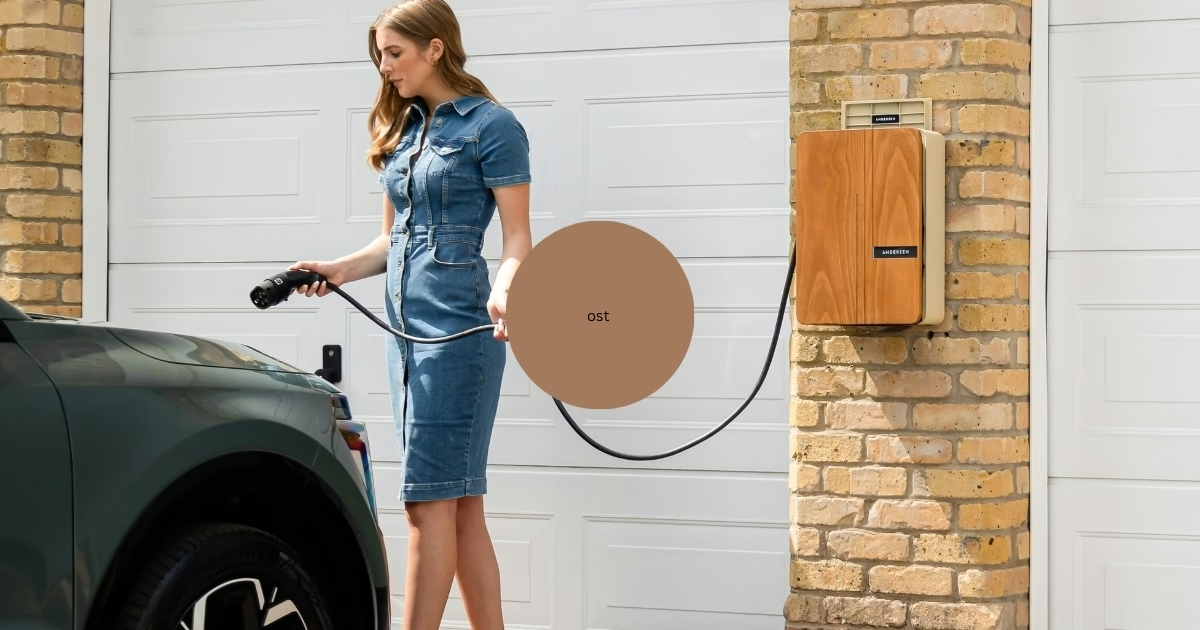
Understanding the true cost of home charging involves looking beyond the equipment price, focusing instead on the installation factors that drive the total project expense.
Installation Reality Check
The cost of installation often dwarfs the cost of the charger itself.
- DIY vs. Professional Install: If you have an existing 240 V outlet (like a NEMA 14−50 used for an RV or large appliance) in your garage and are using a plug-in charger, the installation cost is near zero. For hardwired units or if you need a new circuit run, always hire a licensed professional electrician.
- Electrical Panel Capacity: This is the primary cost determinant. Most Level 2 chargers require a 40-amp or 50-amp circuit. If your home’s main electrical panel is already maxed out (e.g., a 100-amp panel in an older home), you may need a costly panel upgrade or the installation of a sub-panel.
- Permits, Rebates, and Incentives: Always check for local and state government rebates, as well as utility-specific programs. Many offer significant tax credits or direct cash rebates that can cover up to 50% of the equipment and installation costs.
Cost Table: Don’t Overpay Scenario Guide
This guide focuses on average US costs, excluding incentives.
| Situation | Charger Cost | Install Cost (Electrician) | Total Estimated Cost |
| Existing 240 V outlet | $400–$650 | $0–$200 (Safety check/plug) | $400–$850 |
| New circuit run (average) | $500–$750 | $800–$1,500 (Wiring/breaker) | $1,300–$2,250 |
| Panel upgrade required | $500–$750 | $3,000+ | $3,500+ |
Smart Charging Software
Smart charging is key to ongoing cost management. By using the charger or car app, you can schedule charging to occur exclusively during your utility’s designated off-peak hours. This can reduce your electricity cost by 50% or more compared to charging during peak demand times. Look for chargers that integrate directly with utility programs (like Demand Response or TOU rates) to maximize savings.
Cost Comparison: Home vs. Public Charging

Based on current US energy data, home charging provides massive savings and is the core argument for owning an EV.
- Average Home Cost (National EIA Average): ∼ 0.175 per kWh
- Average Public L3 Cost (Fast Charging Networks): ∼ 0.36 to 0.69 per kWh
| Scenario | Electricity Cost (per kWh) | Energy Use (per 100 miles) | Cost per 100 Miles | Notes |
| Home Charging | $0.175 | 30 kWh | $5.25 | Based on national residential average (EIA) |
| Public Level 2 Charger | $0.30 | 30 kWh | $9.00 | Typical rate for non-networked or workplace chargers |
| Public DC Fast Charger (Level 3) | $0.50 | 30 kWh | $15.00 | Average of Electrify America, EVgo, and Tesla Superchargers |
| Premium DC Fast Charger (High-rate network) | $0.69 | 30 kWh | $20.70 | Peak pricing in high-demand urban areas |
The sheer difference in cost means the break-even point for installing a home Level 2 charger is typically reached within one to two years of ownership, depending on your daily mileage. Once installed, home charging offers a cost per mile roughly equivalent to a gasoline car getting 80−100 MPG.
Advanced Cost-Saving Strategies
Moving beyond simple home vs. public cost comparisons, these strategies maximize long-term savings and charging efficiency.
- Memberships vs. Pay-per-use: For DCFC networks (like Electrify America or EVgo), check if the subscription cost saves you enough on the per-kWh rate to be worthwhile. If you only road trip twice a year, pay-per-use is better.
- The 80% Rule: DC fast charging speed dramatically decreases after 80% state of charge (SoC). Charging from 20% to 80% is significantly faster and cheaper than attempting to charge from 80% to 100%. Stopping at 80% also contributes to better long-term battery health.
- Solar or V2H/V2G Integration: If you have solar panels, charging your EV when solar production is highest (daytime) allows you to use self-generated, free energy. Future-focused features like Vehicle-to-Home (V2H) or Vehicle-to-Grid (V2G) allow your EV battery to act as a home energy storage system, potentially eliminating utility dependence during peak hours.
Maintenance & Troubleshooting
EV chargers require minimal maintenance, but safety and reliability are paramount.
- Cleaning and Firmware: Periodically inspect the cable and connector for dirt or moisture. For smart chargers, ensure firmware updates are performed via the app to maintain security and functionality.
- Common Issues:
- Slow Charge: Check the charger’s settings in the app; ensure it hasn’t been accidentally limited to a lower amperage.
- Breaker Trips: Indicates an issue with the circuit (too much current draw) or potentially a ground fault. Stop charging immediately and call an electrician.
- Overheating: If the plug or cable feels excessively hot, stop charging. This can be a sign of a bad outlet, poor connection, or undersized wiring.
Quick Diagnostics Checklist and Safety Callouts: Always follow the 80% safety rule for 240 V plug-in setups: a 40-amp charger should always be plugged into a 50-amp rated NEMA 14−50 outlet. Charging at the maximum limit of an older or cheap outlet can be a fire hazard.
Future-Proofing Your Setup
The EV charging landscape is evolving rapidly, primarily due to the transition to NACS.
- Upcoming Connector Transitions: Nearly all major US automakers are transitioning to the NACS plug (Tesla standard) starting in 2025. If you buy a J1772 charger now, ensure you receive a free or inexpensive NACS adapter from your automaker or charger manufacturer to future-proof its use.
- Faster Level 3 Technology: While DCFC is getting faster, the true bottleneck remains the car’s battery architecture. Vehicles leveraging 800V architecture (like the Hyundai IONIQ 5) can already charge from 10% to 80% in under 20 minutes.
- Grid Incentives and Bidirectional Charging: Keep an eye on local utility programs that incentivize bidirectional charging (V2H/V2G). This technology allows your car to send power back to your home or the grid during outages or peak demand, turning your EV into a massive, mobile battery backup.
Smarter Charging, Bigger Savings
The path to maximizing your EV savings is simple: Match your charger to your car, and spend wisely, not more.
90% of drivers will find that a 32-amp Level 2 charger provides all the speed they need for daily driving, saving them significantly on both equipment and installation costs compared to unnecessary 48-amp setups. By prioritizing the lowest cost per kWh through home charging, leveraging Time-of-Use rates, and using DC Fast Charging only for long-distance travel, you transform your EV from a vehicle into a powerful financial asset.
FAQ / People Also Ask
What’s the best EV charger for my car model?
The best charger is the one whose maximum amperage output matches your car’s maximum onboard AC charge rate. For most standard range EVs, a 32-amp (7.7 kW) charger like the Grizzl-E Classic or Emporia Smart Charger is the best value choice. For premium, long-range models (like the Tesla Model S or Porsche Taycan), a 48-amp (11.5 kW) charger like the Tesla Wall Connector or ChargePoint Home Flex may be appropriate to maximize speed.
How much faster is 48 A vs 32 A?
The 48-amp charger delivers approximately 11.5 kW, while the 32-amp charger delivers 7.7 kW. This means the 48-amp unit is theoretically about 50% faster. However, this speed increase is only realized if your car’s internal charger is capable of accepting 48 amps. If your car is limited to 32 amps, both chargers will charge at the exact same 7.7 kW rate.
Do I need a Wi-Fi charger?
You only need a Wi-Fi (smart) charger if you intend to take advantage of utility Time-of-Use (TOU) or other scheduling programs to charge exclusively during off-peak, low-cost hours. If your utility offers flat-rate pricing or you prefer simplicity, a non-smart charger is perfectly reliable.
Is home or public charging cheaper?
Home charging is significantly cheaper. The national average cost for residential electricity is around 0.175 per kWh, while public DC Fast Charging networks typically cost between 0.36 and 0.69 per kWh. Charging at home often makes your cost per mile less than half the cost of using a public DCFC station.