
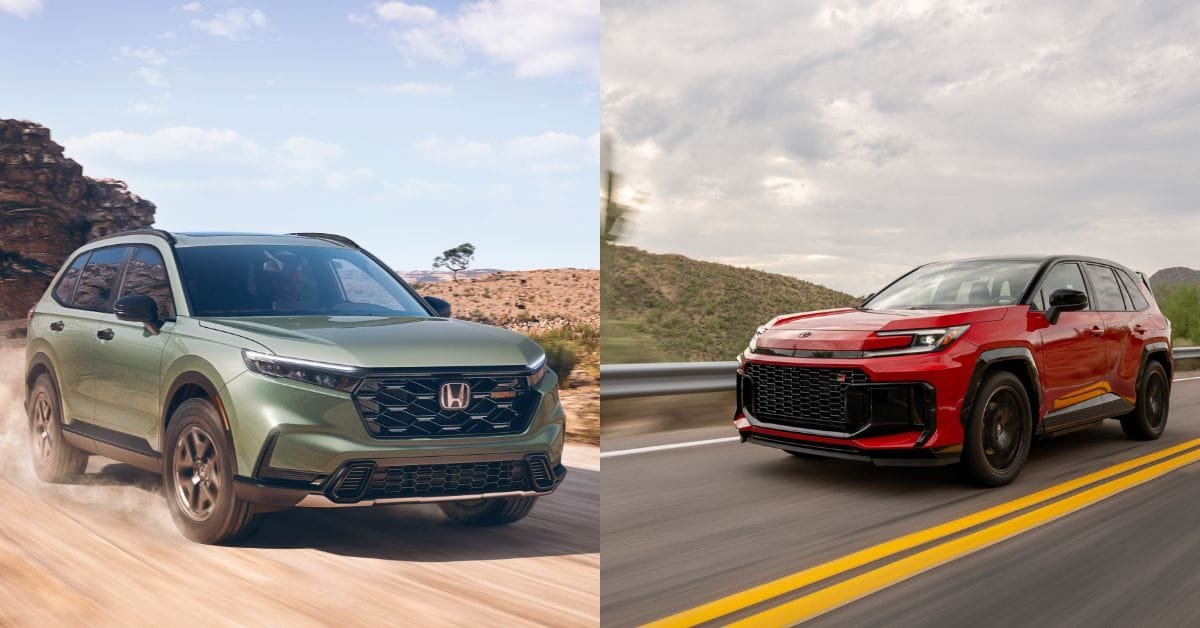
Few debates in the automotive world run as long as the Toyota vs Honda reliability debate. Both Japanese brands have spent decades building reputations for dependable, low-cost ownership, and both regularly appear at the top of the charts in our guides and comparisons. But the data tells a more nuanced story in 2026. Consumer Reports, J.D. Power, and RepairPal each point to meaningful differences between the two brands, not just at the brand level but model by model. This guide breaks down who actually comes out ahead and which badge makes more sense for your next car.
Table of Contents
The Data at a Glance
Before going model by model, it helps to anchor the discussion in numbers. The two most widely cited sources are Consumer Reports and J.D. Power, and in 2026, they paint a broadly consistent but not identical picture.
| Metric | Toyota | Honda |
|---|---|---|
| CR Brand Score (2026) | 66 (1st) | 59 (4th) |
| J.D. Power Dependability | 8th (Mass Market) | Below Avg. |
| RepairPal Annual Cost | $441 | $428 |
| Industry Avg. Cost | $652 | $652 |
| Hybrid Reliability Issues | None | None |
Consumer Reports surveys roughly 380,000 vehicles across model years 2000 to 2026. Its scoring system runs from 1 to 100 and weights trouble areas by severity, from broken trim to engine and transmission failures. In the most recent annual auto reliability survey, Toyota claimed the top spot with a brand score of 66, while Honda placed fourth at 59. Both sit comfortably ahead of the industry median, but the seven-point gap is meaningful.
J.D. Power’s 2026 Vehicle Dependability Study offers a slightly different angle, measuring problems per 100 vehicles on three-year-old cars. Here, neither brand is having its finest year: Toyota slipped to eighth among mass-market brands, and Honda fell below the industry average of 204 problems per 100 vehicles. This study is a reminder that brand reputation and annual survey results do not always move in lockstep.
| Key insight: Consumer Reports and J.D. Power measure different things. CR’s survey captures predicted reliability on current and recent models. J.D. Power’s Dependability Study measures what owners of three-year-old vehicles actually experienced. A brand can lead one and lag the other in the same year. |
Toyota Reliability: What the Numbers Say
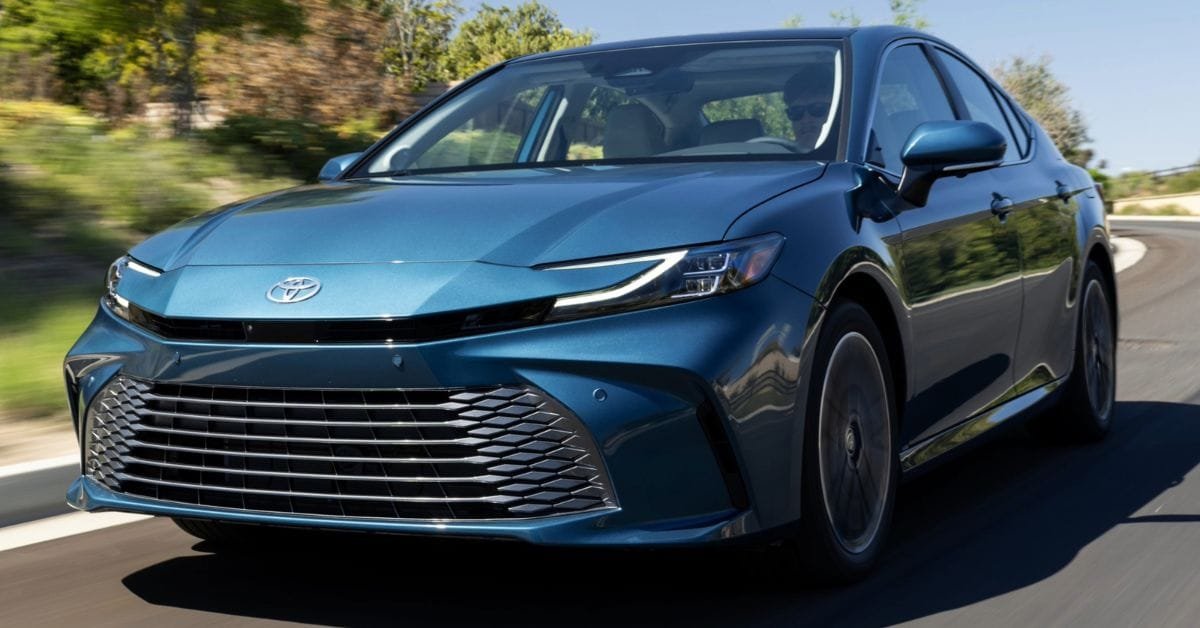
Toyota’s position at the top of Consumer Reports’ brand rankings is not a new development. The automaker has consistently occupied the upper tier of reliability studies for the better part of two decades, and its 2026 score of 66 reflects a philosophy of incremental, conservative engineering rather than rapid change for its own sake.
What drives Toyota’s strong scores
- Conservative redesign cycles: Toyota avoids full platform overhauls unless necessary, which means fewer early-production quality issues.
- Proven powertrains: Engines and transmissions in models like the Corolla and Camry have been refined over multiple generations, making failure unlikely in typical ownership windows.
- Hybrid leadership: Toyota’s hybrid systems have been in production since the first Prius in 1997. The accumulated engineering knowledge shows in reliability outcomes; no Toyota hybrid currently appears on Consumer Reports’ below-average list.
- Improving models: The 2026 Camry moved up to a reliability score of 74 after a difficult year following its 2025 redesign. The Tundra, which had struggled since its 2022 platform overhaul, has returned to average predicted reliability.
Where Toyota has stumbled in recent years, it has been largely at the hands of redesigns and new platforms. The Tacoma had below-average reliability last year, and the Tundra took several model years to iron out issues introduced with its all-new 2022 architecture. These are not outliers; they reflect a consistent pattern across the industry: first-year redesigns carry elevated risk regardless of the brand.
Toyota reliability by the numbers
| Model | Reliability Standout | 2026 Status |
|---|---|---|
| Corolla | Highest-ranked compact car (J.D. Power) | Ultra-consistent mechanicals |
| Camry | Reliability Score: 74 (CR) | Standard hybrid is high-performing |
| RAV4 | 3rd of 26 compact SUVs | Hybrid powertrain is highly proven |
| Tundra | Improved to “Average” | Early redesign issues resolved |
| Prius | Top-tier hybrid durability | No major issues reported |
Honda Reliability: Stronger Than It Gets Credit For
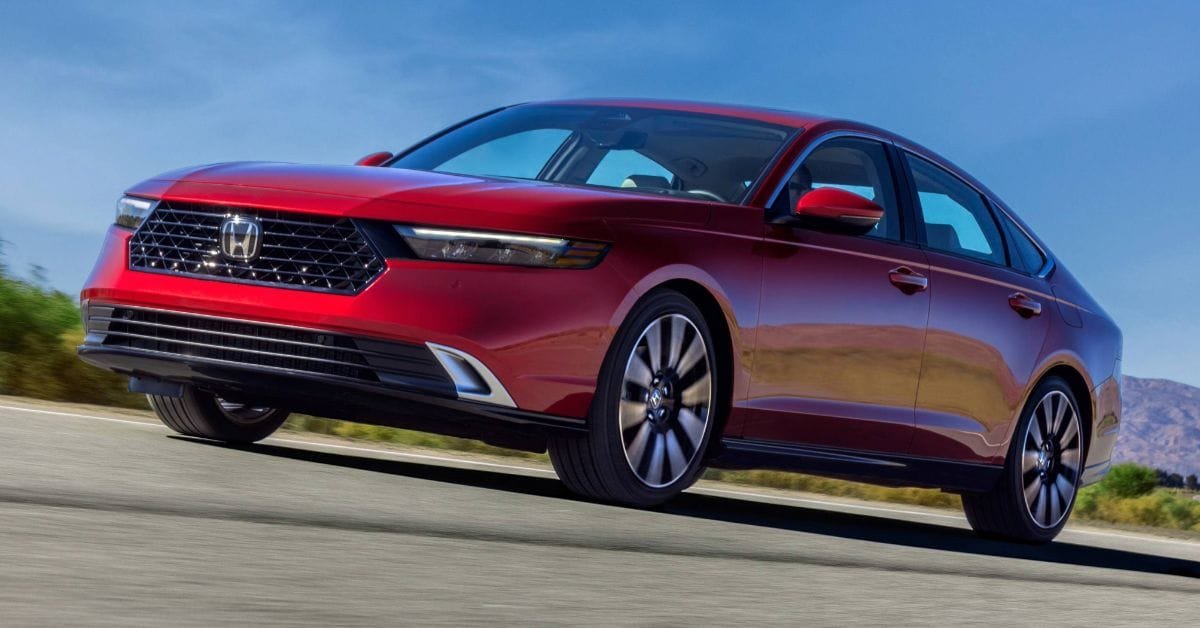
Honda’s fourth-place ranking in Consumer Reports can make it look like a step down from Toyota, but the raw numbers tell a more flattering story. A brand score of 59 still places Honda well ahead of most mainstream automakers, and on specific metrics such as annual repair cost, Honda actually edges out its rival.
Honda’s reliability strengths
- Lower average repair costs: Honda’s average annual repair cost sits at $428, slightly below Toyota’s $441. Both are far below the industry average of $652, but for owners who keep cars well past the warranty period, the difference compounds.
- Strong model-level results: The Honda Civic has long served as a benchmark for compact car dependability. Consumer Reports and Kelley Blue Book consistently rank the ninth and tenth generations highly, with many owners reporting 200,000-plus miles on routine maintenance alone.
- CR-V Hybrid reliability: RepairPal rates the Honda CR-V 4.5 out of 5.0 for reliability, placing it second among 26 compact SUVs. The hybrid variant sidesteps the turbocharged engine entirely, making it the cleaner long-term bet within Honda’s own lineup.
- Accord durability: The Honda Accord has tied the Toyota Camry in Consumer Reports’ latest survey with a reliability score of 74 in the midsize sedan category, closing the gap that historically favored Toyota in this segment.
Where Honda has faced criticism
Honda’s turbocharged engines, introduced broadly across its lineup from around 2016 onward, attracted criticism for oil dilution issues in colder climates during the 2017 and 2018 model years. The problem was serious enough to prompt warranty extensions and a class action lawsuit covering 2019 through 2023 CR-Vs. Honda has made iterative improvements since then, and the current generation of turbocharged models draws significantly fewer complaints, but this history is worth knowing if you are considering a used Honda from that era.
Honda’s infotainment systems have also generated complaints in newer models. Multiple early 2026 CR-V owners have reported a persistent bug preventing the system from reading incoming texts through CarPlay, an issue Honda had not resolved as of early 2026. Infotainment reliability is the single most problematic category industry-wide, according to J.D. Power’s 2026 study, measuring 56.7 problems per 100 vehicles across all brands. Honda is not alone in this struggle, but it is a legitimate concern for buyers who prioritize software reliability.
| Good to know: If oil dilution is a concern with Honda’s turbocharged engines, the CR-V Hybrid uses a 2.0-liter naturally aspirated engine paired with an electric motor, sidestepping the turbo entirely. This makes it one of the safer long-term bets in Honda’s current lineup. |
Head-to-Head: Key Model Comparisons
Brand-level averages only tell part of the story. The buying decision almost always comes down to specific models, and here the picture is more competitive than the headline rankings suggest.
Camry vs Accord: the midsize sedan comparison
The Toyota Camry and Honda Accord have traded positions in reliability rankings for years. In the latest Consumer Reports survey, both score 74 in the midsize sedan category, directly tied. The Camry carries the stronger historical track record and higher resale value, but the Accord is more engaging to drive and offers slightly lower annual repair costs. For pure long-term dependability, this is a genuine coin flip with the Camry holding a marginal edge based on decades of data.
RAV4 vs CR-V: the compact SUV comparison
This is where the 2026 data gets interesting. RepairPal scores the Honda CR-V at 4.5 out of 5.0 (second among compact SUVs, average annual repair cost of $407), while the Toyota RAV4 scores 4.0 out of 5.0 (third, $429 annually). On those metrics, the CR-V edges ahead.
However, the 2026 RAV4 is a ground-up redesign with new sheet metal, an all-hybrid powertrain (the gas-only option is discontinued), and a new infotainment system. Consumer Reports advises waiting until the second model year of a redesign before drawing reliability conclusions. The 2026 CR-V, by contrast, is a mild refresh of the sixth-generation platform introduced in 2023, meaning its reliability data is more established. For a deeper look at how these two models perform as hybrid daily drivers, see our guide to the best fuel-efficient hybrid SUVs.
Corolla vs Civic: the compact car comparison
The Toyota Corolla was the highest-ranked compact car in J.D. Power’s 2025 Vehicle Dependability Study. The Honda Civic matches it closely, with Consumer Reports and Kelley Blue Book consistently ranking the ninth and tenth generations highly. Both are legitimate choices for buyers prioritising long-term reliability. The Corolla has a slight edge in consistency across ownership periods; the Civic offers more driving engagement and a broader range of body styles.
| Segment | Toyota | Honda | Reliability Edge |
|---|---|---|---|
| Midsize Sedan | Camry (74) | Accord (74) | Tied |
| Compact SUV | RAV4 (4.0/5.0) | CR-V (4.5/5.0) | Honda (Current Gen) |
| Compact Car | Corolla (Best in class) | Civic (Highly rated) | Toyota (Marginal) |
| Pickup Truck | Tacoma / Tundra | Ridgeline | Toyota |
Hybrid Reliability: Toyota’s Home Turf
Hybrid reliability deserves its own section because it is increasingly where cars are sold. In 2025, approximately 47 percent of Toyotas sold in the United States were electrified vehicles. Honda has taken a more conservative approach to its electrified rollout, which means Toyota has a substantially longer track record to draw on.
Toyota’s hybrid systems have accumulated enormous real-world mileage across the Prius, RAV4 Hybrid, Camry Hybrid, Corolla Cross Hybrid, and Highlander Hybrid. Prius taxis in high-density cities regularly surpass 500,000 miles. This is not marketing; it is decades of production data. Consumer Reports notes that hybrid models across all brands currently show around 15 percent fewer reliability issues than their gasoline equivalents.
Honda’s hybrid lineup, including the CR-V Hybrid and Accord Hybrid, has performed well in recent reliability data, but neither carries the same volume of long-term ownership evidence that Toyota’s systems have accumulated. For buyers considering a hybrid purchase, Toyota holds a clear advantage in depth of data. That said, the Honda CR-V Hybrid earns a strong 4.5 out of 5.0 on RepairPal and remains one of the better options in the compact SUV segment; we included it in our fuel-efficient hybrid SUV guide for this reason.
| Industry note: Of approximately 30 hybrid models tracked by Consumer Reports in 2026, none appears on the below-average reliability list. Plug-in hybrids and electric vehicles are a different story: 13 of the 26 least reliable models in this year’s ranking are either a BEV or a PHEV. If reliability is the priority, the conventional hybrid configuration remains the safest powertrain choice regardless of brand. |
Long-Term Ownership Costs
Reliability is not just about whether a car breaks down; it is about what it costs to keep it running. On this measure, both Toyota and Honda outperform the mainstream automotive average by a wide margin, but the difference between the two brands is narrow enough that it should not be the deciding factor on its own.
| Cost Factor | Toyota | Honda | Industry Avg |
|---|---|---|---|
| Avg. Annual Repair Cost | $441 | $428 | $652 |
| 10-Year Maintenance (Est.) | $5,500 – $8,000+ | $5,470 – $8,000+ | Significantly Higher |
| Probability of Severe Repair | Low | Low | Moderate/High |
| Resale Value Retention | Exceptional | Strong | Average |
Toyota models typically command stronger resale values, particularly the Camry and RAV4. This matters if you plan to sell or trade in rather than run the vehicle until the wheels fall off. Honda models tend to cost marginally less to repair annually, which has a compounding effect over a ten-year ownership cycle. Neither advantage is large enough to override other factors such as model preference, trim selection, or the specific purchase price you negotiate.
For buyers who prioritise reliability in a used context, the Honda Civic stands out as one of the safest purchases in the compact segment. Our round-up of the most reliable second-hand manual cars ranks it first specifically because of its long-term dependability and the availability of well-maintained examples at sensible prices.
Which Brand Should You Choose?
The answer depends more on what you are buying than which badge is on the bonnet.
- Choose Toyota if: long-term dependability and the strongest hybrid track record are your primary concerns. Toyota’s hybrid systems in particular have the most accumulated real-world mileage in the industry, and its conservative engineering philosophy produces fewer surprises over extended ownership cycles. The Camry and Corolla are among the safest bets in their respective segments, regardless of the year.
- Choose Honda if: slightly lower annual repair costs and a more engaging driving experience matter to you, alongside strong reliability. The CR-V Hybrid is arguably the better current-generation compact SUV reliability bet compared to the redesigned 2026 RAV4, and the Accord matches the Camry on Consumer Reports’ latest reliability score. The Civic remains one of the best long-term compact car purchases available.
- If you are buying used: avoid Honda models with turbocharged 1.5-litre engines from the 2017 to 2020 model years if you live in a cold climate, due to documented oil dilution issues. Toyota used vehicles from the same era carry fewer documented systemic problems, giving the brand a clearer advantage in the used-car market.
- If you are buying new: be cautious about first-year redesigns from either brand. The 2026 RAV4 is a full redesign; the 2026 CR-V is a mild refresh of an established platform. On that basis alone, the CR-V carries less early-production risk in the 2026 model year.
Verdict
Toyota edges out Honda in brand-level reliability based on the most current Consumer Reports data, scoring 66 against Honda’s 59 in the 2026 annual survey. Toyota’s hybrid legacy, conservative engineering approach, and stronger resale value all reinforce this conclusion for buyers who plan to keep a vehicle for ten or more years.
Honda, however, is not a reliability risk. It sits fourth among all brands in Consumer Reports’ rankings, its annual repair costs run slightly lower than Toyota’s, and specific models such as the CR-V Hybrid and Accord match or exceed their Toyota counterparts on current data. The brand’s turbocharged engine issues from the 2017 to 2020 period are well documented but largely historical.
For most buyers, the choice between Toyota and Honda should ultimately come down to the specific model, the model year, and whether it is a redesign year or a proven generation. Both brands will reliably outlast most of the competition.
| Bottom line: Toyota wins on brand reliability rankings and hybrid track record. Honda wins on annual repair cost and specific model-level scores in the current model year. Either brand is a significantly safer long-term bet than the industry average. |