
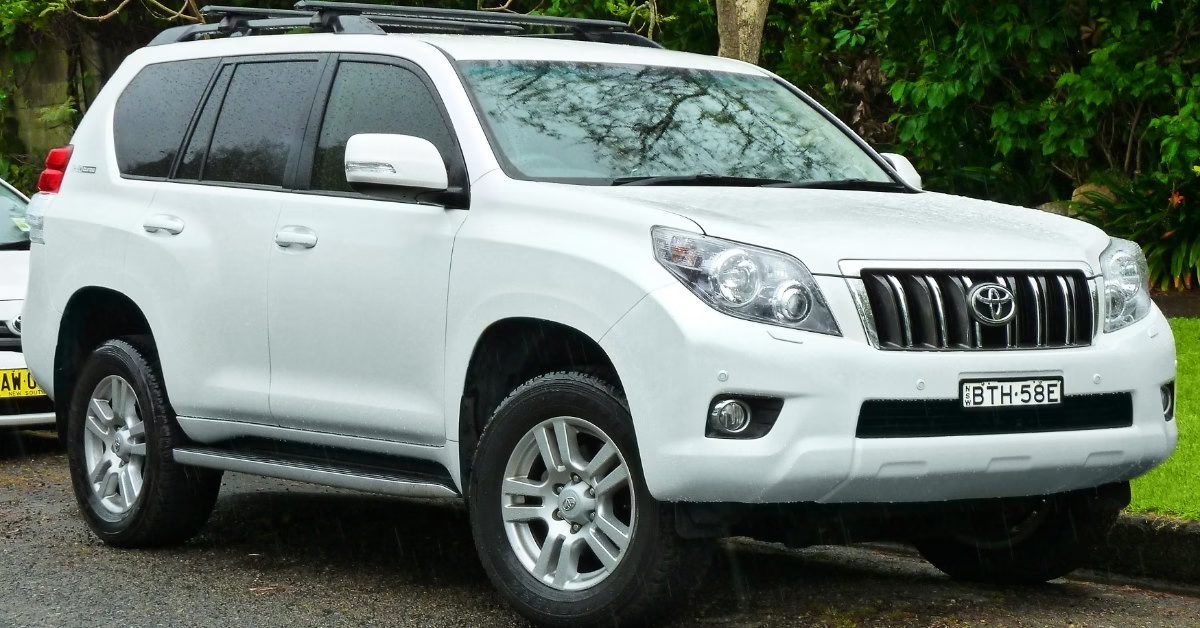
Walk through any car yard in Nairobi, Mombasa or Kampala and the same badges keep coming back: Prado, Hilux, Fortuner, Hiace. A huge share of them run on one of a handful of Toyota diesel engines, and the code stamped on that engine tells you more about the car’s future than the number on the odometer. A 1KD and a 1GD can sit in two Prados that look almost identical from the kerb, yet they age, fail and cost money in completely different ways. This guide breaks down the KD and GD families, the bigger Land Cruiser diesels, and how to work out which one you’re actually buying.
Table of Contents
How to Read a Toyota Diesel Engine Code
Toyota’s engine names look like alphabet soup, but they follow a pattern. Once you can read one, a seller’s listing, an auction sheet or a logbook entry starts telling you useful things before you even open the bonnet.
What a Code Like 1KD-FTV Actually Means
Read the 1KD-FTV from left to right. The letters KD name the engine family, and the number in front marks the variant within that family, which is why the 3.0-litre came first as the 1KD and the 2.5-litre followed as the 2KD. The numbering doesn’t track size, though. In the newer GD family, the bigger 2.8-litre is the 1GD and the smaller 2.4-litre is the 2GD, so never assume a 1 means smaller or older without checking.
The letters after the dash describe the hardware. On Toyota’s modern diesels, F points to a four-valve twin-cam head, T means turbocharged, and V means common-rail direct injection. An engine ending in FTV is a turbocharged, four-valve, common-rail diesel, and that covers every KD and GD engine you’ll find in a used Prado or Hilux.
Why D-4D on the Badge Tells You Less Than You Think
D-4D is Toyota’s name for its common-rail diesel technology, short for Direct injection 4-stroke common-rail Diesel. Toyota’s first common-rail system went into the 1CD-FTV in 1999, according to Toyota’s own engine development timeline, and the badge has since been used on everything from small passenger-car diesels to the V8 in the Land Cruiser. That’s the catch. When a listing says Toyota D-4D engine, it hasn’t told you which engine. A D-4D Prado could be running a 1KD from 2005 or a 1GD from 2019, and those two cars need very different conversations with a mechanic.
The Main Engines at a Glance
Before going engine by engine, here is the short version. The years are approximate, because Toyota phased engines in and out at different times in different markets.
| Engine | Size and layout | Main era | Where you’ll find it |
|---|---|---|---|
| 1KD-FTV | 3.0-litre turbo four | 2000 to about 2015 | Prado 90, 120 and 150, Hilux (7th gen), Fortuner (1st gen), Hiace |
| 2KD-FTV | 2.5-litre turbo four | 2001 to about 2015, later in some markets | Hilux, Hiace, Innova, Fortuner in some markets |
| 1GD-FTV | 2.8-litre turbo four | 2015 to today | Hilux, Fortuner, Prado 150 and 250, Land Cruiser 70 |
| 2GD-FTV | 2.4-litre turbo four | 2015 to today | Hilux, Fortuner, Innova in some markets |
| 1HZ | 4.2-litre non-turbo six | 1990 onwards | Land Cruiser 70, 80 and 100 in some markets |
| 1VD-FTV | 4.5-litre turbo V8 | 2007 onwards | Land Cruiser 200, Land Cruiser 70 |
| F33A-FTV | 3.3-litre twin-turbo V6 | 2021 onwards | Land Cruiser 300 |
The KD Family: Toyota’s First Common-Rail Workhorses
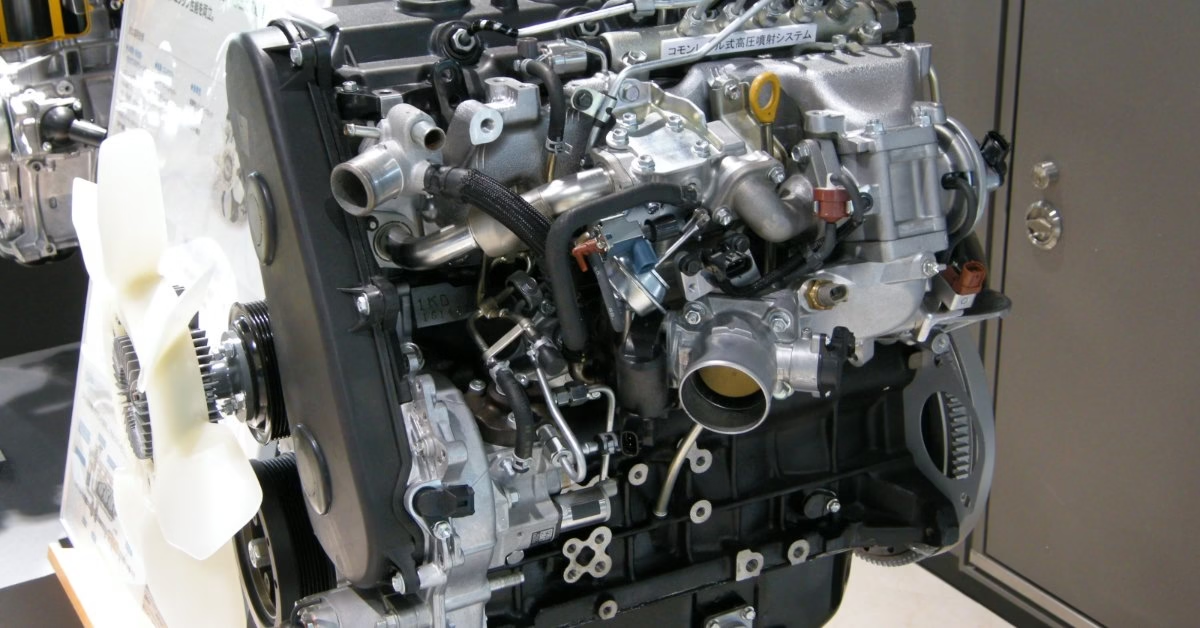
Toyota developed the KD series in August 2000, and for the next decade and a half the Toyota KD engine was the default diesel in its mid-size 4x4s, pickups and vans. If you’re shopping for a Prado or Hilux built before about 2016, this is almost certainly the family you’re dealing with. Toyota even launched a combustion design it describes as a world first on the 1KD, which tells you how much it was betting on the engine at the time.
1KD-FTV: The 3.0-Litre Everyone Knows
The 1KD-FTV displaces 2,982cc and first appeared in the 90-series Land Cruiser Prado in 2000. From there it spread into the 120 and 150 Prado, the seventh-generation Hilux, the first-generation Fortuner, the Hiace and the Japanese-market Hilux Surf. In Kenya it’s simply the 3.0 diesel, and it’s the engine most buyers mean when they ask whether a used Prado is a good idea.
Output varied a lot by market and year. A European-spec Hilux from the late 2000s was rated at about 126 kW (171 PS), while earlier and some emerging-market versions made noticeably less. What stayed constant was the character: strong low-down pull, easy cruising, and a willingness to haul a loaded Prado up the Kikuyu escarpment without much complaint.
One detail matters if you’re shopping for a later Prado. The 1KD hung on longer in some African markets than it did in Japan. South Africa’s Prado, for example, kept the 3.0-litre until Toyota moved it to the 2.8 in late 2020, so a 2018 or 2019 Prado from that market can still be a KD car.
2KD-FTV: The Smaller, Simpler Sibling
The 2KD-FTV followed with 2,494cc. It shares the 1KD’s basic architecture, with the main difference coming down to bore and stroke, and it became the working engine of the family. You’ll find it in the Hilux, the Innova, the Fortuner in some markets and, above all, the Hiace, which means a large share of the vans working as matatus across East Africa run one.
Outputs ranged from about 75 kW in basic Hiace versions to roughly 106 kW in later Hilux tunes, and many versions used a simpler wastegate turbocharger instead of the 1KD’s variable-geometry unit. That simplicity is part of why fleet operators like it. It’s slower and less refined than a 1KD, but there’s less hardware to go wrong, and nearly every roadside mechanic has had one apart.
Where the KD Family Shows Its Age
Most KD engines on African roads are now well over a decade old, and plenty are closer to twenty. That age, combined with patchy fuel quality and stretched service intervals, produces more of the KD horror stories than any single design flaw does.
The complaints mechanics raise most often centre on the fuel system: worn injectors, leaking injector seals that let combustion gas and soot build up around the injector, and clogged EGR valves. On a neglected 1KD, an injector fault can escalate into piston damage, which turns a relatively cheap preventive job into an engine rebuild. That’s why, on any KD car, service history and injector records matter more than the mileage. We’re breaking down the 1KD’s specific failure points, and how to spot them before you buy, in a dedicated follow-up to this guide.

The GD Family: Toyota’s Current Diesel Generation
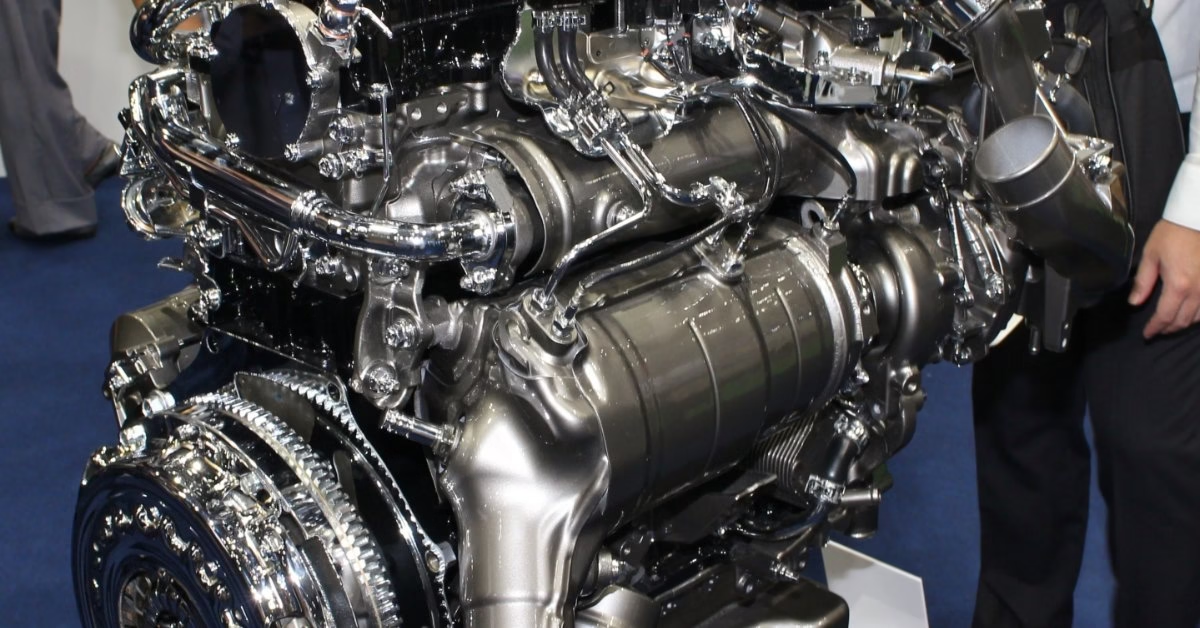
In June 2015, Toyota announced the GD series as the replacement for the KD engines, with the older family to be phased out gradually. The headline claims were big: a maximum thermal efficiency of 44 percent, 15 percent better fuel efficiency than the KD, and 25 percent more maximum torque despite the smaller displacement, according to Toyota’s launch announcement. Every Toyota GD engine is a turbocharged four-cylinder, and the two you’ll see most often are the 2.8-litre 1GD and the 2.4-litre 2GD. Here’s how they compared at launch.
| 1GD-FTV | 2GD-FTV | |
|---|---|---|
| Displacement | 2,754cc | 2,393cc |
| Bore x stroke | 92 x 103.6mm | 92 x 90mm |
| Compression ratio | 15.6:1 | 15.6:1 |
| Maximum output | 130 kW (177 PS) at 3,400 rpm | 110 kW (150 PS) at 3,400 rpm |
| Maximum torque | 450 Nm at 1,600 to 2,400 rpm | 400 Nm at 1,600 to 2,000 rpm |
| Torque at 1,200 rpm | 370 Nm | 330 Nm |
1GD-FTV: The 2.8-Litre That Replaced the 3.0
The 1GD-FTV went on sale in May 2015 in the new Hilux launched in Thailand, and a month later in the updated Prado in Japan. It has since become Toyota’s core 4×4 diesel. It powers later 150-series Prados, the Fortuner, the 250-series Land Cruiser and, since 2023, the Land Cruiser 70 as well, which Toyota rates at 150 kW and 500 Nm in Japanese spec. Even the all-new Hilux that Toyota launched in Japan in May 2026 still uses it.
The number that matters most to owners isn’t peak power. It’s that the 1GD makes its torque low and holds it across a wide band, so a loaded Prado or Hilux feels more relaxed than the older 3.0 despite the smaller engine. We covered the current 250-series model, and its version of this engine, in our Land Cruiser Prado specs and pricing guide.
2GD-FTV: The Efficiency Pick
The 2GD-FTV uses the same 92mm bore as its bigger sibling but a shorter stroke, giving 2,393cc. At launch Toyota rated it at 110 kW and 400 Nm, which is more torque than the 2KD it replaced ever made. It sits in lower-spec Hilux and Fortuner models and in the Innova in some markets, and it’s the engine fleets tend to choose when a vehicle spends its life on tarmac with moderate loads.
If you tow heavy or spend long days off-road, the 1GD’s extra torque earns its keep. If you don’t, the 2GD is a sensible engine that rarely gets the attention it deserves.
The DPF Problem Every GD Buyer Should Know About
The GD engines run a diesel particulate filter, or DPF, which traps soot and periodically burns it off in a process called regeneration. Regeneration needs sustained heat, and that’s where early GD cars ran into trouble. In Australia, the Federal Court found that Hilux, Prado and Fortuner models with the 1GD or 2GD engine acquired between October 2015 and April 2020 were fitted with a defective DPF system, as set out on Toyota Australia’s DPF information page. Toyota also made a manual DPF regeneration switch standard on those models from June 2018.
The conditions behind the complaints are easy to picture in Nairobi: short trips, crawling traffic and long idling are exactly where a DPF struggles to clean itself. When you inspect a GD car, check whether it has the manual regeneration switch, watch for DPF warnings on the dash, and treat white smoke from a warm engine as a reason to walk away or get a proper diagnosis first.
Japanese Imports and the Urea Tank
One more GD detail catches out importers. When Toyota launched the GD family, it said its urea SCR system, which cuts nitrogen oxide emissions using a urea solution, applied to European and Japanese specifications. Japan’s current 250-series Land Cruiser, for instance, lists both a particulate system and SCR on its 2.8 diesel. A GD Prado or Hilux imported from Japan may therefore carry a urea tank that needs topping up, which a car sold new locally may not have. Before you pay, ask the dealer whether the car has SCR, where the fluid is sold near you, and what the car does if it runs dry.

The Land Cruiser Diesels: 1HZ, 1VD and the V6

Above the Prado and Hilux sits a separate line of bigger diesels built for the full-size Land Cruiser and the 70 Series workhorse. You’ll see them less often on the used market and they cost more, but they have a loyal following among safari operators, NGOs and mining fleets for good reason.
1HZ: The Old-School Straight-Six
Toyota developed the 1HZ, a 4.2-litre inline six, in 1990. It’s naturally aspirated and uses indirect injection with a mechanical pump, which makes it slow by modern standards and thirsty for the power it makes. That same design is why it earned its reputation in remote work. There’s very little electronics to fail, it’s more tolerant of poor fuel than a common-rail engine, and a competent mechanic can keep one running far from a dealer. Its direct-injection cousin, the 1HD, arrived in 1995 for buyers who wanted more power from the same basic six.
1VD-FTV: Toyota’s First V8 Diesel
In January 2007, Toyota introduced the 1VD-FTV as its first V8 diesel. The 4.5-litre engine went into the 200-series Land Cruiser in twin-turbo form and into the 70 Series too, where it became the engine most associated with the modern Land Cruiser pickup and Troop Carrier. Even after Toyota added the 1GD to the 70 Series in 2023, some markets kept the V8 on sale alongside it, mostly for buyers who value its smoothness and the way it tows.
F33A-FTV: The V6 That Replaced the V8

When the 300-series Land Cruiser arrived in 2021, Toyota dropped the V8 diesel for a new 3.3-litre twin-turbo V6, the F33A-FTV. Toyota quoted about 227 kW and 700 Nm at launch, comfortably more than the outgoing V8, paired with a 10-speed automatic. It’s still too new and too expensive to show up much on the used market here, but it’s where the full-size Land Cruiser line is heading.
So, What Is the Best Toyota Diesel Engine?
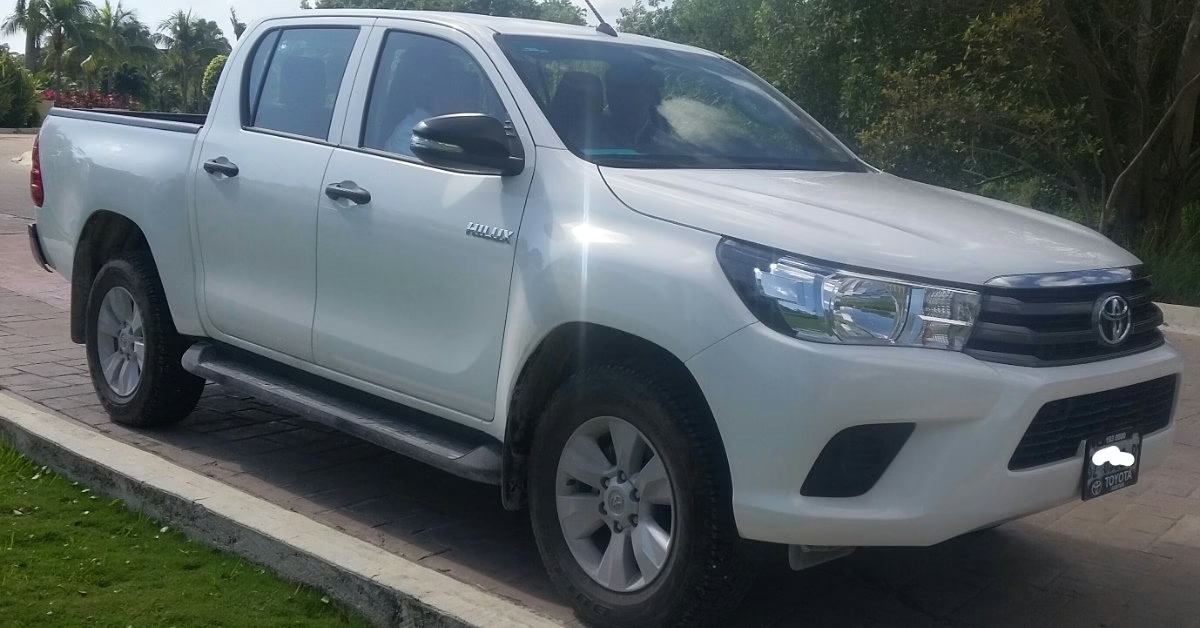
There’s no single best Toyota diesel engine, and anyone who gives you one answer without asking how you drive is guessing. The right choice depends on your budget, your roads and how much maintenance you can realistically keep up with.
If You’re Buying on a Tight Budget
A well-kept KD car is still the value play. A 1KD Prado or 2KD Hilux costs far less to buy than a GD equivalent, parts are everywhere, and almost every mechanic in the country knows the engine. The trade-off is age. You’re buying an engine that’s probably past its first set of injectors, so budget for fuel system work and only buy one with records you can verify.
If You Cover Long Distances or Tow
This is where the 1GD shines. Its low-speed torque and better efficiency make long highway runs easier, and regular sustained driving is exactly what keeps its DPF healthy. If your week includes the Nairobi to Mombasa road or loaded trips upcountry, a 1GD Prado, Fortuner or Hilux is hard to beat.
If Your Car Lives in City Traffic
Be honest about how you’ll use it. If the car will spend most of its life inching between Westlands and the CBD, a GD engine’s DPF won’t get the heat it needs to clean itself on those trips alone. That doesn’t rule a GD out, but it does mean building regular highway runs into your routine and paying attention to regeneration warnings instead of ignoring them.
If You Work Far From Help
For remote, rough work where the nearest dealer is a day away, the older Land Cruiser diesels still make a strong case. A 1HZ is slow, but it’s simple. A 1VD gives you far more power while keeping the Land Cruiser’s toughness. Both cost more to buy, and both reward owners who care more about getting home than getting there fast.
How to Check Which Engine a Toyota Actually Has
Sellers sometimes describe engines loosely, and engine swaps aren’t rare on older 4x4s. Two quick checks will tell you what you’re really looking at.
Read the Model Code
Every Toyota carries a model code on its compliance plate and on its Japanese export certificate, and the first letters point straight to the engine. On the vehicles in this guide, codes starting with KDJ, KUN or KDH point to a KD engine, so a KDJ150 is a 1KD Prado and a KUN26 is a 1KD Hilux. Codes starting with GDJ or GUN point to a GD engine, which makes a GDJ150 a 1GD Prado. HZJ points to the 1HZ, and VDJ points to the 1VD. If the code on the paperwork doesn’t match what the seller told you, stop and ask why.
Then Check the Engine Itself
Paperwork can be wrong, so confirm the engine code stamped on the block itself. It’s usually there, though you may need a torch and a rag to find it under years of grime, and a good mechanic will know where to look on each engine. Matching the block code to the model code is the simplest way to catch a swapped engine before it becomes your problem.
Frequently Asked Questions (FAQ)
What is the most reliable Toyota diesel engine?
It depends on age and use more than design. The 1HZ has the strongest reputation for simplicity, the 1GD is the strongest modern all-rounder, and a well-maintained 2KD is one of the toughest budget options. On any used engine, the service history matters more than the code.
What is the difference between the Toyota KD and GD engines?
The KD family, made up of the 1KD and 2KD, came first, from 2000. The GD family, the 1GD and 2GD, replaced it from 2015 with smaller displacement, more torque, better fuel efficiency and more emissions hardware, including a diesel particulate filter.
Do Toyota 1GD engines have DPF problems?
Early ones did. In Australia, a court found that Hilux, Prado and Fortuner models with the 1GD or 2GD engine acquired between October 2015 and April 2020 had a defective DPF system, and Toyota made a manual regeneration switch standard from June 2018. Regular longer drives help any DPF stay clean.
What does D-4D mean on a Toyota?
D-4D is Toyota’s name for its common-rail diesel injection technology. It appears on many different engines, from the 1KD and 2KD to the GD family and the 1VD V8, so the badge alone doesn’t tell you which engine a car has.
Is the 1KD better than the 2KD?
The 1KD is stronger and more refined, which suits a heavy Prado or a loaded Hilux. The 2KD is slower but simpler, which is why it’s popular in vans and fleets. Condition and service history matter more than which of the two you pick.
Know the Code Before You Pay
The badge on the tailgate tells you what a Toyota is. The engine code tells you what owning it will be like. A KD car asks you to dig into its fuel system history. A GD car asks you to think about how you drive and whether the DPF will get the runs it needs. The big Land Cruiser diesels ask for a bigger budget and repay it with toughness. Learn the codes in this guide, check them against the paperwork and the block, and you’ll walk into any yard knowing more than most of the sellers there. Over the coming weeks we’ll go deeper into each of these engines, starting with the 1KD.