
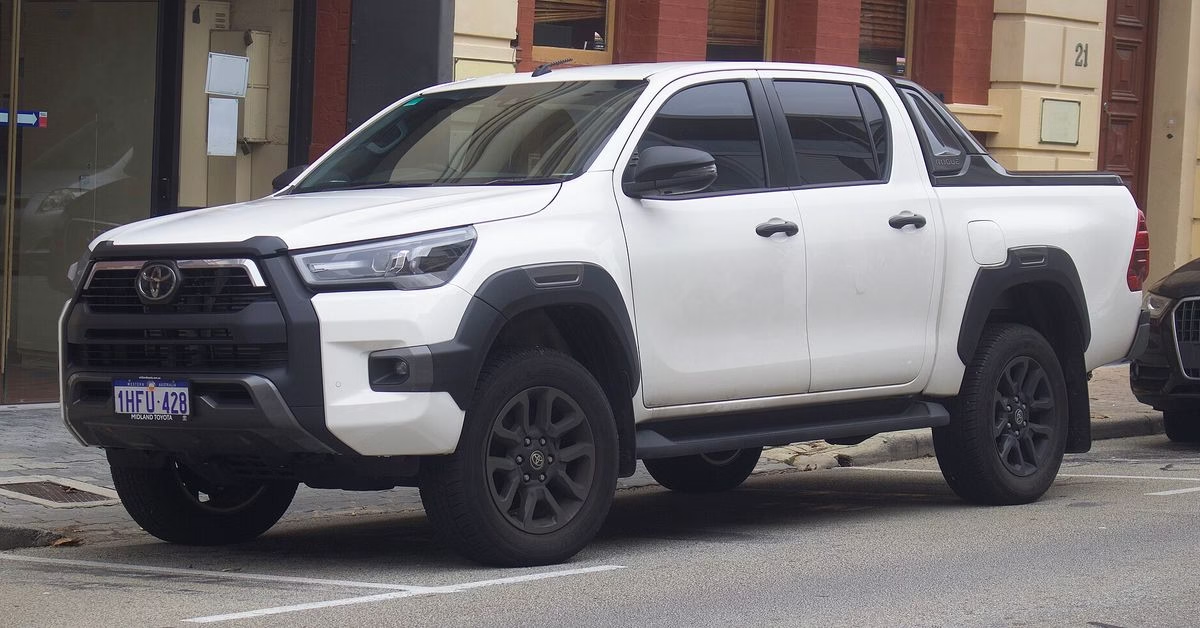
Few vehicles get worked as hard as a Hilux, and few hold their value as stubbornly. That toughness is real, but it also means plenty of used trucks have spent their lives overloaded, under-serviced or both. The two generations you’ll meet most often, the 2004 to 2015 Vigo and the Revo that replaced it, have different engines, different emissions hardware and different weak spots, and where the truck was first sold changes the picture again. This guide covers the real Hilux Revo problems alongside the Vigo faults still turning up in older trucks, so you know what to check before you hand over the money.
Table of Contents
Vigo or Revo? Which Hilux You’re Looking At

Two generations make up almost the entire used Hilux market. Toyota revealed an all-new ninth generation in November 2025, but it’s far too new to matter to used buyers yet. Before you judge a truck’s condition, work out which of the two older generations it is and which engine it carries, because that decides which problems you should be hunting for.
The Vigo: 2004 to 2015
Production of the seventh-generation Hilux began in Thailand in August 2004, and the Thai-built truck carried the Vigo name. It was facelifted in 2008 and again in 2011, and Thailand got a further update, the Vigo Champ, in August 2012. The diesels were the 2.5-litre 2KD and the 3.0-litre 1KD, with 2.7-litre four-cylinder and 4.0-litre V6 petrol engines alongside them. South African and European trucks of this generation were built in Durban rather than Thailand.
The Revo: 2015 Onwards
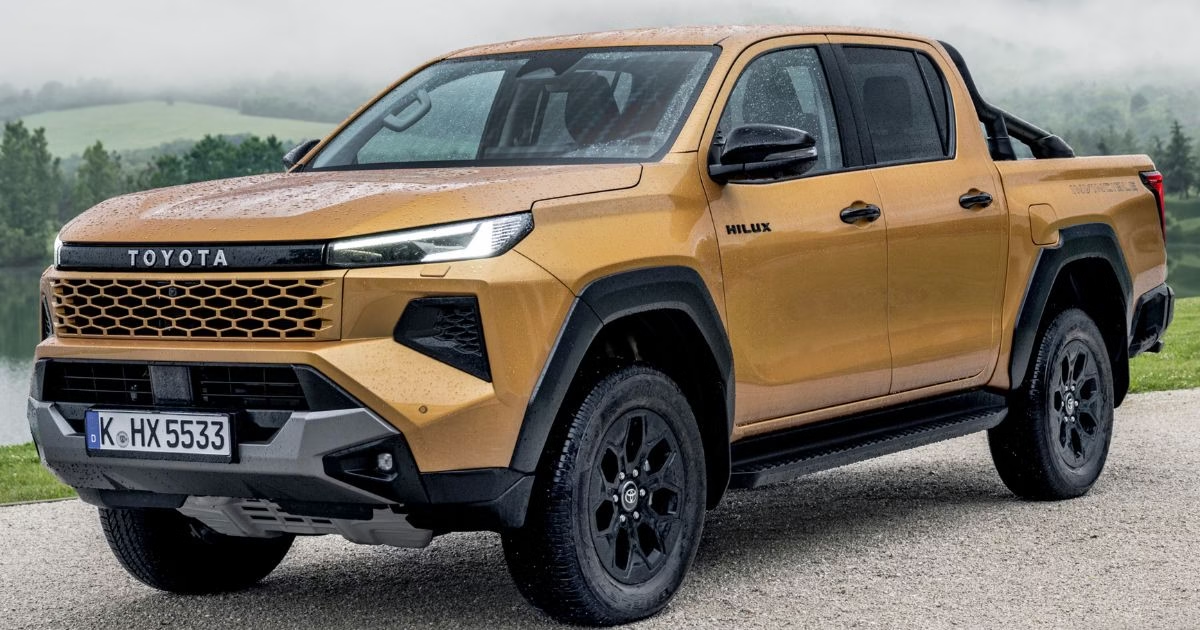
The eighth generation was unveiled in Bangkok and Sydney on 21 May 2015 and sold as the Hilux Revo in Thailand and several other Asian markets. Its diesels are the 2.4-litre 2GD and the 2.8-litre 1GD. The biggest update came in August 2020, when Toyota Australia’s announcement listed a 1GD rated at 150 kW and up to 500 Nm, a larger ball-bearing turbo, a new higher-pressure fuel system, retuned suspension with longer rear leaf springs, and a 3,500 kg braked towing rating for 4×4 models.
Read the Model Code
The model code on the paperwork narrows things down fast. On the Vigo, KUN means a KD diesel, TGN the petrol four and GGN the V6. The diesel codes come in two groups, KUN15, 25 and 35 and KUN16, 26 and 36, which as a rule split the 2.5 from the 3.0. On the Revo, GUN means a GD diesel, and the Japanese-market GUN125 is a 2.4 2GD. Treat the code as a strong hint rather than proof, and match it to the engine number on the block. While you’re at it, check for a transfer case lever or 4WD switch, because 2WD Hilux models often wear the same raised ride height and styling as the 4x4s.
Where Your Hilux Came From
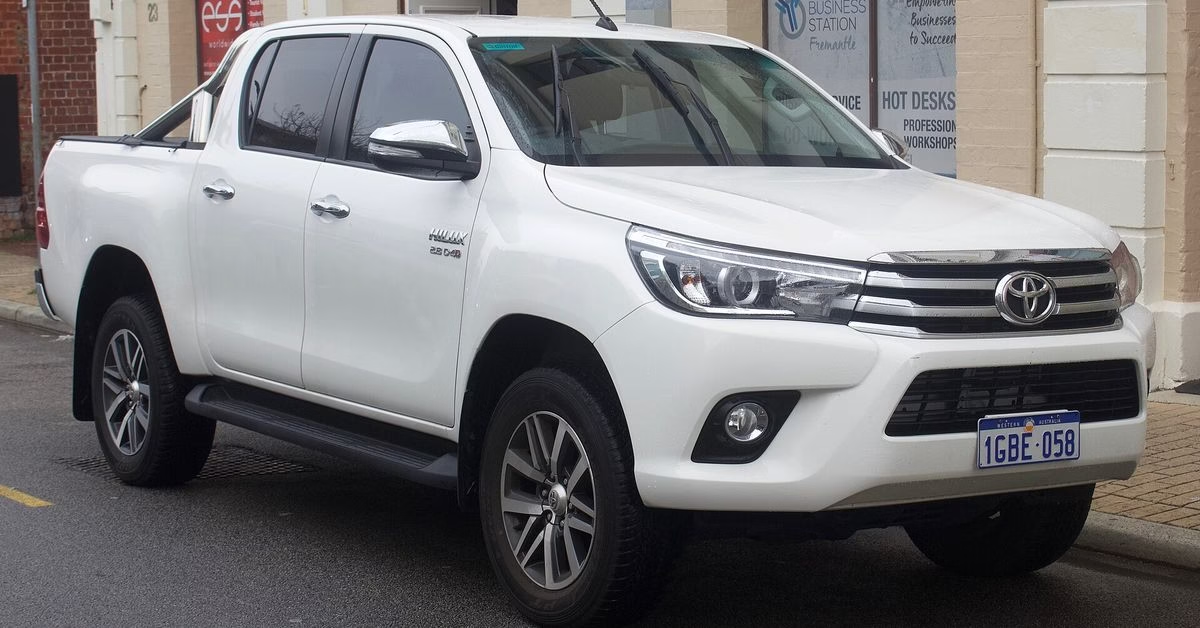
Used Hilux trucks that change hands outside their home market usually started life in Japan, Australia or South Africa, or came out of the Thai factory that builds most of the world’s supply. Each source brings its own mix of engines, equipment and known issues.
Japan: No Vigo, and a 2.4-Only Revo
Toyota stopped selling the Hilux in Japan in 2004 and only brought it back in September 2017, so the Vigo was never sold new there. If a Vigo is offered as a Japanese import, ask where it was actually first registered. The Revo that returned to Japan came with the 2.4-litre 2GD and a six-speed automatic, under the GUN125 code. Japanese-spec GD engines can carry urea SCR on top of the particulate filter, so look for a urea filler and confirm the system works.
Australia: Recalls and the DPF Window
Australian Vigos have one recall worth checking. In 2010, Toyota recalled 116,507 four-wheel-drive Hilux trucks built between January 2005 and February 2010 because the rear tailshaft centre bearing support brackets could give way under hard use on rough roads. A truck from those years should have had the work done.
Australian Revos with a 1GD or 2GD supplied between October 2015 and April 2020 fall inside the DPF case that went against Toyota in the Federal Court, and only the fix introduced from May 2020 solved the problem. Ask for proof the fix was applied, and read up on what actually went wrong with the filter before you inspect one.
South Africa: Built in Durban
South Africa builds its own Hilux. The Revo went on sale there in March 2016 with the 2.4 and 2.8 GD-6 diesels, and the 2.8 rose from 130 kW and 450 Nm to 150 kW and 500 Nm in the 2020 update. Not every South African truck has a DPF, so check rather than assume. A later 48V mild-hybrid 2.8 is too new to show up much on the used market.
Import Rules Narrow the Field
Import age limits decide which of these you’ll find. In Kenya, for example, only right-hand-drive vehicles first registered from 2019 onwards can be cleared from 1 January 2026, so every freshly imported Hilux there is now a Revo: a 2.4 from Japan, a 2.4 or 2.8 from South Africa, or an Australian truck that may still fall inside the DPF window if it was built before mid-2020. Vigos are still everywhere, but they’re trucks already on local roads, which makes their local service history the thing to dig into.
Engine Problems in Brief
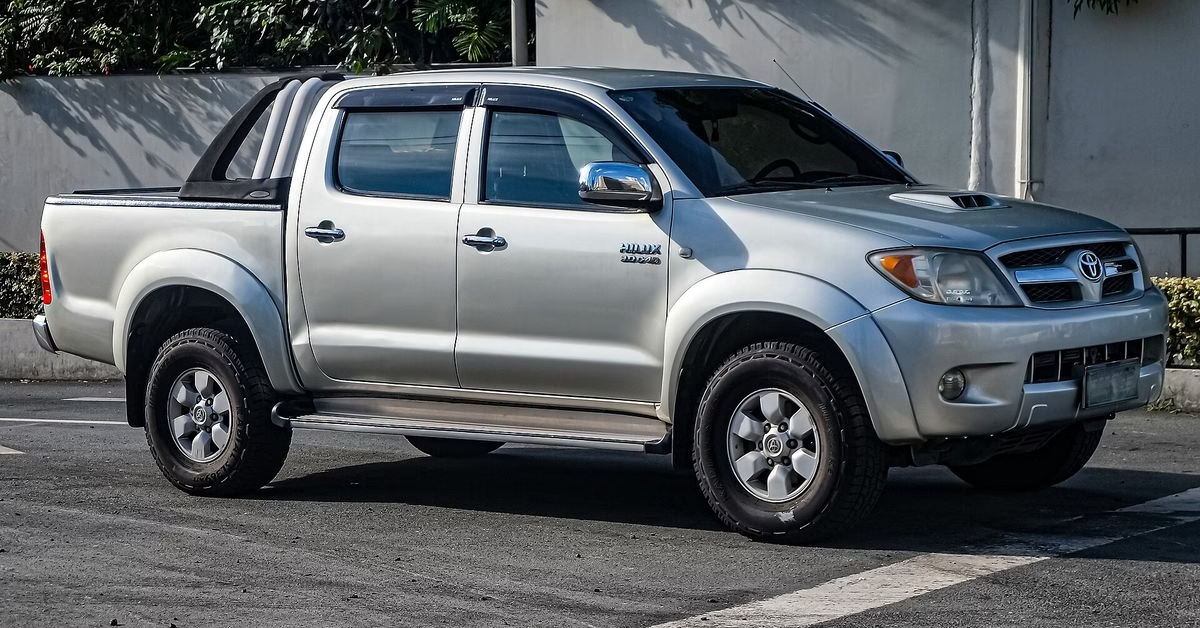
Most expensive Hilux surprises start under the bonnet. The four diesels have different weak spots, so the engine code tells you which receipts to ask for.
Vigo Diesels: 2KD and 1KD
Both KD engines share the same main weaknesses: worn injectors, leaking injector seat washers and, on neglected engines, cracked pistons. The 3.0 also has fragile turbo actuators, and many owners and mechanics rate the simpler 2.5 as the tougher engine, partly because it works its parts less hard. Both use a timing belt that has to be changed on schedule. European Vigos from around 2012 gained a DPF, but most trucks in Africa and Asia run without one.
Revo Diesels: 2GD and 1GD
The GD engines use a timing chain and make more torque on less fuel, but they bring emissions hardware the KDs never had. Beyond the DPF itself, the small fifth injector that feeds fuel into the exhaust to help the filter regenerate failed often enough on pre-2020 trucks that Toyota redesigned it. EGR cooler leaks show up at higher mileage as unexplained coolant loss, some early trucks develop a timing chain rattle on cold starts as the guides wear, and Toyota issued a service bulletin for camshaft and rocker arm wear on the 1GD. A DPF-equipped GD also needs low-ash oil and low-sulphur diesel.
Dust Past the Air Filter
Early Revos had airbox seals that could let fine dust slip past the filter. Once it coats the airflow sensor, the engine computer gets bad readings, and the result is rough running or limp mode. Mechanics have also traced trouble to an airbox lid that distorts and stops sealing, and over time unfiltered dust can wear the turbo and piston rings. On a truck that has lived on dirt roads, check that the lid seats cleanly and look for dust on the clean side of the filter.
The Petrol Hilux
Petrol trucks avoid the diesel’s injector and DPF worries, but they’re thirstier and much less common. The 2.7-litre four is the one you’re most likely to find, and its gaskets tend to start leaking somewhere past 150,000 km, so look for oil around the engine before you buy.
Beyond the Engine: Chassis, Driveline and Body

A Hilux is a working truck, and the damage that work does often sits underneath rather than under the bonnet. These are the checks that catch a hard life.
Chassis Damage From Overloading
A bent chassis isn’t a Hilux-specific fault, and any leaf-sprung pickup can suffer one. Specialists who repair them point to overloading in most cases, with heavy towball weights, long trays, airbag suspension that point-loads the chassis and fast driving over dips and corrugations making it worse. Look along the chassis rails behind the cab for kinks, cracks or fresh paint, and check whether the gap between the cab and the load bed is even from top to bottom.
Front Diff, Tailshaft and 4WD
The front differential is the Vigo’s weak spot in the driveline. Toyota fitted several different types, so a rebuild needs the right parts for that truck. On a test drive, engage 4WD, make sure it goes in and out cleanly, and listen for whining or clunking from the front on and off the throttle. On older Australian 4x4s, confirm the tailshaft bracket recall was done.
Springs, Bushes and the Automatic
Rear leaf springs sag on trucks that have carried heavy loads, and potholed roads wear out bushes and shocks. A truck that sits low at the back when empty has done a lot of work. The six-speed automatic in the Revo can run hot when towing or driving in sand, because the factory cooler is on the small side, and old fluid can make it slip. Check the fluid’s colour and smell, and on a manual, test the clutch for slip under load.
Rust, Paint and Water
Trucks that have lived near the coast can rust on the chassis, the load bin and the underbody, so get underneath with a torch. Revo paint is thin enough to wear through on high-contact areas like the sills. Early 2015 and 2016 Revos also had door drain plugs that were missing or sealed shut at the factory, letting water collect in the doors after rain or river crossings, so lift the door seals and look for rust along the bottom edges.

Which Hilux Should You Buy?
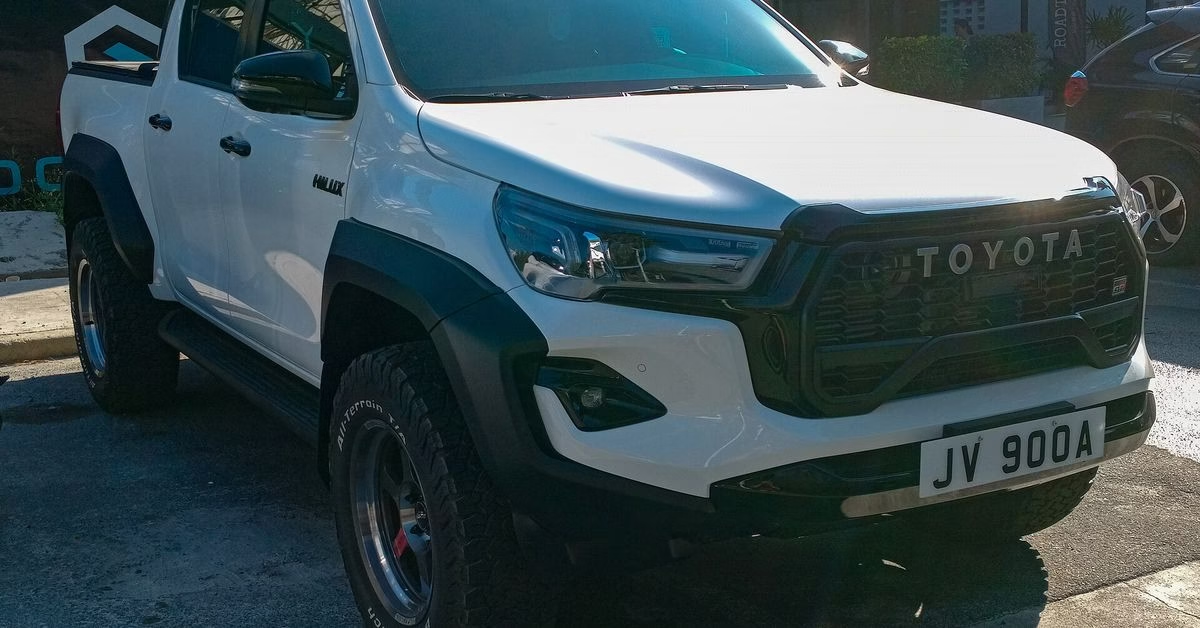
So, is the Toyota Hilux reliable? Yes, by the standards of its class, and its known faults have known fixes. If you want more comfort and full-time 4WD from the same engines, the Prado 150 shares the 1KD and 1GD with these trucks. The Hilux Vigo vs Revo choice comes down to budget, the work you’ll give it and how much emissions hardware you’re willing to look after.
On a Tight Budget: a Well-Kept Vigo
A Vigo with full injector and timing belt records is the value buy, and most African and Asian examples have no DPF to look after. The 2.5 suits lighter work and tends to last, while the 3.0 is the one to have for heavy loads and long hills. Either way, price in fuel system work if the records are thin, and check the front diff and chassis carefully, because these trucks have usually worked hard.
For Work and Towing: a 2020-On 2.8
A post-2020 1GD has the 150 kW tune, the revised fuel system and turbo, longer rear springs and the DPF fix built in. It costs more, but it’s the Hilux that was improved most where working owners need it. Long highway runs also suit a DPF, so the engine’s weak point matters least for the owners who use its pull most.
For Lighter Duty: the 2.4
For moderate loads on mostly sealed roads, a 2GD is enough truck and usually cheaper than a 2.8. It shares the same DPF story, so the same questions apply, and a truck that spends most of its life in town traffic needs regular longer runs to keep the filter healthy.
Before You Pay: A Quick Checklist
Take this list to any used Hilux inspection, and bring a mechanic who knows Toyota diesels if you can.
- The model code, engine number and country of first registration match the truck and the seller’s story.
- Records cover injectors and the timing belt on a Vigo, or DPF history and oil grade on a Revo.
- An Australian Revo from 2015 to 2020 has proof of the DPF fix, and an Australian 2005 to 2010 4×4 has had the tailshaft recall.
- A diagnostic scan shows no stored engine or DPF codes.
- The chassis rails behind the cab are straight, uncracked and free of fresh paint.
- 4WD engages and disengages cleanly, with no noise from the front diff.
- The rear springs aren’t sagging, and bushes and shocks are in good order.
- The airbox lid seals cleanly and the clean side of the filter is free of dust.
- The underbody, load bin and door bottoms are free of serious rust.

Frequently Asked Questions (FAQ)
What goes wrong most often on a Hilux Revo?
The DPF system, especially on Australian trucks from 2015 to 2020, along with the fifth injector that helps the filter regenerate. EGR cooler leaks, early timing chain rattle and dust getting past the airbox seal also come up, and Toyota issued a service bulletin for camshaft and rocker arm wear on the 2.8.
What are the common Hilux Vigo problems?
Worn injectors and leaking injector seat washers, which can lead to cracked pistons if ignored, plus fragile turbo actuators on the 3.0 and a weak front differential. Australian 4x4s from 2005 to 2010 were also recalled for tailshaft centre bearing brackets.
Hilux Vigo vs Revo: which should you buy?
A well-kept Vigo is the value choice and usually has no DPF, but it is older and its injectors and timing belt need attention. A Revo, ideally from 2020 or later, is stronger, more efficient and better equipped, but it needs low-sulphur diesel, low-ash oil and driving that keeps the DPF healthy.
Is the Toyota Hilux reliable?
Yes, by the standards of its class, and its known faults have known fixes. The bigger risk is how a used truck has been treated, since many have been overloaded or under-serviced, so the chassis, driveline and service records matter as much as the engine.
A Hilux Is Only as Tough as Its Last Owner
The Hilux earned its reputation, but a used one carries every load, shortcut and missed service its owners gave it. A Vigo asks you to dig into its injectors and timing belt, a Revo asks about its DPF and the fixes Toyota published, and both ask you to get underneath and look at the chassis and front end. Work out which truck you’re looking at, match the paperwork to the metal, and pay for the history you can prove rather than the badge on the tailgate.