
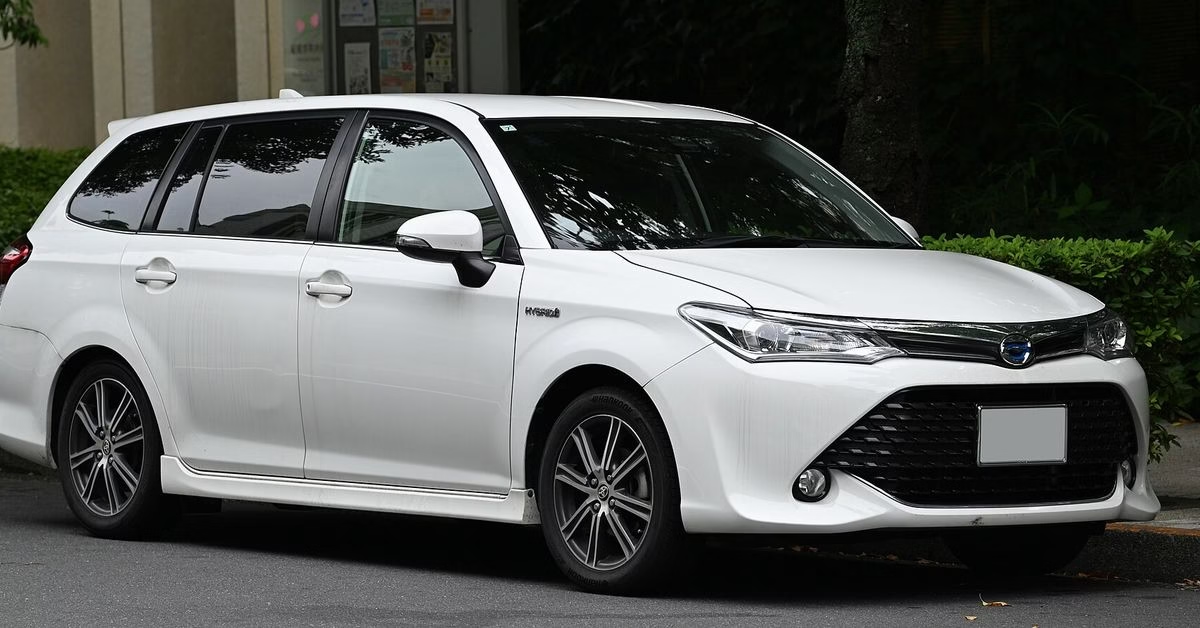
The Fielder is the car Kenya runs on: a Corolla-based wagon with Toyota’s simple engines, a big boot and running costs that barely move. That popularity keeps the Toyota Fielder price in Kenya high and steady. In November 2026, most Fielders on sale ask between KSh 1.3 million and KSh 1.9 million ($10,000 to $14,700), a 2018 or 2019 hybrid sits closer to KSh 2.1 million ($16,000), and older cars go well under a million. This guide breaks those prices down by year and engine, shows what a 2019 import costs in duty, and explains which Fielder is worth paying for and which is a false saving.
Table of Contents
Fielder Prices at a Glance
These are typical asking prices for locally sold cars, taken from Garisea’s and Magari Deals’ listings in November 2026. Dollar figures use KSh 130 to the dollar (CBK, 5 November 2026). Asking prices leave room to negotiate, and mileage, grade and condition move any single car well outside its band.
| Year and version | Generation | Typical asking price |
|---|---|---|
| 2008 to 2011, 1.5 or 1.8 petrol | E140 | $4,600 to $8,500 (KSh 600,000 to 1.1 million) |
| 2012 to 2014, petrol or early hybrid | E160, first version | $6,500 to $10,400 (KSh 850,000 to 1.35 million) |
| 2015 to 2017, first facelift | E160 | About $13,500 (KSh 1.75 million median for a 2016) |
| 2018 to 2019, petrol | E160, second facelift | $11,200 to $14,600 (KSh 1.45 to 1.9 million) |
| 2018 to 2019, hybrid | E160, second facelift | $14,500 to $16,800 (KSh 1.89 to 2.18 million) |
Across all years, Garisea’s median Fielder asks KSh 1.8 million ($13,800). The single biggest driver is not the year but the drivetrain: its median hybrid asks KSh 2.075 million, against KSh 1.3 million for the 1.5 petrol.
What a Used Fielder Costs, Year by Year
Fielders hold their value unusually well, so the gap between a 2014 and a 2019 is smaller than buyers expect. That changes which year makes sense, because a newer car often costs only a few hundred thousand shillings more and gives you years of extra life and better safety kit.
Under KSh 1 Million: 2008 to 2013
This money buys a late E140 or an early E160 1.5 petrol, usually with well over 150,000 km. Garisea’s 2008 median is KSh 680,000 ($5,200), and the cheapest listings start around KSh 600,000. These are honest cars if they have been serviced, but at this age the CVT, suspension bushes and rust underneath decide whether a car is a bargain or a project, and you are buying the previous owner’s maintenance more than the badge.
KSh 1 to 1.5 Million: 2014 to 2016
Garisea’s 2014 median is KSh 1.35 million ($10,400) and its 2016 median KSh 1.75 million ($13,500). The 2015 facelift is the point to aim for: it brought Toyota’s newer 1.5-litre 2NR-FKE petrol engine, rated at 23.0 km/L in the Fielder under Japan’s JC08 test, against about 20 km/L for the old 1NZ, plus the first Toyota Safety Sense C package with automatic emergency braking on most grades.
KSh 1.5 Million and Up: 2017 to 2019
The October 2017 facelift made Toyota Safety Sense C standard and nudged the hybrid to 34.4 km/L on the JC08 cycle. Locally sold 2018 cars ask KSh 1.45 to 1.9 million for petrol, and 2018 to 2019 hybrids KSh 1.89 to 2.18 million on Garisea, which puts them close to the cost of importing a 2019 yourself. That is the comparison to make before you buy one from a yard.
Hybrid or Petrol: Which Fielder to Pay For
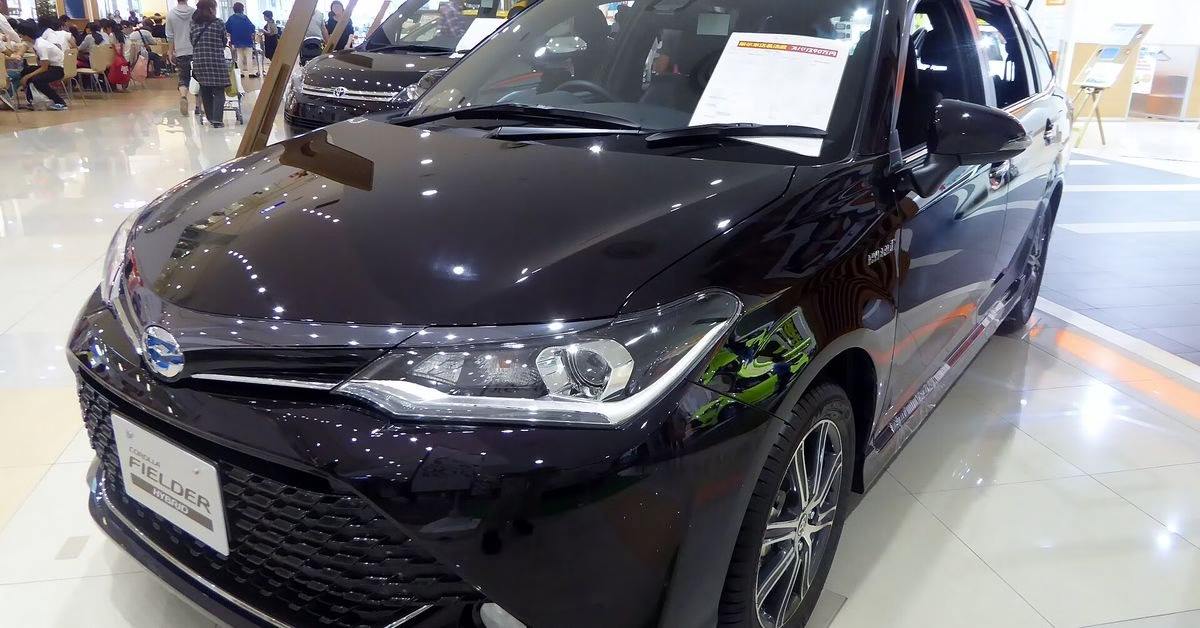
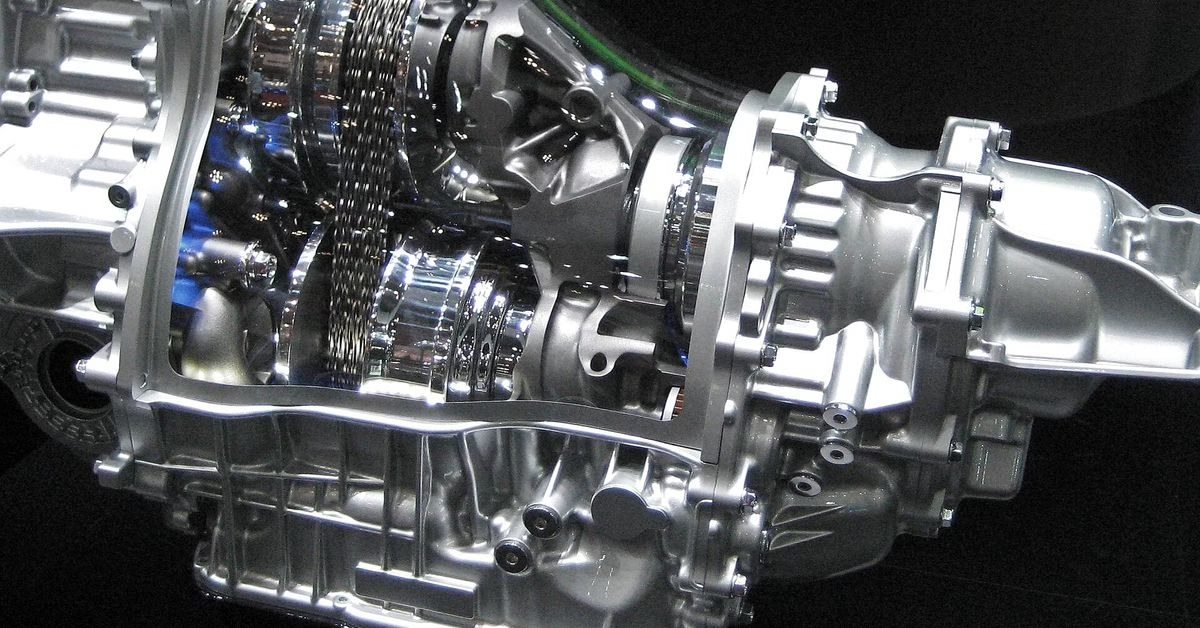
Three drivetrains turn up in Kenya, and the right one depends on how far you drive more than on the purchase price. All three use automatic gearboxes: a CVT in the petrol cars and Toyota’s hybrid transmission in the hybrid.
The Toyota Fielder Hybrid (NKE165)
Launched in August 2013, the hybrid pairs a 1.5-litre Atkinson-cycle engine with an electric motor and a nickel-metal hydride battery under the floor, the same basic system as the Aqua. Toyota rated it at 33.0 km/L on launch, later 34.4 km/L. Real figures in traffic are lower, but the hybrid’s advantage is biggest exactly where Kenyan Fielders spend their lives: stop-start town driving and taxi work. It costs roughly KSh 300,000 to 500,000 more than a petrol car of the same year, so it pays back fastest for high-mileage drivers. Check the battery’s health with a diagnostic scan rather than guessing from the mileage.
The 1.5 Petrol (NZE161 and NRE161)
The 1.5 petrol is the cheapest to buy and the simplest to fix, and nearly every mechanic in the country knows it. Before the 2015 facelift it uses the long-serving 1NZ-FE; from 2015 most 2WD cars got the more efficient 2NR-FKE. For a buyer covering modest distances, a clean petrol Fielder is the better use of KSh 1.3 million than a tired hybrid at the same price.
The 1.8 and the 4WD Versions
The 1.8-litre 2ZR (ZRE162) is quicker and suits a car that is often loaded or driven on the highway, at the cost of fuel: Toyota rated it at 16.6 km/L. Four-wheel-drive Fielders (NZE164) exist for snowy parts of Japan. They add weight and complexity and don’t make a Fielder an off-roader, so they are worth buying only if the price is right.
The Three Fielder Generations
The Fielder name has covered three generations of Japanese-market Corolla wagon since 2000. Outside Japan the E160 was also sold in markets such as New Zealand, Sri Lanka and Bangladesh. The engine code on the auction sheet or logbook tells you exactly which version a car is.
| Generation | Years | Main codes | Engines | Gearbox |
|---|---|---|---|---|
| E120 | 2000 to 2006 | NZE121, ZZE122, NZE124 (4WD) | 1.5 1NZ-FE, 1.8 1ZZ-FE | 4-speed automatic |
| E140 | 2006 to 2012 | NZE141, ZRE142, NZE144 (4WD) | 1.5 1NZ-FE, 1.8 2ZR-FE | CVT (2WD), automatic (4WD) |
| E160 | 2012 to 2025 | NZE161, NRE161, ZRE162, NKE165 (hybrid), NZE164 (4WD) | 1.5 1NZ-FE, 1.5 2NR-FKE, 1.8 2ZR-FAE, 1.5 hybrid | CVT; hybrid transmission |
E160 (2012 to 2025): The One Most Buyers Want
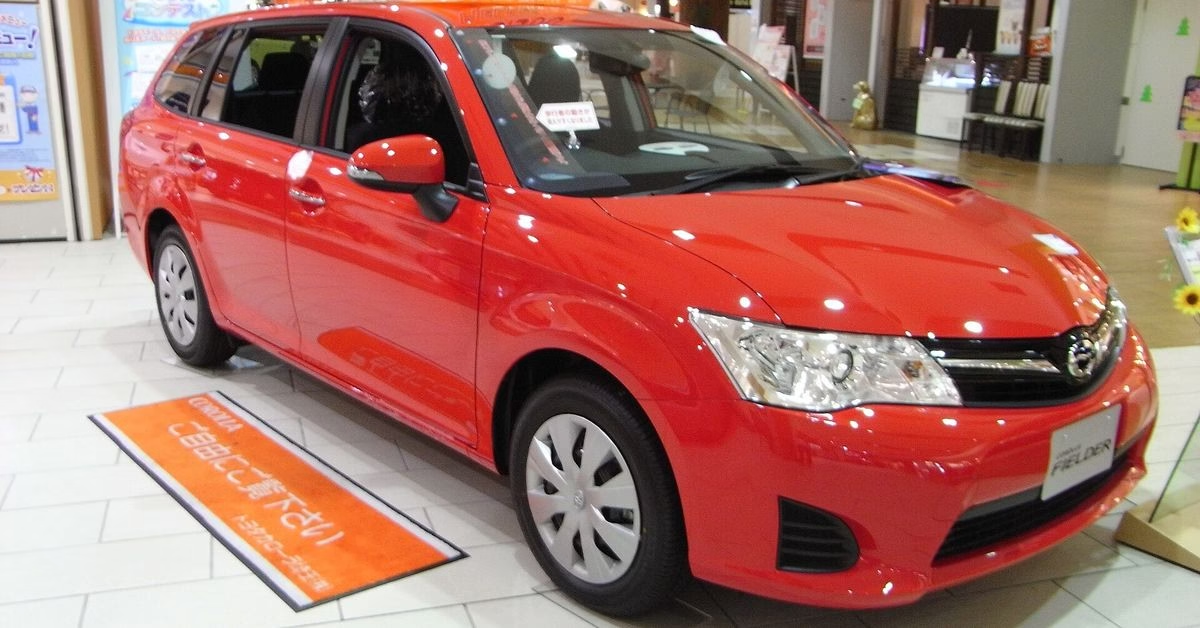
Launched in May 2012 on a smaller platform than the global Corolla, the E160 ran for 13 years with facelifts in 2015, 2017 and 2022, and added the hybrid in 2013. It is the only Fielder you can now import, and the one that fills Kenyan listings. Pre-2015 cars are the cheapest way into the generation; 2017-on cars have the safety kit as standard.
E140 (2006 to 2012): The Budget Fielder
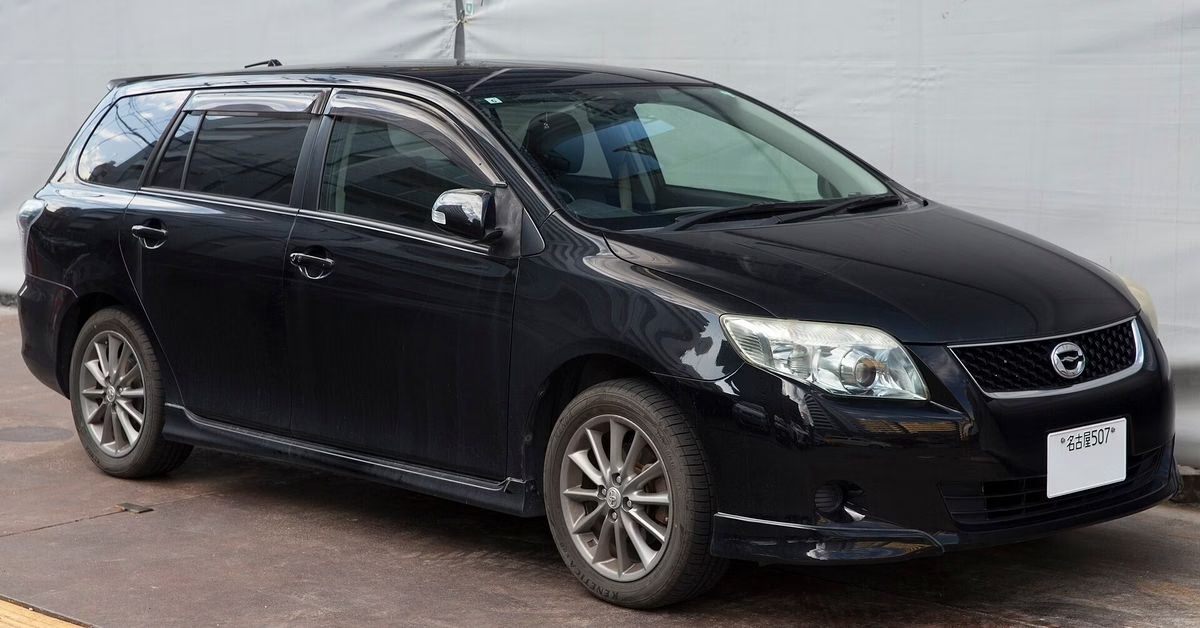
The E140 introduced the CVT to the Fielder in 2WD cars and the 2ZR engine in the 1.8. It is roomier than its age suggests and cheap to run, and survivors are now under a million shillings. Any E140 in Kenya is a locally used car, since the 8-year rule shut out imports long ago, so its history is only as good as its paperwork.
E120 (2000 to 2006): The Original
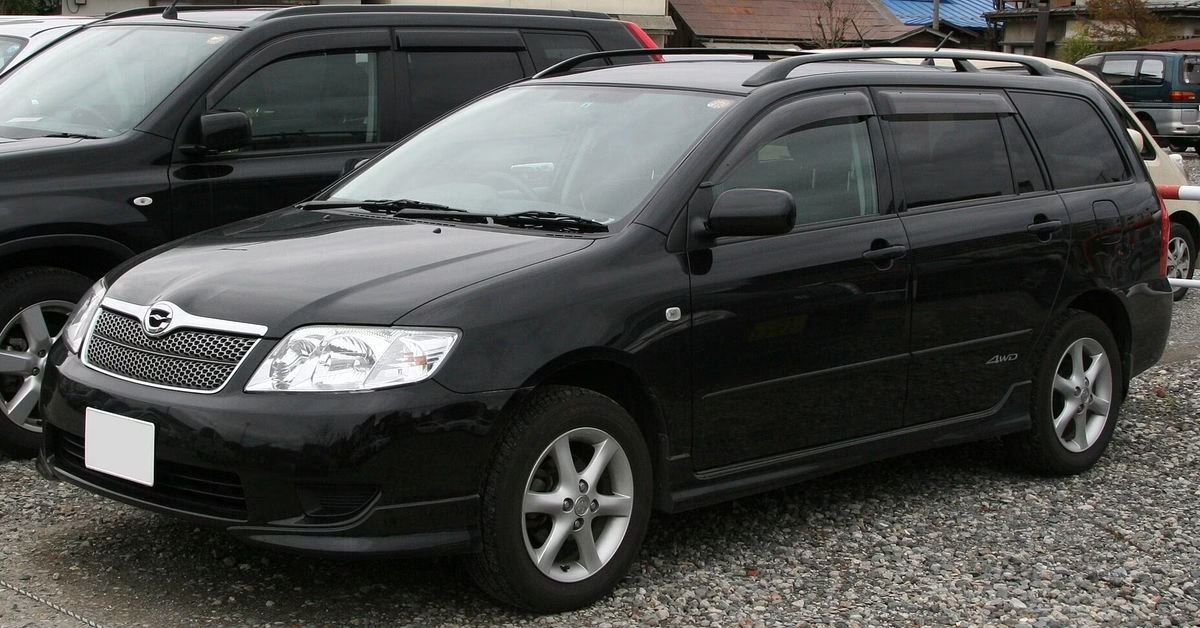
The first Fielder used a conventional four-speed automatic rather than a CVT, which some owners prefer for durability. They are cheap and simple, but every one is now 20 years old, so rust, worn suspension and tired interiors are the norm. Buy one on condition alone.
Importing a Fielder Yourself

Under the KEBS 8-year rule, a car imported in 2026 must have been first registered in 2019 or later, so the only Fielders you can bring in are 2019 to 2025 E160s. KRA taxes them by engine size, and hybrids are listed under petrol, so a 1.5 hybrid pays the same rates as a 1.5 petrol of the same value. Business Radar’s working from KRA’s July 2025 price list puts the total duty, excise, VAT and levies at roughly:
| Year of manufacture | Total KRA taxes (Fielder Hybrid and EX variants) |
|---|---|
| 2019 | $4,650 to $4,800 (KSh 605,000 to 622,000) |
| 2020 | $5,200 to $5,400 (KSh 681,000 to 700,000) |
| 2021 | $5,800 to $6,000 (KSh 756,000 to 778,000) |
| 2025 | $11,600 to $12,000 (KSh 1.51 to 1.56 million) |
Add the car’s price in Japan, shipping, insurance, port charges and clearing, and a 2019 hybrid usually lands close to what a yard asks for one, with the advantage that you choose the car from its auction sheet. Clearing a Fielder works exactly like bringing in any other car from a Japanese auction, step for step. Whatever the route, insist on the exact model code from the export certificate, because the KRA row used for the duty depends on it.
Can You Still Buy a New Fielder?
Not really. Toyota ended production of the Corolla Fielder and Axio in Japan in October 2025, after 13 years. In its final year the Fielder started at ¥1,786,400 in Japan, about $11,800. Toyota Kenya never sold it new, so a “new” Fielder here means a 2024 or 2025 car imported with very low mileage, and those carry the full duty shown above because there is no depreciation allowance on a nearly new car. Toyota’s replacement in Japan is the larger, more expensive Corolla Touring wagon.
What to Check Before You Pay
The Fielder’s mechanical record is strong, and the risks are about neglect rather than design. Toyota’s Super CVT-i has a broadly good reputation, but a high-mileage gearbox that has never had a fluid change can judder or slip, and the signs of a tired CVT are easy to feel on a proper test drive. On hybrids, have the battery and inverter checked with a scan tool. Then work through the dealer traps and inspection checks that catch most Kenyan buyers, and compare the Fielder with its alternatives on the shortlist of cars worth buying in Kenya.
Which Fielder Should You Buy?
With KSh 1 million or less, buy the best-documented 2012 to 2014 E160 1.5 petrol you can find rather than a cheaper E140 with a vague history. Between KSh 1.3 and 1.7 million, a 2015 to 2017 petrol with the 2NR engine is the sweet spot for most owners. If you drive long distances or run the car as a taxi, stretch to a 2018 or 2019 hybrid, and price an import against the yard before you sign anything. The 1.8 and 4WD versions only make sense when they are cheaper than an equivalent 1.5.

Frequently Asked Questions
How much is a used Fielder in Kenya in 2026?
Most ask between KSh 1.3 million and KSh 1.9 million ($10,000 to $14,700), with a median of about KSh 1.8 million on Garisea in November 2026. Cars from 2008 to 2011 can be under KSh 700,000, and 2018 to 2019 hybrids reach about KSh 2.2 million.
How much more does a Fielder hybrid cost than the petrol?
Usually KSh 300,000 to 500,000 more for the same year. Garisea’s median hybrid asks KSh 2.075 million against KSh 1.3 million for the 1.5 petrol across all years.
Can I buy a brand new Toyota Fielder in Kenya?
Not from Toyota Kenya. Production ended in Japan in October 2025, so the newest option is a low-mileage 2024 or 2025 import, which pays full duty of about KSh 1.5 million.
Which year of Fielder can I import in 2026?
A 2019 or newer car, because the KEBS rule bars used cars first registered more than eight years ago. Total KRA taxes on a 2019 Fielder are about KSh 605,000 to 622,000.
What fuel consumption does a Toyota Fielder hybrid get?
Toyota rated it at 33.0 to 34.4 km/L on Japan’s JC08 test, depending on the year. Real-world figures are lower, but it is still far more economical in town than the 1.5 petrol.
The Bottom Line
A good Fielder costs between KSh 1.3 and 1.9 million in Kenya today, and the hybrid premium is worth paying only if you drive a lot. Aim for a 2015-on car, check the gearbox and hybrid system properly, and compare any yard price with the cost of importing a 2019 car through KEBS inspection yourself. Toyota’s own 2015 facelift announcement is a useful check on what each grade should have fitted.
MotorQuips is taking its first import enquiries. Tell me what you need, and I’ll shortlist cars in Japan and send you the auction sheet, inspection photos and the full CIF price before you pay anything.
- Auction sheet checked for grade, mileage and damage marks
- Right-hand drive and the 8-year rule checked before you commit
- You pay the exporter directly, on an invoice in your own name
- Introduction to a licensed clearing agent for KRA clearance
Sourcing fee: 3% of the CIF price (minimum KSh 50,000), paid only once you approve a specific car. Duty, clearing costs and shipping insurance are separate.
Tell me what you’re looking for