
When it comes to car accessories that actually earn their place on the windshield, dashcams are at the top of the list. The best dashcams of 2026 have moved well past shaky 1080p clips and unreliable loop recording. Today’s top models deliver 4K clarity, Sony STARVIS 2 sensors built for low-light performance, and parking modes that watch your car while you’re nowhere near it. Whether you’re documenting a commute, protecting yourself from insurance fraud, or simply want peace of mind in a parking garage, there’s a dashcam for your situation and your budget.
Disclosure: This article contains affiliate links. If you buy through these links, we may earn a small commission at no extra cost to you.
Table of Contents
Why a Dashcam Matters More in 2026
According to a Consumer Reports analysis of the 2026 dashcam market, dashcam footage is increasingly being used to dispute speeding tickets, support insurance claims, and serve as evidence in legal proceedings. A survey by AutoInsurance.com found that 36% of drivers who don’t currently own a dashcam plan to buy one in the next year. The reasons aren’t hard to understand: staged accidents and parking lot hit-and-runs are real, and when they happen, clear video beats conflicting accounts every time.
Beyond the legal angle, 4K resolution has become genuinely useful rather than a marketing bullet point. At that clarity, you can read a license plate at a meaningful distance, something 1080p often can’t deliver once the footage is reviewed on a laptop or TV screen. The 2026 market has also settled into a clear sensor standard: cameras using Sony’s STARVIS 2 image sensor consistently outperform older silicon for night footage, and any serious contender at the $100+ price point is now expected to use one.
What to Look for Before You Buy
Resolution: 2K or 4K?
For most drivers, 2K (2560×1440) is the practical minimum worth spending money on in 2026. It captures enough detail to read nearby plates and road signs clearly. 4K genuinely improves on that, especially when footage is zoomed or cropped after an incident. The catch is file size: 4K clips fill a microSD card faster and can require more heat management inside the camera. If you’re recording in a hot climate like Arizona or Texas, a camera with a supercapacitor rather than a lithium battery handles thermal stress much better.
Sony STARVIS 2 and HDR
The sensor inside the camera matters as much as the resolution number. Sony’s STARVIS 2 platform dramatically improves low-light and nighttime performance, producing footage that reads correctly lit even under street lamps or in dim parking structures. Pair that with High Dynamic Range (HDR) processing, and the camera handles scenes with bright sky and dark foreground without blowing out detail. For 2026, if you’re spending over $100, look for both STARVIS 2 and HDR as baseline expectations, not premium features.
Front-Only vs. Front and Rear vs. Three-Channel
A front-only camera handles the most common incident scenarios since the majority of collisions happen at the front of the vehicle. Adding a rear camera gives you coverage for rear-end hits and tailgating incidents. A three-channel system adds an interior cabin camera, which matters most for rideshare drivers who want documentation of passenger behavior, or for parents who want to see what’s happening in the back seat. Each step up adds cost and routing complexity during installation.
Parking Mode
Parking mode keeps the camera active after you turn off the engine. There are two main approaches. Motion-triggered recording wakes the camera when movement crosses the lens. Buffered parking mode is more useful: it continuously records into a short loop, so when an impact is detected the camera saves a clip that includes the seconds before the hit, not just after. Buffered mode requires the camera to be hardwired into your vehicle’s fuse box for constant low-current power rather than running off the cigarette lighter.
Some dashcams push cloud storage and monitoring features behind a monthly fee. Always check what works without a subscription before buying; most solid cameras offer full local recording to a microSD card at no ongoing cost.
Memory Card Sizing
A 64GB microSD card handles approximately 4 to 5 hours of 4K footage before the loop recording overwrites the oldest clips. For most daily commuters, 128GB is a comfortable cushion. If you use parking mode heavily or run a 3-channel setup, 256GB keeps you from losing useful footage during a long weekend away from the car. Use cards rated for continuous write cycles, such as the SanDisk High Endurance or Samsung PRO Endurance lines, since standard cards aren’t built for dashcam-style workloads and can fail early.
2026 Dashcam Comparison: At a Glance
| Model | Resolution | Channels | Parking Mode | Price (approx.) | Best For |
|---|---|---|---|---|---|
| Viofo A329S | 4K front / 2.7K rear | 2-ch | Yes (buffered) | $399.99 | Best overall |
| Viofo A119 Mini 2 | 2K front only | 1-ch | Yes (buffered) | $104.49 | Best budget front-only |
| Viofo A229 Plus | 2K front / 2K rear | 2-ch | Yes | $189.99 | Best front & rear value |
| BlackVue Elite 9 | 4K front / 2K rear | 2-ch | Yes (cloud) | $499.99 | Best cloud connectivity |
| Vantrue N4 Pro S | 4K front / 1080p int & rear | 3-ch | Yes | $379.99 | Best 3-channel / rideshare |
| Redtiger F7NP Basic | 4K front / 1080p rear | 2-ch | Yes (motion) | $129.99 | Best budget dual cam |
Our Top Dashcam Picks for 2026
Best Overall: Viofo A329S ($399)
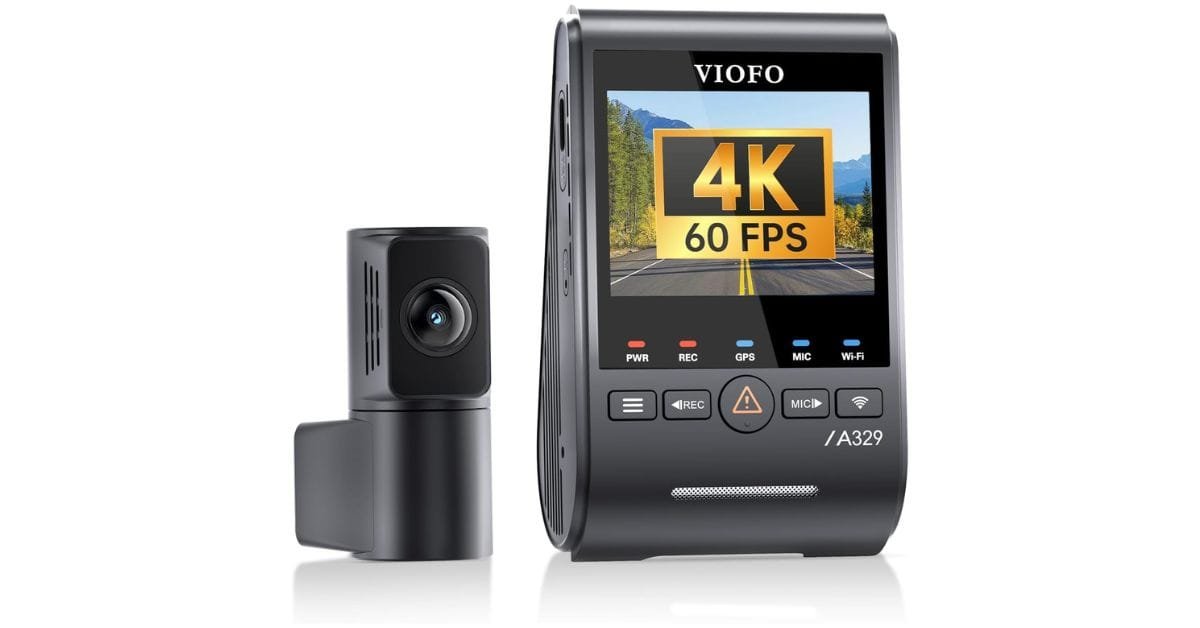
The Viofo A329S has earned its spot at the top of multiple independent rankings this year, including recommendations from Wirecutter and Vortex Radar, which tested 13 dashcams head-to-head before naming it the all-around champion. It pairs a 4K front camera with a 2.7K rear unit, both using Sony’s STARVIS 2 IMX678 sensor. The result is footage that renders license plates cleanly at night, handles high-contrast highway lighting without washout, and holds up to sustained summer heat thanks to its supercapacitor build. Buffered parking mode captures the seconds leading up to an impact, not just after. The companion app connects via Wi-Fi for quick clip review and over-the-air firmware updates. For most drivers who want one camera and no compromises, this is the answer.
Best Budget Front-Only: Viofo A119 Mini 2 ($104)
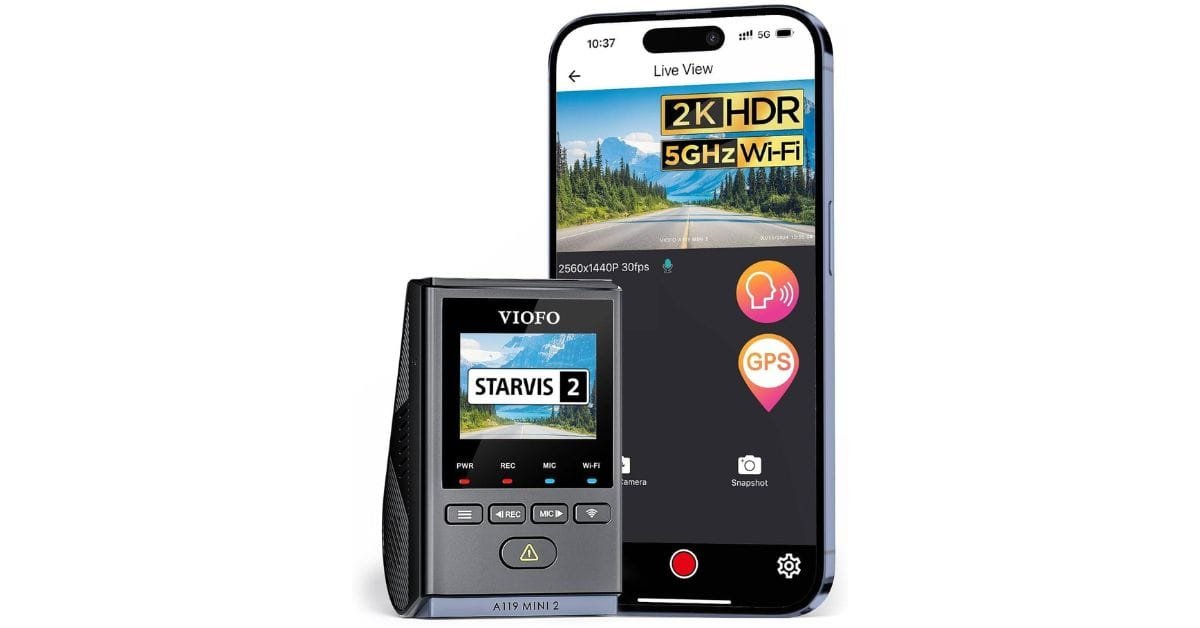
The A119 Mini 2 punches well above its price because it uses the same Sony STARVIS 2 sensor technology found in cameras costing twice as much. At 2K resolution with HDR, it produces genuinely useful nighttime footage. The body is small enough to tuck behind the rearview mirror, meaning it stays out of your sightline completely. Loop recording, G-sensor impact detection, and buffered parking mode are all present. The one note: a microSD card is sold separately, and enabling parking mode requires hardwiring or an add-on battery pack. For anyone who wants reliable front coverage without spending a lot, this is the clear value pick.
Best Front and Rear Value: Viofo A229 Plus ($189)
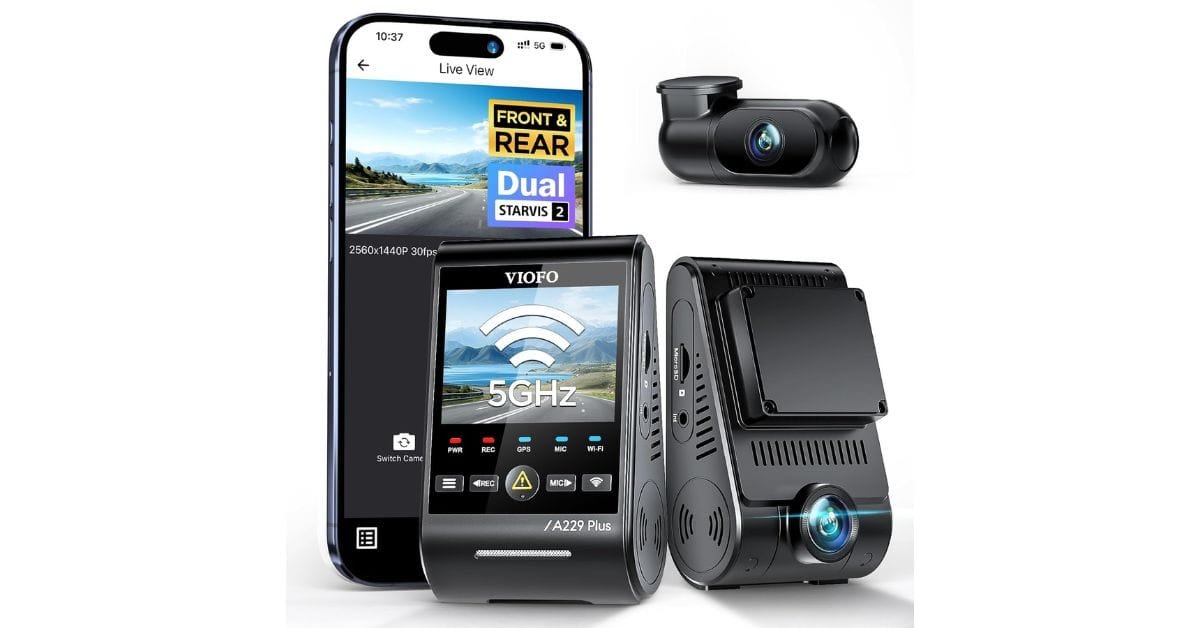
The A229 Plus covers both directions with 2K cameras front and rear, and supports an optional interior cabin lens for a third channel. What separates it from cheaper two-channel alternatives is the sensor quality: both cameras use STARVIS 2 silicon rather than downgrading the rear to a cheaper chip, which is a common cost-cutting move in this price range. Daytime and nighttime footage quality holds up well across both cameras, and the system supports optional Wi-Fi connectivity for app-based clip access. If front-and-rear coverage is your priority but you’d rather not spend $350, this is the logical choice.
Best Three-Channel: Vantrue N4 Pro S ($379)
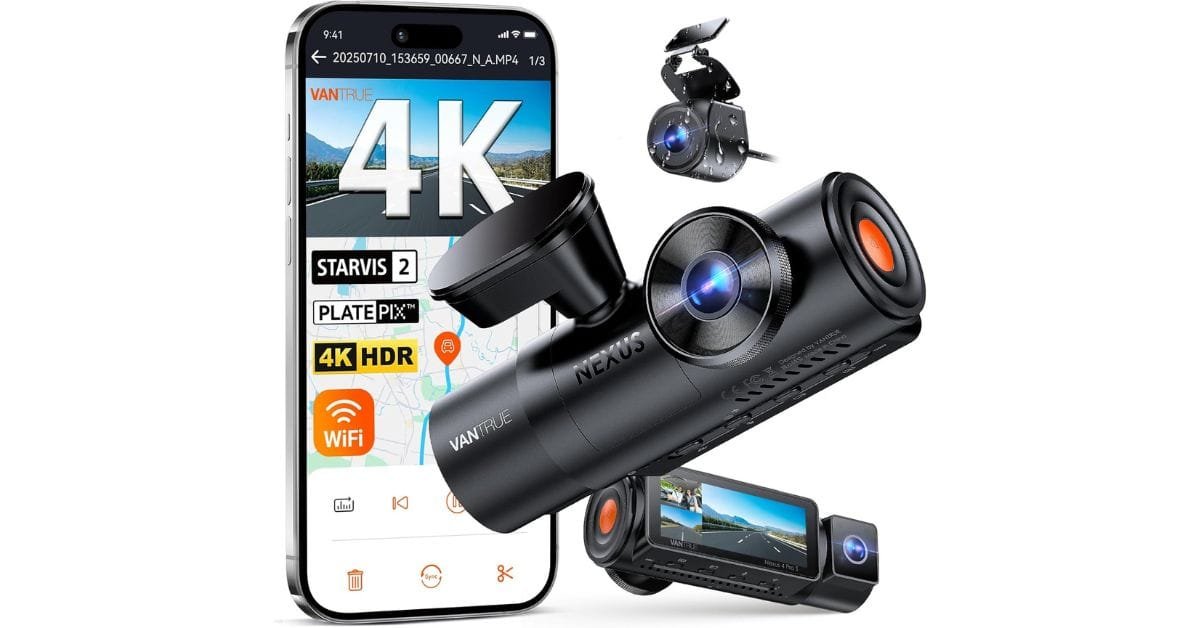
The Vantrue N4 Pro S deploys three Sony STARVIS 2 sensors, covering the front at 4K and the interior plus rear at 1080p each. That interior camera makes it the most practical option for rideshare and delivery drivers who need documentation from every angle. Build quality is solid with a rubberized housing and a display that makes it easy to review footage without opening an app. An optional LTE bundle ($350 as a kit) adds remote live monitoring. If three-channel coverage is on your list, this is where to start.
Best for Cloud Connectivity: BlackVue Elite 9 ($499)
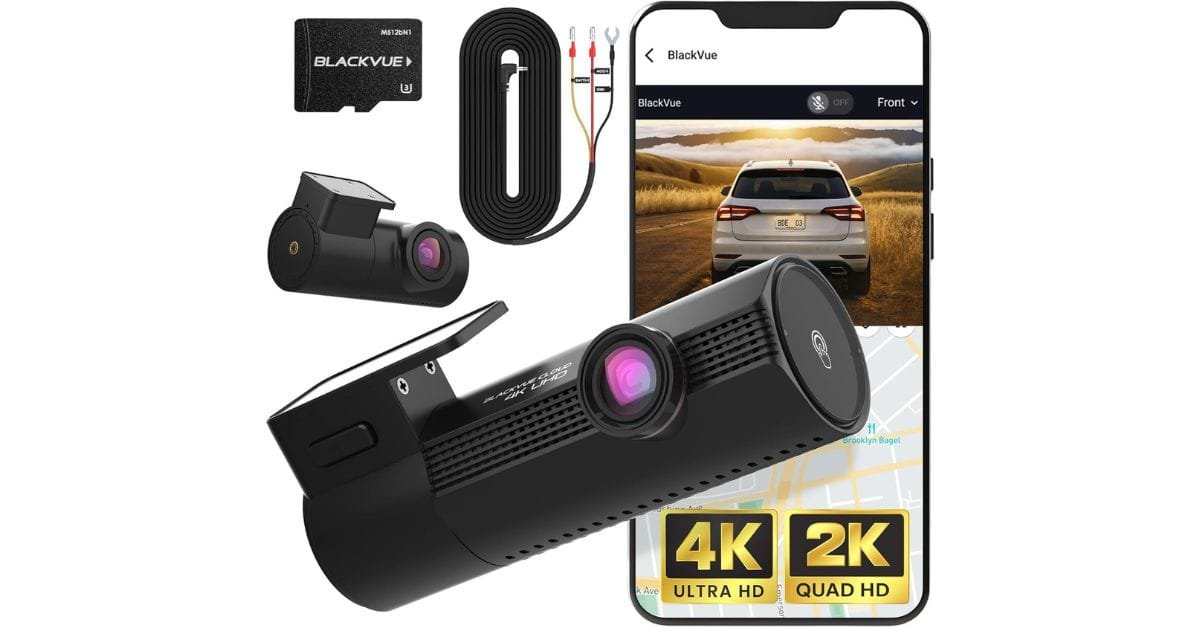
The BlackVue Elite 9 is the dashcam for drivers who want remote access to their car’s camera from anywhere. It pairs 4K front footage with a 2K rear lens, and its standout feature is a cellular-connected cloud platform that lets you pull live footage, receive impact alerts, and check in on a parked vehicle from a phone app regardless of Wi-Fi. The low-power parking mode is one of the most efficient available, drawing just enough current to stay ready for up to a year in a parked car. If you travel frequently or leave a vehicle at long-term airport parking, that matters. The price reflects the premium hardware, but the cloud capabilities are genuinely in a class of their own at this level.
Best Budget Dual Cam: Redtiger F7NP Basic ($129)
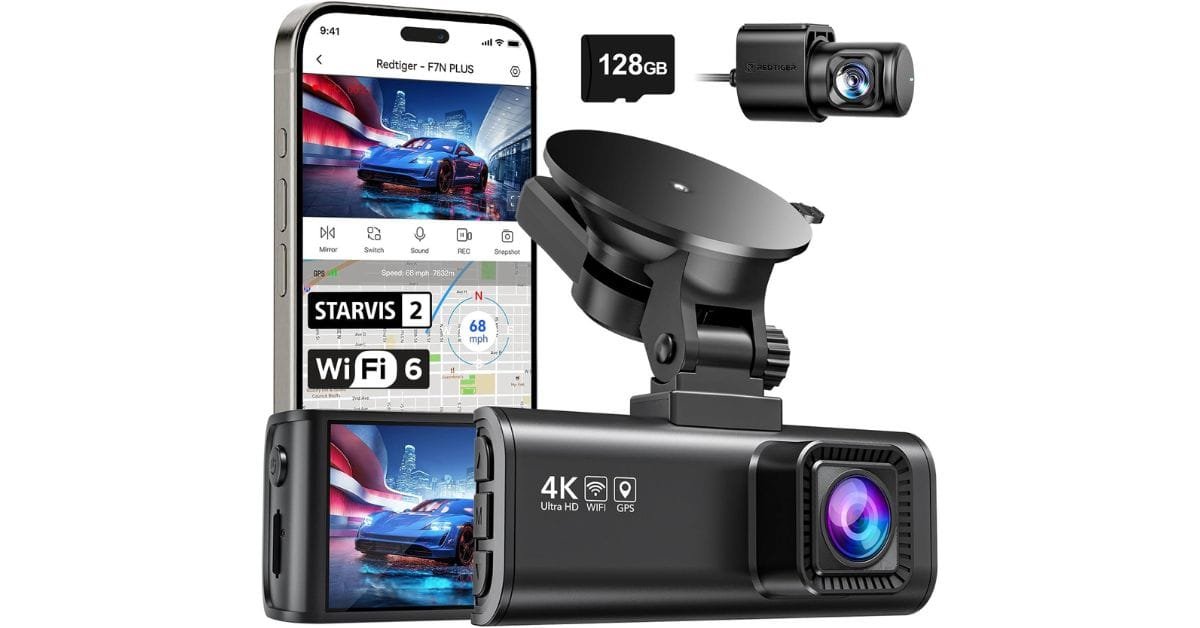
Consumer Reports tested several dashcams at the entry-level, and the Redtiger F7NP Basic came out on top for this price range, scoring highest for all-around daytime image quality, ease of setup, and included extras: a 3.2-inch screen, hardwiring kit, and multiple mounting options are all in the box. It records 4K front and 1080p rear, covers the basics confidently, and doesn’t hide features behind a subscription. For a first dashcam purchase, especially if you’re not sure how much you’ll actually use parking mode, this is a sensible way to get started.
Which Dashcam Is Right for You?
| Your Situation | Our Pick |
|---|---|
| Tight budget, want reliable front footage | Viofo A119 Mini 2 |
| Want front + rear without overspending | Viofo A229 Plus |
| Best overall image quality, no compromises | Viofo A329S |
| Drive for Uber / Lyft or need cabin coverage | Vantrue N4 Pro S |
| Want cloud monitoring and remote access | BlackVue Elite 9 |
| First dashcam, want something simple | Redtiger F7NP Basic |
Installation: What You Need to Know
Most dashcams install in 20 to 30 minutes using the included cigarette lighter cable. That powers the camera when the engine runs and cuts power when you turn off the car. It’s fine for everyday recording but doesn’t enable proper parking mode.
For parking mode, a hardwire kit routes the camera directly to your vehicle’s fuse box, supplying constant low-current power. Kits are typically $20 to $30 and include a voltage cutoff that shuts the camera off if the car battery drops too low. Many dashcam manufacturers sell a matching kit for their model, and most install with a basic understanding of your car’s fuse panel. If you’d rather not run cables yourself, most car audio shops will do the wiring for around $50 to $80.
Routing the rear camera cable from the front of the car through the headliner and down the D-pillar is the part of the job that takes the most patience, but it keeps everything clean and out of sight. Plastic pry tools make this significantly easier without damaging interior trim. If you’ve already got practice pulling interior panels from other projects, it’s straightforward work.
In states like Arizona, Florida, and Texas, interior car temperatures can exceed 150°F. Cameras with supercapacitors (like the Viofo A329S and BlackVue Elite 9) handle these extremes significantly better than internal batteries for long-term reliability.
The Bottom Line
The dashcam market in 2026 is in a good place for buyers. Sony STARVIS 2 sensors have pushed quality upward across price ranges. 4K is now accessible under $100 for a front-only setup, and parking mode hardware has matured to the point where it actually does what it promises. The Viofo A329S remains the benchmark for most drivers. Those on a budget get real value from the A119 Mini 2. Rideshare and commercial drivers should look at the Vantrue N4 Pro S. And anyone who wants a connected, remotely monitored system should go straight to the BlackVue Elite 9.
A dashcam is also one of those purchases that sits quietly in the background until the exact moment you need it. The best time to have one was before the incident that made you wish you had. The second-best time is now. For more practical additions to your daily driver setup, our round-up of the coolest car accessories under $50 covers a range of affordable upgrades worth considering alongside a dashcam.