
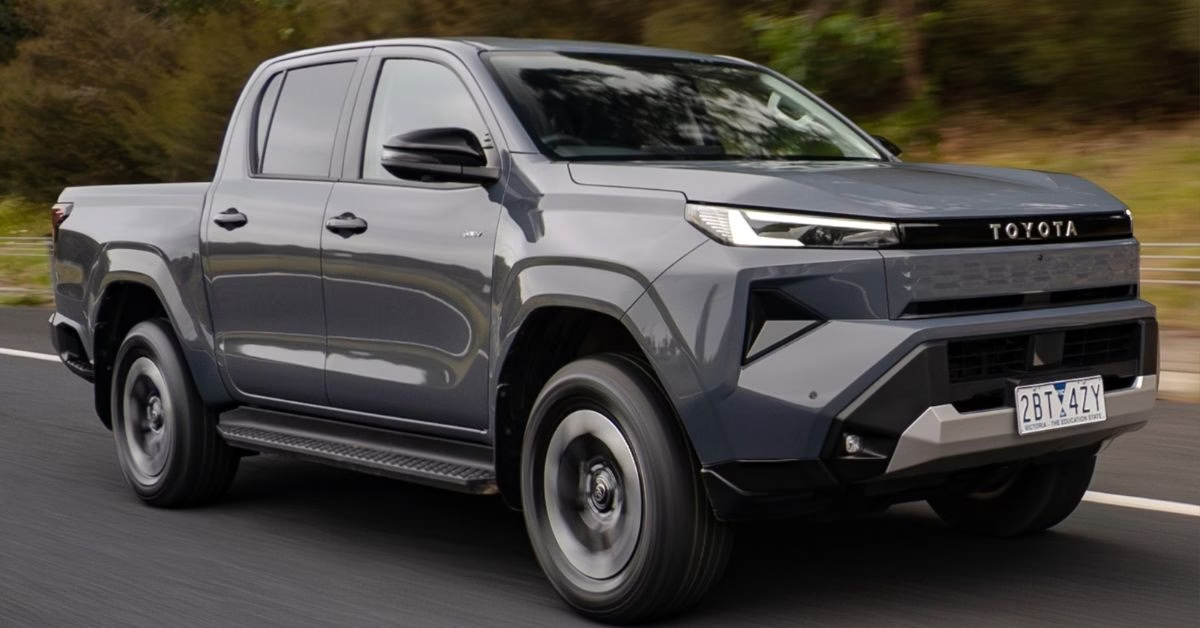
Few trucks have changed as much while keeping the same name. The first Hilux was a small 1.5-litre pickup built for Japanese tradesmen in 1968. The latest is a 2.8 diesel double cab with a mild-hybrid option and an electric sister, sold on every continent. In between sit nine Toyota Hilux generations, and the one you’re looking at decides which engine you get, which faults to check for and what the truck is worth. This guide runs through every generation by year, the engines and model codes that tell them apart, and which used Hilux makes the most sense to buy today.
Table of Contents
Every Hilux Generation at a Glance
If you only need the short version, start here. The years below are launch dates in Toyota’s main markets. Production overlapped by a year or two in some countries, so a truck registered in, say, 2005 could belong to either the sixth or seventh generation.
| Generation | Years | Main diesels | What it’s known for |
|---|---|---|---|
| 1st | 1968 to 1972 | None (1.5 petrol) | Built for Toyota by Hino; the original compact pickup |
| 2nd | 1972 to 1978 | None (1.6 and 2.0 petrol) | Longer wheelbase and a 2.0 Highway model |
| 3rd | 1978 to 1983 | L series in some markets | First factory 4WD and the first double cab |
| 4th | 1983 to 1988 | 2L, 2L-T | A separate, tougher body for 4WD models |
| 5th | 1988 to 1997 | 2L, 3L, 1KZ-TE | The truck that built the Hilux’s reputation for toughness |
| 6th | 1997 to 2005 | 2L, 3L, 5L, 1KZ-TE, early 1KD and 2KD | Split into work and lifestyle versions; extra cab |
| 7th (Vigo) | 2004 to 2015 | 2KD (2.5), 1KD (3.0) | First common-rail D-4D Hilux sold worldwide; first not built in Japan |
| 8th (Revo) | 2015 to 2025 | 2GD (2.4), 1GD (2.8) | Today’s most common used Hilux |
| 9th | 2025 on | 1GD (2.8), 48V mild hybrid in some markets | New body and cabin, electric version, same proven diesel |
By Toyota’s own count, more than 17.7 million Hilux had been sold by 2017, in over 180 countries and regions, according to Toyota’s Hilux sales figures. That’s why almost every generation still turns up somewhere, and why parts for even the old ones are rarely hard to find.
Where It Started: The First Five Generations
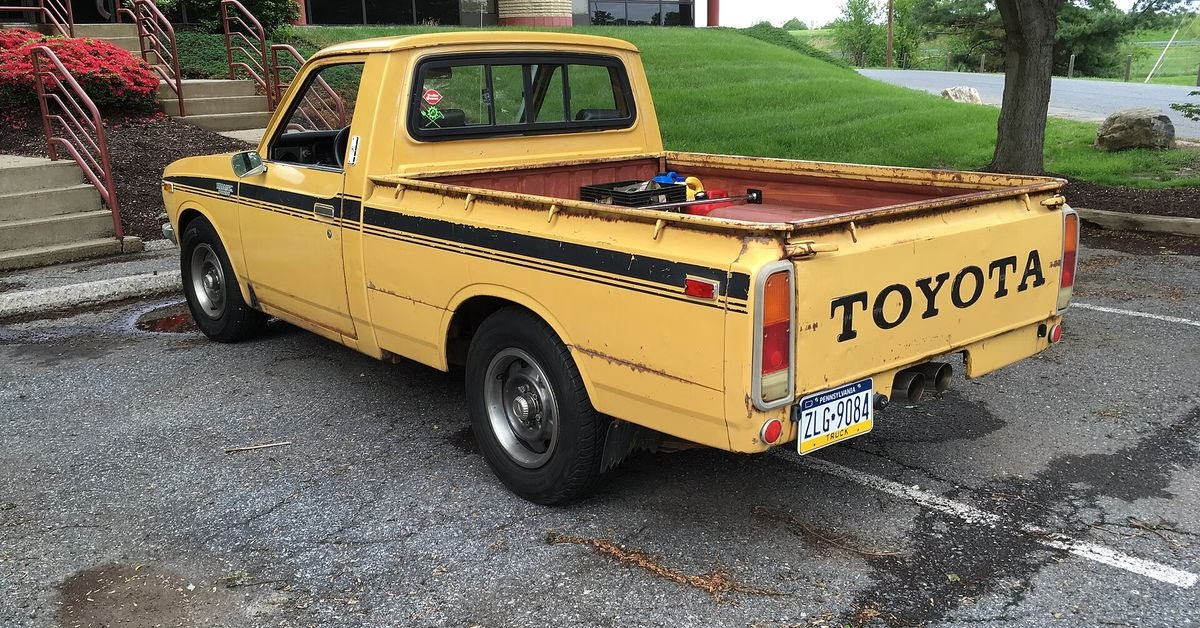
The early trucks matter less to buyers today, but they explain why the Hilux became the default pickup across Africa, Asia and Australia. Each generation added one thing that stuck: a bigger engine, four-wheel drive, a double cab, then real toughness.
1968 to 1978: A Small Truck for Japanese Tradesmen
The Hilux debuted in March 1968, replacing two older Toyota light trucks. Toyota designed it, but Hino Motors built it at its Hamura plant, with a 1.5-litre, 70 PS engine, a 1,000 kg payload and room for three across the bench, according to Toyota’s generation history. The second generation followed in May 1972 with a longer wheelbase and a 2.0-litre Highway model aimed at Japan’s new expressways. Both were rear-wheel drive, petrol only and light by later standards.
1978 to 1988: Four-Wheel Drive and the Double Cab
The third generation, on sale from September 1978, is where the Hilux started becoming the truck people know today. Factory four-wheel drive arrived in early 1979, and a double cab followed in the early 1980s. In the US it was sold as a car-like lifestyle truck, while in other markets it went to work. The fourth generation of November 1983 gave 4WD models their own, tougher body with blistered wheel arches, and diesel versions such as the 2L became common outside Japan.
1988 to 1997: The Fifth Generation and the Tacoma Split
The fifth generation, launched in September 1988, was built around power, strength and comfort, with a single body style and a more car-like cabin. 4WD versions were 40 mm wider than the rear-drive trucks. This is the Hilux that earned its reputation for surviving almost anything, and in many markets it ran on the 2L and 3L diesels, with the 3.0-litre 1KZ-TE turbodiesel in some. It was also the last Hilux sold in the US, where it was simply called the Toyota Truck before the Tacoma replaced it for the 1995 model year.
The Sixth Generation (1997 to 2005)
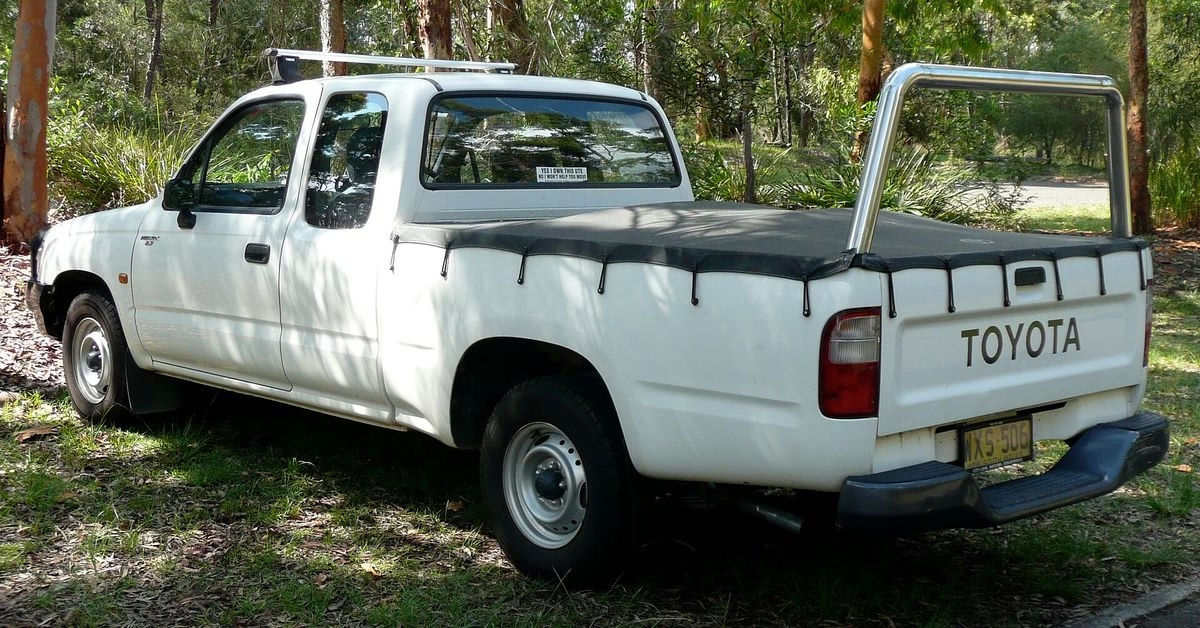
Launched in September 1997, the sixth generation split the Hilux into two lines: a plain business truck and a taller, quieter sports pickup for personal use. Toyota added an extra cab two months later, 100 mm wider than before, with two small rear seats. It’s the oldest Hilux still common as a daily worker in many countries.
Engines and What Still Matters
Most sixth-generation trucks run indirect-injection diesels: the 2.4 2L, the 2.8 3L, the 3.0 5L and, in some markets, the 1KZ-TE turbo, which is known for cracking its head when it overheats. Late in the run, some markets got the first common-rail 1KD and 2KD engines. These trucks are simple and cheap to fix, but they’re now 20 to almost 30 years old, so rust, worn steering and tired injection pumps matter more than the badge.
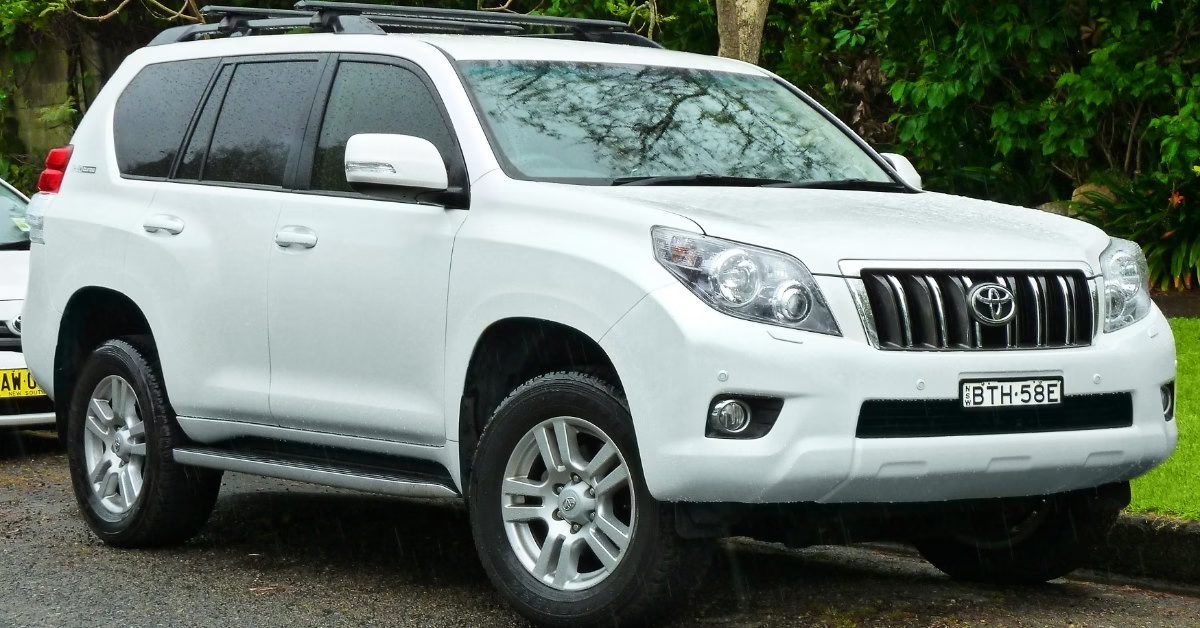
The Seventh Generation: Vigo (2004 to 2015)
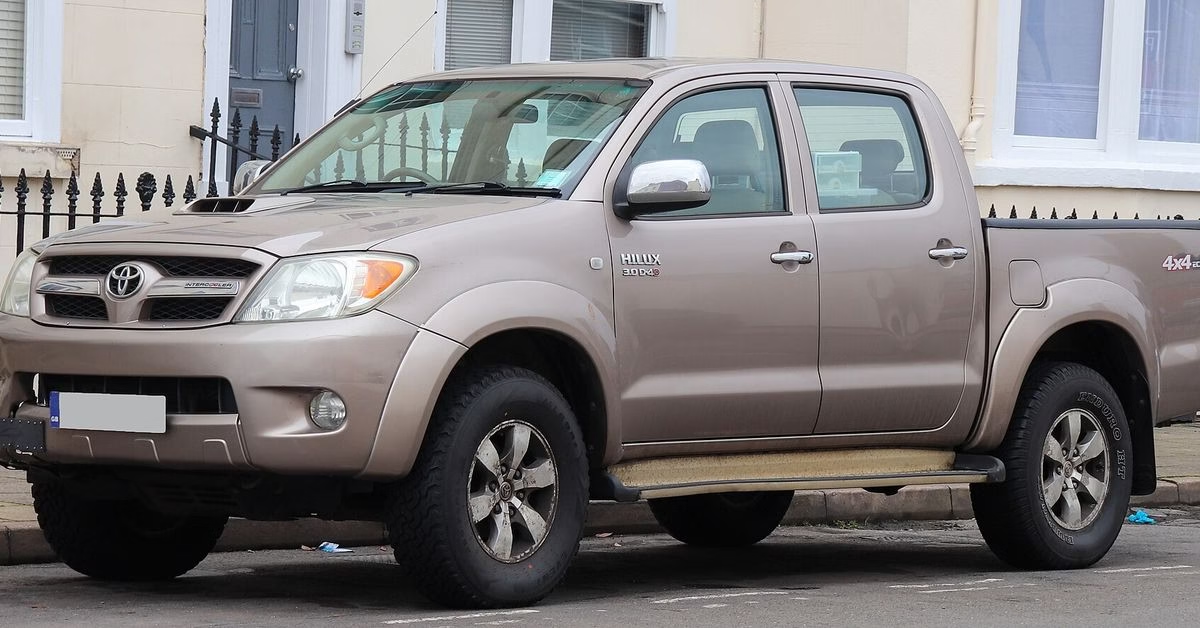
The seventh generation launched in August 2004 for sale in more than 140 countries, and it changed how Toyota built the Hilux. It was part of the IMV project, a single platform shared by three Hilux pickups, the Innova MPV and the Fortuner SUV. It was also the first Hilux not built in Japan, with main production in Thailand, South Africa and Argentina.
Engines, Facelifts and Model Codes
Diesel Vigos use the 2.5-litre 2KD or the 3.0-litre 1KD, both common-rail D-4D engines, alongside 2.7 four-cylinder and 4.0 V6 petrol engines. Toyota facelifted the truck in 2008 and 2011, and Thailand got a further update called the Vigo Champ in 2012. On the paperwork, KUN codes mean a KD diesel. As a rule, KUN15, 25 and 35 are 2.5s and KUN16, 26 and 36 are 3.0s, but always match the code to the engine number on the block.
What to Watch on a Vigo
The Vigo’s weak spots are mostly in its engines, so the code matters more than the trim. The 3.0 is stronger but has the worse record for injector seal leaks and cracked pistons, while the 2.5 is slower and usually tougher. Chassis rust, worn leaf springs and clutch wear from overloading are common too, and the faults that turn up on used Vigos and Revos are worth reading before you look at one.
The Eighth Generation: Revo (2015 to 2025)
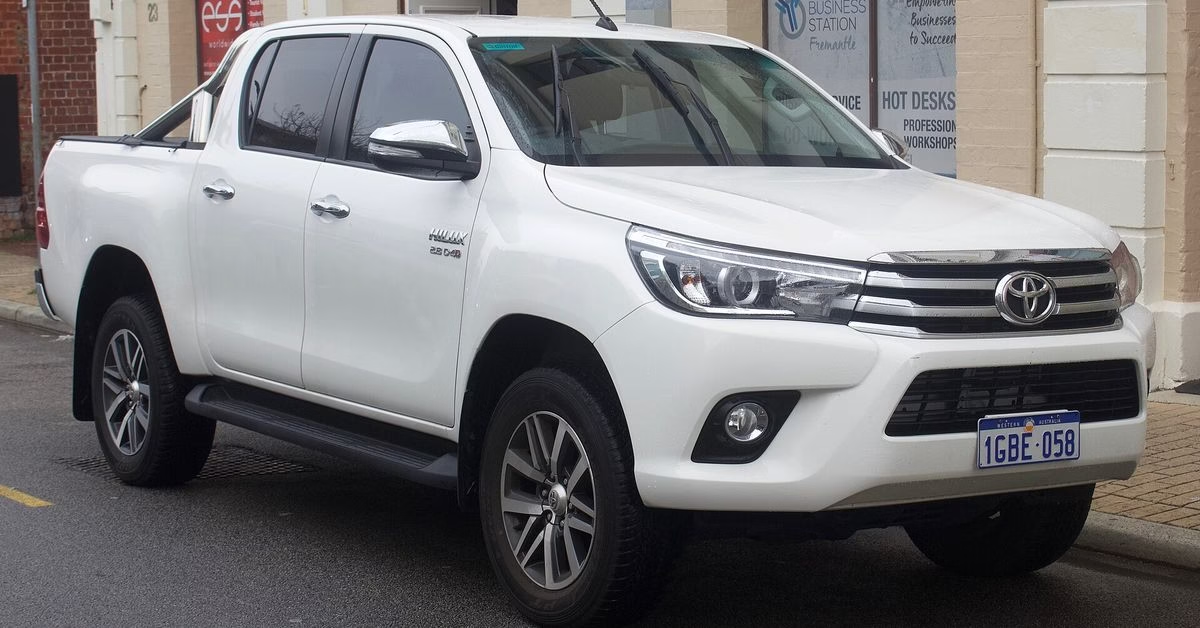
The eighth generation launched in May 2015, sold as the Hilux Revo in Thailand and several other markets. Toyota’s brief was to keep the toughness but improve ride comfort, cabin noise and fuel use, and for most used buyers today this is the Hilux on the shortlist.
The GD Engines and the 2020 Update
Revos use the 2.4-litre 2GD and the 2.8-litre 1GD, whose early diesel particulate filter trouble is the main thing to check on pre-2020 trucks. The biggest update came in 2020, when the 1GD was raised to 150 kW and up to 500 Nm in markets such as Australia, along with a new turbo, a higher-pressure fuel system and retuned suspension. The Revo also went on sale in Japan in 2017 as a 2.4, which is why GUN125 trucks are common among Japanese imports.
How the Revo’s Engines Rank
Neither GD engine is perfect, but both have far fewer catastrophic failures than the KD engines they replaced, which is why the GD pair sits well above the 1KD when you rank Toyota’s diesels by how often they fail and what it costs. The 2.4 is the gentler engine for light work; the 2.8 earns its keep when the truck tows or runs loaded.
The Ninth Generation (2025 Onwards)
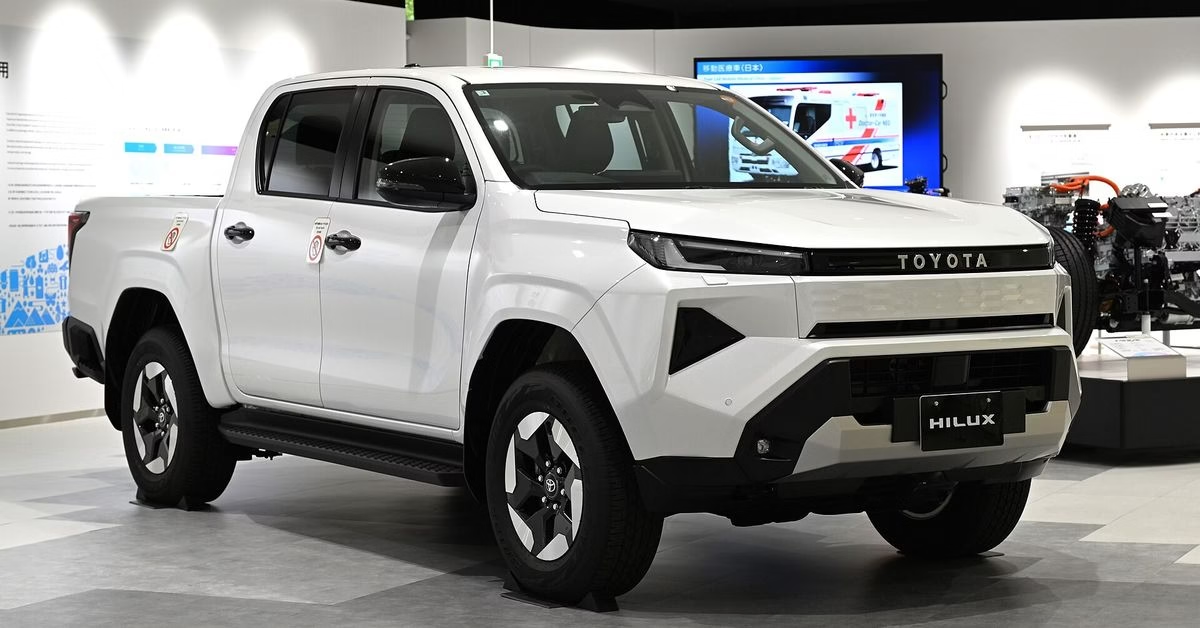
Toyota revealed the ninth-generation Hilux in November 2025. It’s a new body and cabin on a stiffened version of the old ladder frame, with the same 2.8 1GD diesel, electric power steering and, in some markets, a 48V mild-hybrid system and a fully electric version. It went on sale in Australia in December 2025, Japan in May 2026, the UK in June 2026 and Kenya in October 2026. Kenyan buyers can already get the ninth-generation Hilux as a locally assembled double cab, though some markets are still waiting for the full range.
The Hilux Champ and Other Offshoots
Not everything called Hilux follows the main line. The Hilux Champ, launched in Thailand in November 2023, is a cheaper, simpler workhorse from Toyota’s IMV 0 project, with 2.0 and 2.7 petrol engines and a 2.4 diesel, priced from 459,000 baht at launch, according to Toyota’s IMV 0 launch release. The Hilux Surf was Japan’s SUV version, sold as the 4Runner elsewhere. Don’t confuse either with the main Hilux when you compare prices or parts.
Which Hilux Should You Buy Today?
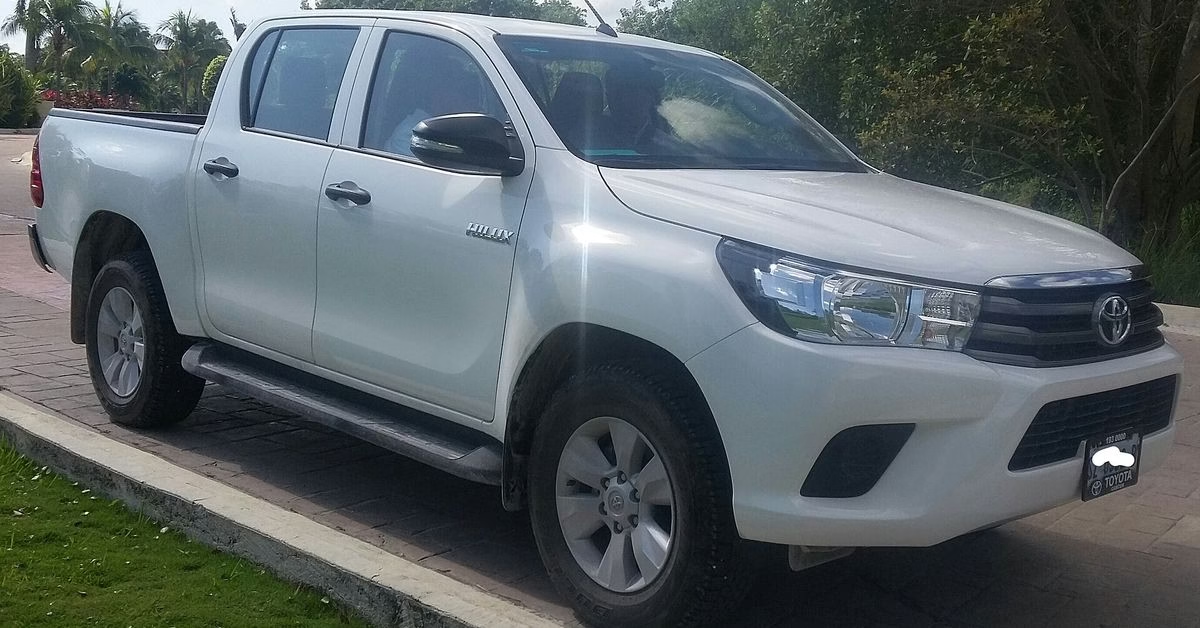
The right generation depends on your budget and how hard the truck will work. Here’s how the three you’re most likely to see in a yard compare as used buys.
On a Tight Budget: A Late Vigo
A 2011 to 2015 Vigo is the cheapest way into a common-rail Hilux. Pick the 2.5 2KD unless you tow or carry heavy loads every day, insist on injector and timing belt records, and walk away from any 3.0 with a cold-start knock or sludge under the oil cap.
Best All-Round Buy: A 2020-On Revo
A 2020 or later Revo with the updated 1GD avoids the worst of the early DPF trouble and gets the stronger engine, better suspension and newer safety kit. It costs more than an older Revo, but it’s the sweet spot for a truck you plan to keep. If you’re choosing between a 2.4 and a 2.8, the 2.4 is fine for light use; the 2.8 suits towing and long highway days.
New: The Ninth Generation
If you’re buying new, the ninth generation keeps the proven 1GD and adds a much better cabin. It’s expensive, and some early details are still unconfirmed, so a young Revo makes more sense if value matters more than the newest design.
Frequently Asked Questions (FAQ)
How many Toyota Hilux generations are there?
Nine. The first went on sale in 1968 and the ninth was revealed in November 2025. The two most common on the used market today are the seventh generation (Vigo, 2004 to 2015) and the eighth (Revo, 2015 to 2025).
What are the Toyota Hilux models by year?
1st 1968, 2nd 1972, 3rd 1978, 4th 1983, 5th 1988, 6th 1997, 7th 2004 (Vigo), 8th 2015 (Revo) and 9th 2025. Launch years vary slightly by market, and some generations overlapped.
Which Hilux generation is the most reliable?
Among the trucks still common today, a 2020-on Revo and a well-kept 2.5 Vigo have the best records. Older generations are simple and tough, but their age now matters more than their design.
Is the Hilux Vigo the same as the Revo?
No. Vigo is the name used in Thailand and some other markets for the seventh generation (2004 to 2015), with KD diesels. Revo is the eighth generation (2015 to 2025), with the newer GD diesels.
Is the Hilux sold in the US?
Not since the mid-1990s. In the US it was sold as the Toyota Pickup and later the Toyota Truck, and the Tacoma replaced it for the 1995 model year.
Nine Generations, One Simple Idea
Every Hilux since 1968 has been built around the same idea: a pickup that keeps working when others give up. The details changed enormously, from Hino-built 1.5 petrols to common-rail diesels and an electric version, and those details decide what owning one is like. Know which generation you’re looking at, match the model code to the engine, and the Hilux is still one of the safest used truck buys you can make.