
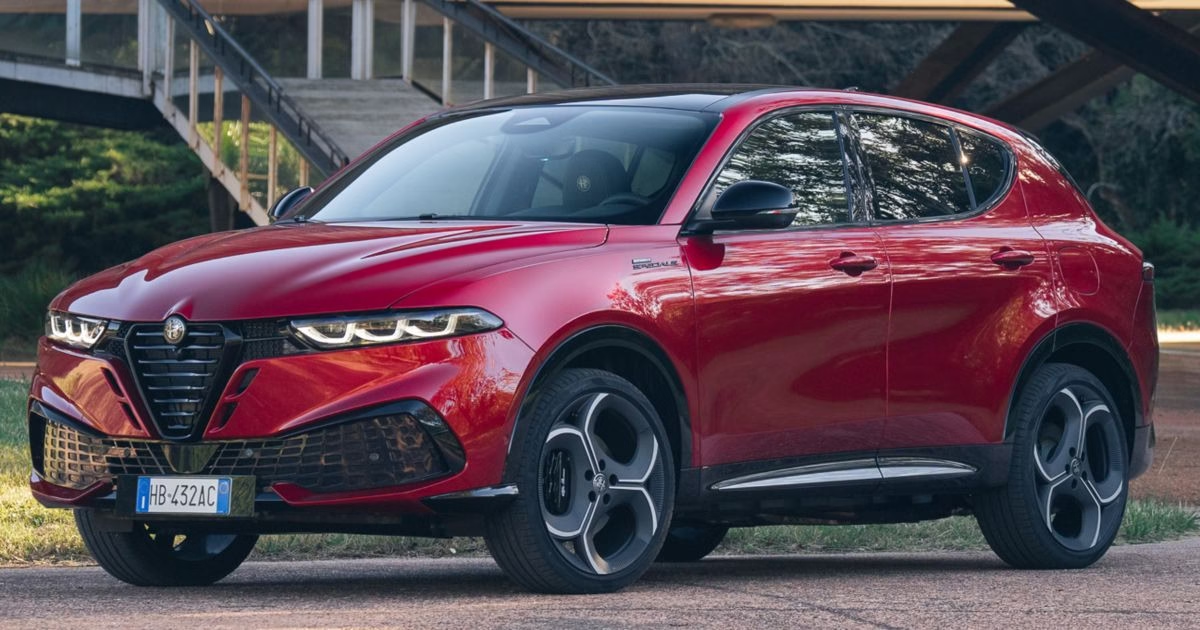
You’ve probably done this without realizing it had a name. You’re at a stoplight next to an SUV that looks almost exactly like your neighbor’s, except the badge on the grille is different and the sticker price at the dealership was a few thousand dollars apart. That’s not déjà vu. That’s a same car, different name situation, and once you start noticing it, you’ll see it everywhere on US roads.
The easiest way to understand it is to think about the grocery store. Kirkland almond milk and the name-brand almond milk next to it on the shelf often come off the same production line, get poured into different cartons, and sell for different prices twenty feet apart. Cars work the same way more often than most buyers ever clock.
Table of Contents
What Badge Engineering Actually Means (And What It Isn’t)
Before you can spot these twins on the road, it helps to know exactly what you’re looking for, and just as importantly, what you’re not looking for. The term gets thrown around loosely, and it covers a few genuinely different arrangements that don’t all mean the same thing for you as a buyer.
The One-Factory, Different-Labels Idea
Badge engineering is when an automaker builds a single vehicle, on a single production line, and sells it under two or more brand names with different exterior styling, interior trim, and a logo swap. The frame, suspension geometry, engine options, and most of the electronics underneath stay the same. What changes is what you see and touch: the grille shape, the headlights, the badge, sometimes the infotainment screen size, and almost always the price.
It’s not a scam. Nobody’s getting cheated. It’s just cheaper for the company to dress up one car three ways than to engineer three separate cars from scratch.
Badge Engineering vs. Platform Sharing vs. Joint Development
People use these terms interchangeably, and that’s where confusion creeps in, so it’s worth separating them once.
Badge engineering is the tightest relationship: same car, same factory, same core dimensions, different name. Platform sharing is looser: two vehicles use the same underlying architecture but can end up looking, driving, and feeling quite different, because the platform is more like a shared toolkit than a finished car. Joint development sits in between: two separate automakers split the engineering cost of a single design and each puts their own styling on top. The Toyota GR86 and Subaru BRZ are a joint development. The Chevy Trax and Buick Envista are much closer to true badge engineering.
Further Reading
Toyota vs Honda: Which Brand Is More Reliable in 2026?
If badge-level differences matter to you, reliability is where they actually show up in ownership costs.
The Twins You’ve Actually Driven Past This Week
With the definitions out of the way, here’s where it gets interesting: actual examples you can find at a dealership or in your neighbor’s driveway right now, ranging from near-identical siblings to lookalikes that only share their bones underneath.
GM’s Entry-Level Value Ladder: Trax, Envista, and Encore GX
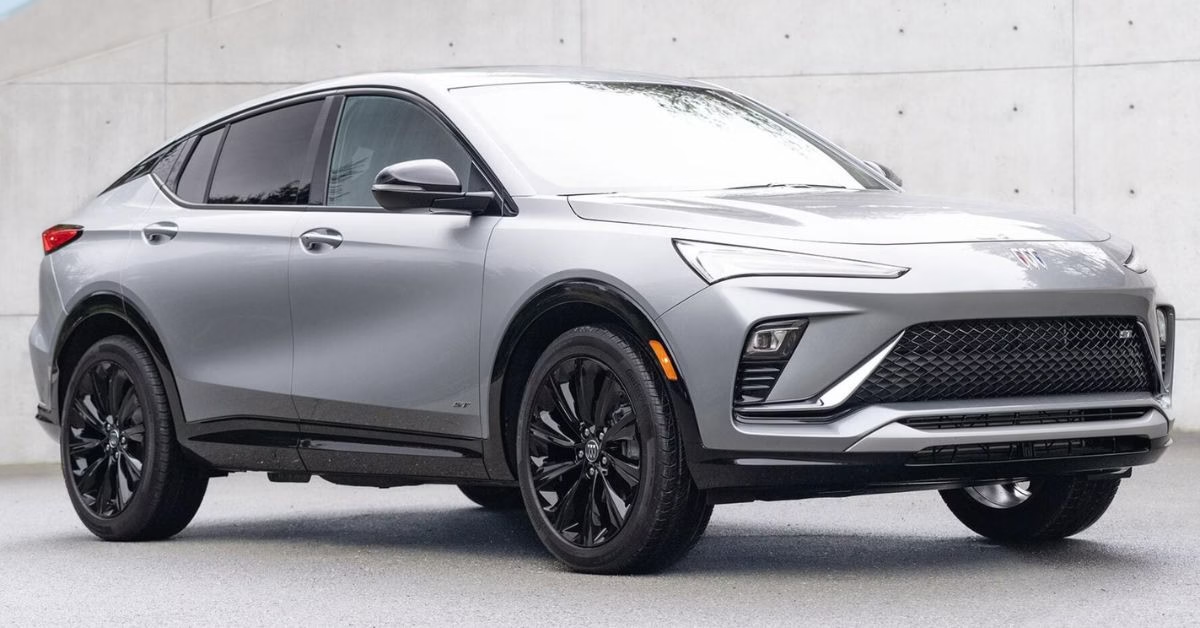
This is the clearest badge-engineering pair on sale in the US right now. The current Chevrolet Trax and Buick Envista share a 106.0-inch wheelbase and the same 1.2-liter turbocharged three-cylinder engine, and buyers cross-shopping the two are, mechanically speaking, looking at the same car with different sheet metal and interior finishes. Buick charges roughly $1,400 more for the Envista at entry-level trims, mostly for extra standard tech and a Bose-adjacent audio upgrade rather than anything under the hood.
The Buick Encore GX complicates the family tree slightly. It’s built on a related GM architecture but has grown more distinct over the past couple of generations, adding an available all-wheel-drive option the Trax and Envista don’t offer. So within one GM value ladder, you’ve actually got two different levels of “twin”: a near-identical pair (Trax/Envista) and a looser platform cousin (Encore GX).
The Full-Size SUV Trio: Tahoe, Yukon, and Escalade
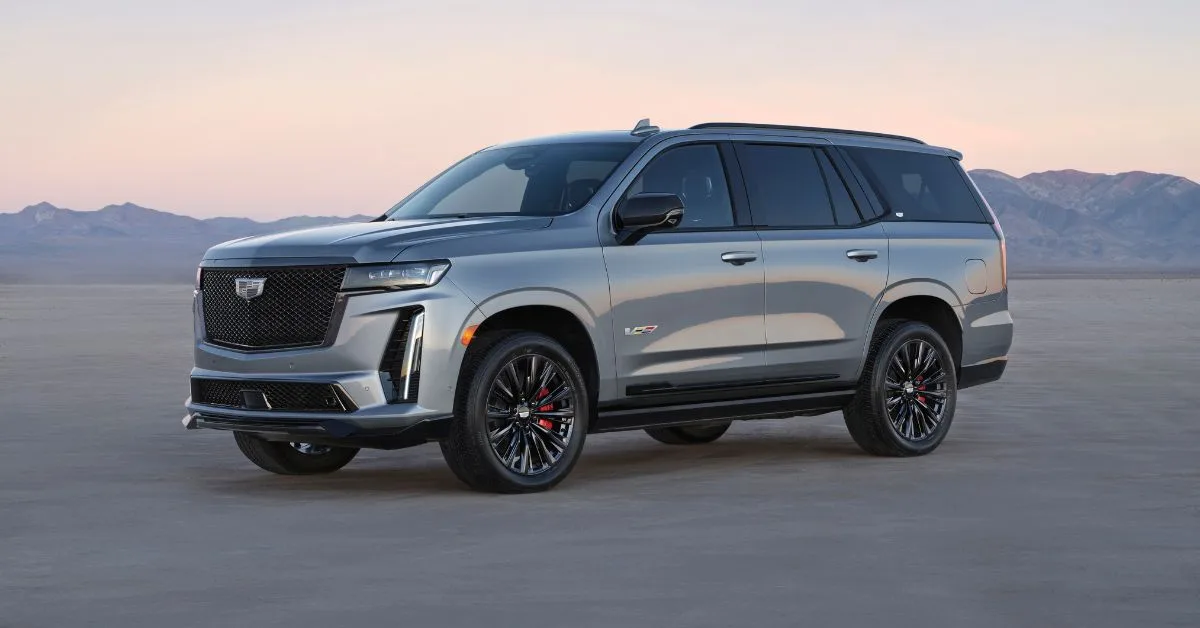
Go up a size class and GM does the same thing with more separation between price points. The Chevrolet Tahoe, GMC Yukon, and Cadillac Escalade share the same full-size, body-on-frame SUV architecture, the kind GM has built alongside its Silverado and Sierra pickups for decades at facilities like Arlington Assembly in Texas. It’s the kind of shared-DNA arrangement we broke down in more detail when we untangled what actually separates a true SUV from a crossover, and it’s exactly why three vehicles that started life as the same basic truck-based platform can end up $50,000 apart in price once you move up the ladder from Chevy to GMC to Cadillac.
The Sports Car Exception: GR86, BRZ, and the Scion FR-S That Started It
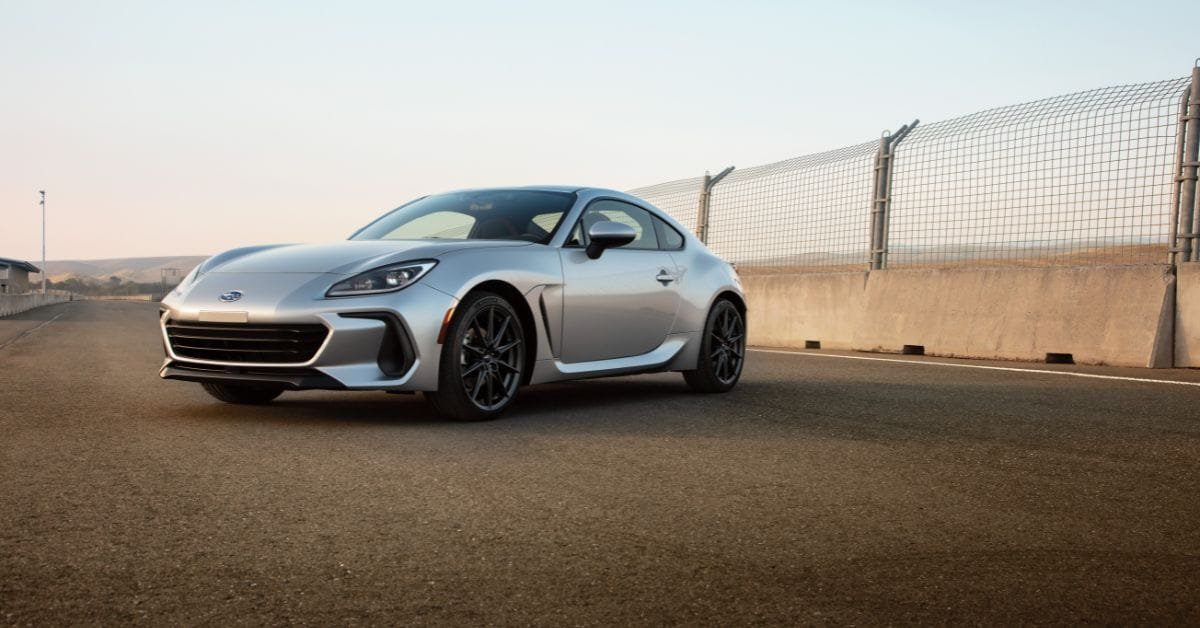
Not every badge-engineered pairing is about squeezing more brands out of a mainstream SUV. Toyota and Subaru jointly developed a lightweight, rear-wheel-drive sports coupe together, and Toyota originally sold its version under the now-discontinued Scion brand as the FR-S. When Scion folded, Toyota simply renamed its half of the car the 86, later the GR86, while Subaru kept selling its version as the BRZ. Different badges, different tuning philosophies from each brand’s engineers, but the same platform underneath the whole time.
The Geo Era: When an Entire Brand Was Built on Rebadging
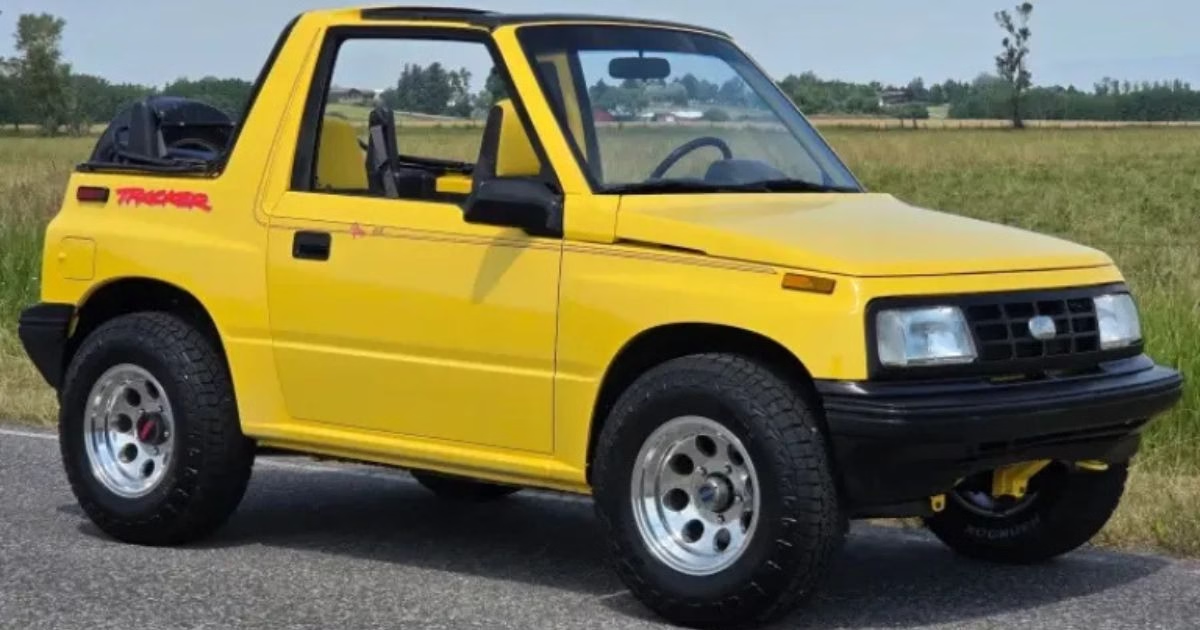
If you want to see badge engineering taken to its logical extreme, look back at GM’s old Geo brand. The Geo Prizm was a rebadged Toyota Corolla, built alongside actual Corollas at a jointly-run California plant. The Geo Metro was a rebadged Suzuki Swift. The Geo Storm was, underneath its own styling, an Isuzu. Geo didn’t design a single one of its own platforms; the entire brand existed as a badge-engineering exercise, and it ran that way for the better part of a decade before GM folded it into Chevrolet in the late ’90s.
Why Automakers Keep Doing This
None of this happens by accident or laziness on an automaker’s part. There’s real, fairly cold math behind the decision to sell one car three different ways instead of building three actual different cars, and it comes down to two forces working together.
The Billion-Dollar Reason
Developing an all-new vehicle platform from a blank sheet of paper costs somewhere between $1 billion and $6 billion, according to industry cost estimates, and that’s before a single unit rolls off the line. Once that cost is sunk into one platform, spreading it across three or four badge-engineered variants turns an enormous one-time expense into something the company can recover across a much wider range of price points and customer types. It’s the same logic as a restaurant chain using one central kitchen to supply several different-branded storefronts.
Filling a Lineup Gap Without Waiting Years
There’s a second, less-talked-about reason. If a brand suddenly needs a compact SUV to compete in a hot segment, and a sister brand within the same company already has one built and tooled up, badge engineering gets a competitive product to market in a fraction of the four-to-five years a from-scratch vehicle typically takes. It’s less elegant than a purpose-built design, but it’s fast, and in a segment moving as quickly as compact SUVs have over the past decade, fast sometimes wins.
Further Reading
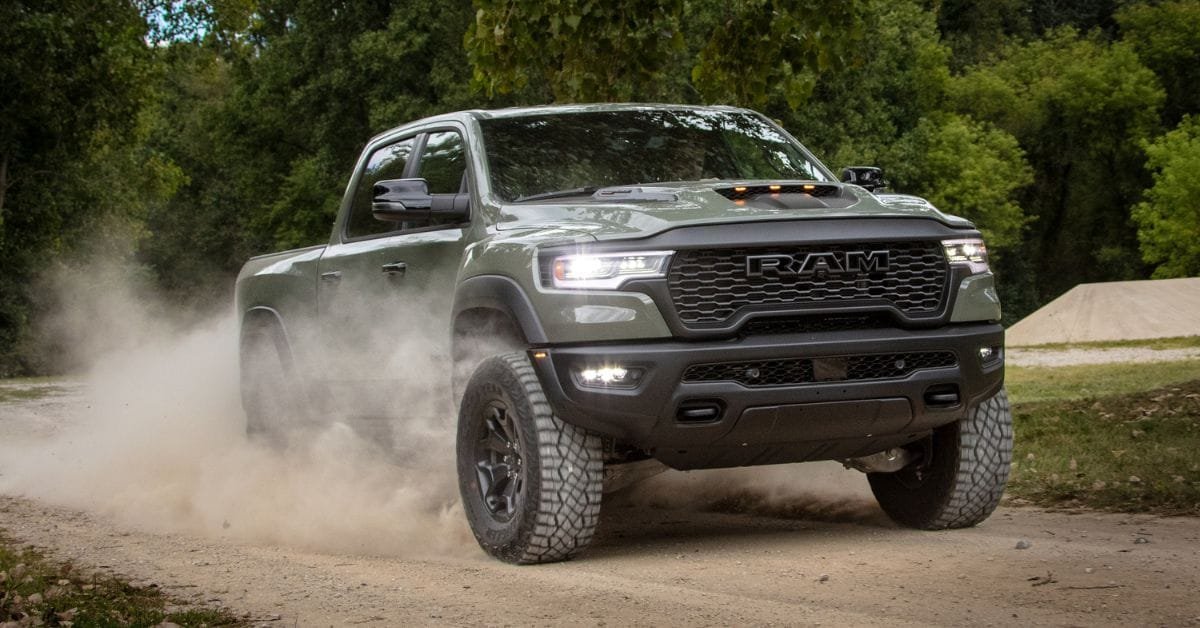
2026 F-150 vs Silverado vs Ram 1500: America’s Big Three Compared
GM shares platforms across trucks and SUVs alike — here’s how the Big Three actually stack up.
How to Spot a Badge-Engineered Twin Yourself
Once you know these pairings exist, the fun part is confirming one for yourself instead of taking a dealer’s word for it. A few concrete checks will tell you fast whether two vehicles are true mechanical siblings or just similar-looking coincidences.
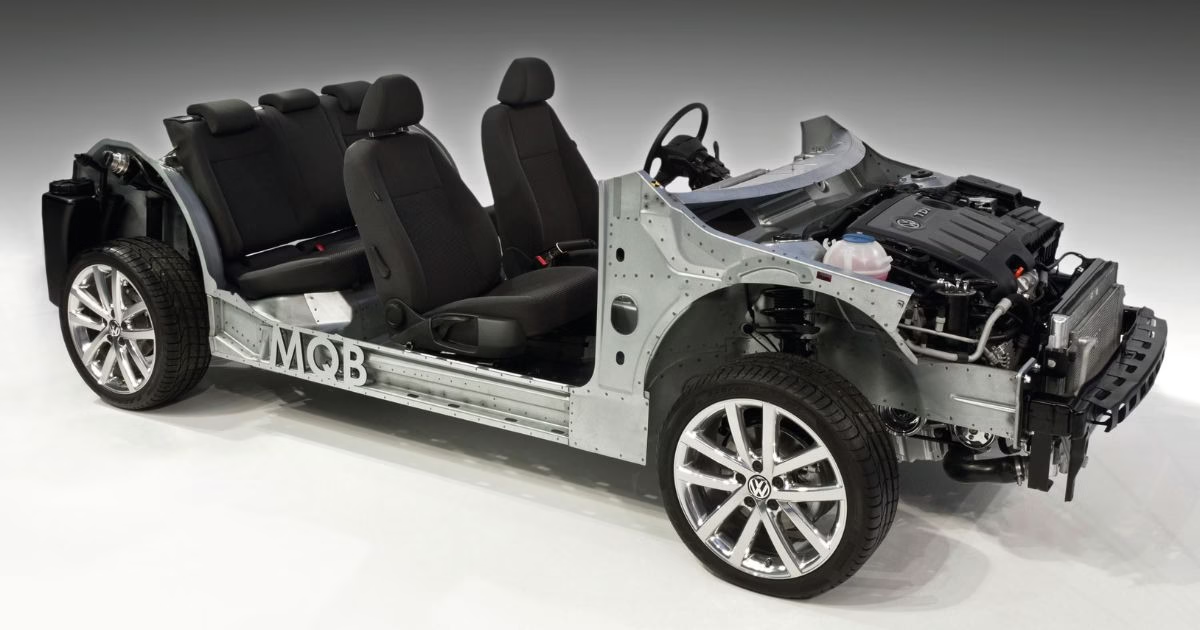
Start With the Wheelbase
Wheelbase, the distance between the front and rear axles, is one of the hardest things to disguise on a shared platform, because changing it requires re-engineering the floor pan itself. If two vehicles from sister brands list identical or nearly identical wheelbase measurements in their spec sheets, that’s usually your first real clue you’re looking at close mechanical siblings, not just similar-looking vehicles.
Check the Engine and Recall Data
Shared engine options across brands are another reliable tell, especially when the horsepower and torque figures match exactly rather than approximately. It’s also worth knowing that badge-engineered twins frequently share recall campaigns, since a defect in a shared component gets addressed under one combined notice rather than separate ones for each brand. When you see a recall covering two or three differently badged vehicles at once, that’s a strong signal of how much hardware and software they actually share underneath.
Read the Data Plate
If you want real proof rather than an educated guess, the manufacturer’s data plate, usually riveted somewhere in the driver’s door jamb or under the hood, often lists a platform or body code that’s identical across badge-engineered siblings even when the model names on the outside don’t match at all. Dealers rarely point this out, since it undercuts the idea that the more expensive badge is a fundamentally different vehicle.
Does It Matter Which Badge You Actually Buy?
Knowing two vehicles are mechanical twins is useful, but it doesn’t automatically tell you which one to actually put in your driveway. The badge on the hood can still carry real consequences even when everything underneath is identical.
Where Real Differences Show Up
The mechanical parts underneath are usually identical, but that doesn’t mean the ownership experience is. Warranty terms can differ between sister brands. Dealer network size and service quality vary a lot, and that matters more than people expect when it’s time for a repair. Resale value often favors whichever badge has the stronger reputation, regardless of what’s actually under the sheet metal. And feature availability, like the Encore GX’s all-wheel-drive option that the Trax doesn’t offer, can be the real deciding factor rather than the badge itself.
When the Higher-Priced Badge Is Worth It
Paying more for the “nicer” badge isn’t automatically a bad deal. If the upscale version includes genuinely useful standard features you’d otherwise have to option separately, or if the dealer network near you is dramatically better for one brand than the other, the price gap can be worth it. But if you’re paying extra purely for logo prestige on a vehicle you already know is mechanically identical, that’s a decision worth making with eyes open rather than by accident, and it’s exactly the kind of tradeoff that gets easier to spot once you know what to look for when you’re actually standing on a used car lot working through a full inspection.
Further Reading
Best First Cars Under $15k in 2026: Top Picks for New Drivers
If the cheaper badge on a nearly identical car sounds appealing, this budget guide is the natural next stop.
Frequently Asked Questions (FAQ)
What does “badge engineered” mean?
It means a single vehicle is designed and built once, on one production line, and then sold under two or more different brand names with cosmetic and trim changes layered on top. The core structure, most of the mechanical components, and often the exact engine options carry over unchanged between versions, even though the exterior styling and interior finish can look quite different from one badge to the next.
Why do automakers sell the same car under different brand names?
Developing a single new vehicle platform can cost anywhere from $1 billion to $6 billion, so spreading that cost across three or four differently badged versions lets one company reach several price points and customer types without engineering separate vehicles from the ground up. It also lets a brand fill a gap in its lineup quickly by borrowing an already-built vehicle from a sister brand instead of waiting years for something new.
Is a rebadged car worse than the original version?
Not in terms of build quality, since the vehicles typically come off the exact same assembly line using the same manufacturing process and quality controls. Where real differences show up is in warranty coverage, available features, dealer network strength, and resale value, all of which can vary between two badges even when the car underneath them is identical.
How can you tell if two cars are actually the same vehicle underneath?
Start by comparing wheelbase measurements in the official spec sheets, since that number is hard to change without re-engineering the whole platform. From there, check whether the engine options and horsepower figures match exactly, look at whether the vehicles share recall campaigns, and, if you want certainty, look up the platform or body code listed on the manufacturer’s data plate in the door jamb.
Are automakers still badge engineering cars today?
Yes, and it’s not a relic of the Geo era. The Chevrolet Trax and Buick Envista are a current, actively-sold example on US lots right now, sharing a wheelbase and engine while wearing two different badges and carrying two different price tags.