
Gas prices are back above $4.00 a gallon across much of the country, and for a lot of us, that sting at the pump is reshaping what we care about when shopping for a new car. The most fuel-efficient cars of 2026 are not econoboxes wearing their frugality as a badge of shame.
This year’s top performers include redesigned hybrids, a revived nameplate making a splashy return, and a luxury crossover that proves premium and practical are no longer mutually exclusive. Every car on this list earns its rank through confirmed EPA combined mpg figures, all sourced from the EPA’s official fueleconomy.gov database, and all are available at US dealerships right now.
Early 2026 import tariffs have pushed MSRPs higher than previous 2025 guides. While these figures are current as of April, prices are moving targets—always confirm final window sticker pricing with your dealer.
Table of Contents
At a Glance: The 10 Best MPG Cars of 2026
All EPA combined ratings below are for the most efficient non-plug-in trim of each model. Prices are approximate MSRP.
| Rank | Model | EPA Combined | Starting MSRP |
|---|---|---|---|
| 1 | 2026 Toyota Prius LE | 57 mpg | $28,550 |
| 2 | 2026 Hyundai Elantra Hybrid Blue | 54 mpg | $25,450 |
| 3 | 2026 Kia Niro Hybrid | 53 mpg | $27,390 |
| 4 | 2026 Toyota Camry LE | 51 mpg | $29,300 |
| 5 | 2026 Hyundai Sonata Hybrid Blue | 51 mpg | $29,200 |
| 6 | 2026 Toyota Corolla Hybrid | 50 mpg | $24,975 |
| 7 | 2026 Honda Civic Hybrid | 49 mpg | $29,395 |
| 8 | 2026 Honda Accord Hybrid | 48 mpg | $33,795 |
| 9 | 2026 Honda Prelude Hybrid | 44 mpg | $42,000 |
| 10 | 2026 Lexus UX 300h | 43 mpg | $38,450 |
How We Ranked This List
This list covers standard (non-plug-in) hybrids and gas-only cars. Plug-in hybrids operate on a fundamentally different logic, since their real-world efficiency depends heavily on how often you charge, so we keep them separate. Every figure here is the EPA combined rating for the most efficient available trim level of each model, with any ties broken by the better city mpg. All pricing is approximate and reflects current market conditions.
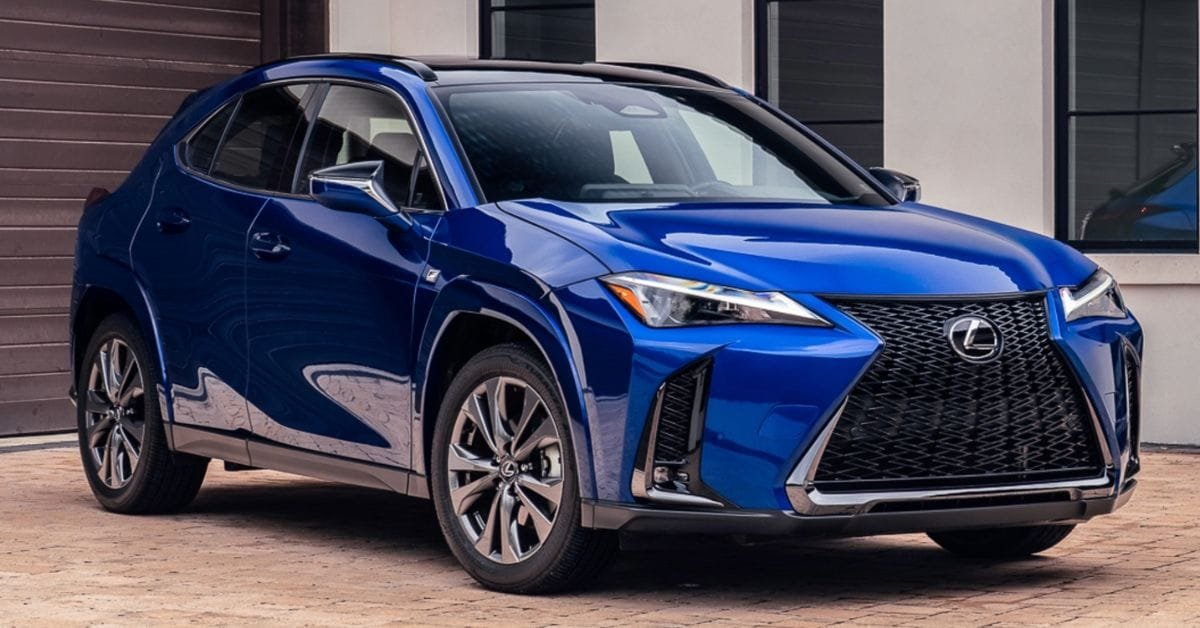
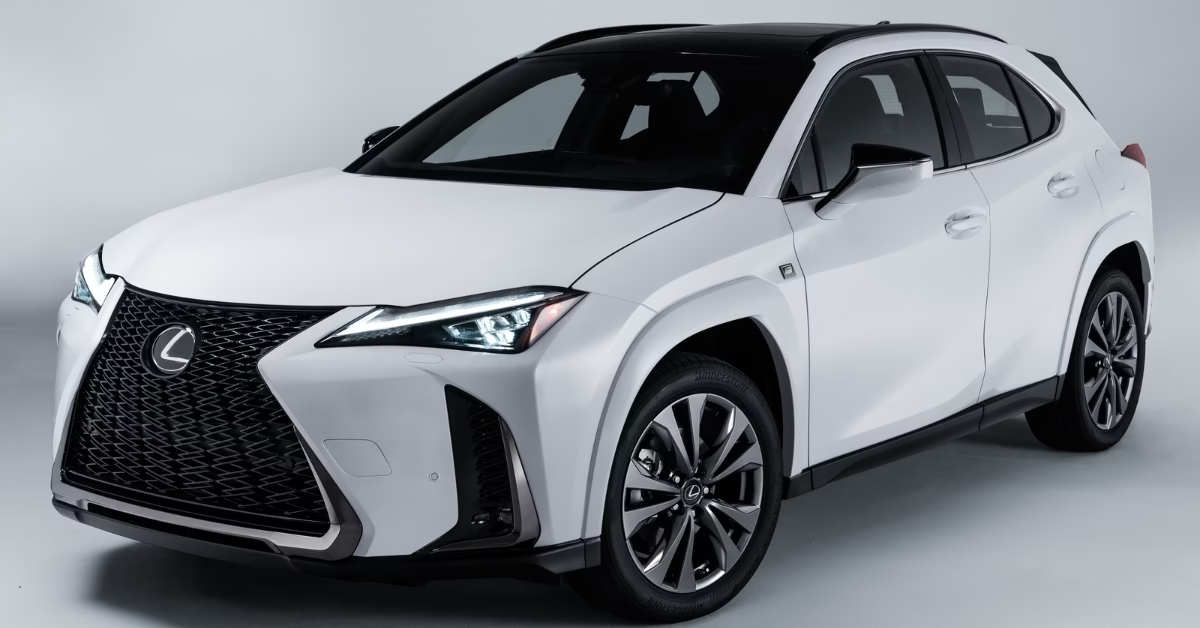
10. Lexus UX 300h — 43 MPG Combined
| Specification | Detail |
|---|---|
| EPA Rating | 45 city / 41 highway / 43 combined |
| Powertrain | 2.0L hybrid system, 196 hp |
| Drive | FWD standard, AWD optional |
| Starting MSRP | $38,450 |
| Est. Annual Fuel Cost | $1,400 |
The Lexus UX 300h is the only luxury car on this list, and it earns its spot with 43 mpg combined alongside an interior that sets a standard most efficiency-focused vehicles do not even attempt. The cabin is genuinely refined, the ride is settled, and the hybrid powertrain operates with the seamless quietness you expect from a Lexus. Infotainment has improved considerably over prior generations, and the overall build quality is a level above anything else near this price point on the efficiency spectrum.
The real constraint here is cargo space. At just 17.2 cubic feet behind the rear seats, the UX is a commuter and weekend companion, not a family hauler. If you regularly need SUV-grade utility alongside strong fuel economy, a dedicated hybrid crossover will serve you better. Our comparison of the best
If you regularly need SUV-grade utility alongside strong fuel economy, a dedicated hybrid crossover will serve you better. Our rundown of the best fuel-efficient hybrid SUVs covers that territory in full. But if your priorities are luxury, efficiency, and a small footprint, the UX 300h is difficult to beat.
9. Honda Prelude Hybrid — 44 MPG Combined
| Specification | Detail |
|---|---|
| EPA Rating | 46 city / 41 highway / 44 combined |
| Powertrain | 2.0L hybrid, dual electric motors, 200 hp |
| Drive | FWD |
| Starting MSRP | $42,000 |
| Est. Annual Fuel Cost | $1,350 |
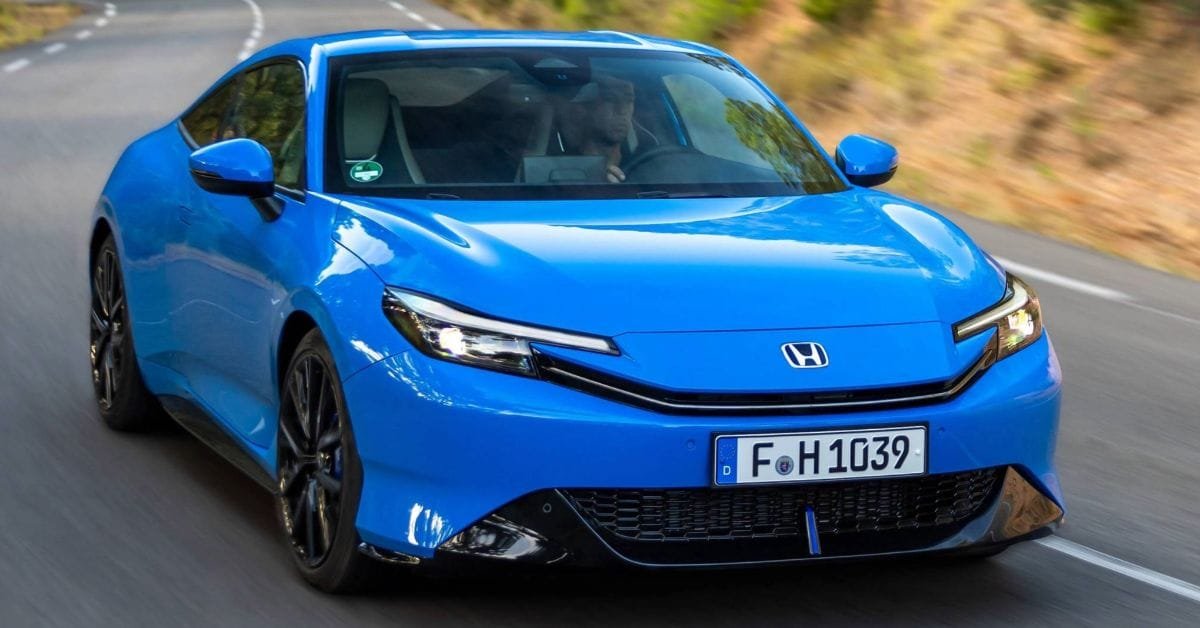
The Prelude nameplate is back, and it means something. Honda revived one of its most beloved models for 2026 as a sporty coupe-styled hybrid, and the result is easily the most interesting car on this list. With 200 horsepower from its dual-motor hybrid system, the Prelude is one of the more energetic entries here, a car where the 44 mpg feels earned through engineering rather than extracted through deprivation. The transition between electric and gasoline power is virtually imperceptible, and the low-slung profile gives it a visual presence that no other car in this ranking can match.
What distinguishes the Prelude is its character. Most fuel-efficient cars lean heavily on practicality. The Prelude leans into driving. The steering is weighted and communicative, and the interior design feels a generation ahead of the standard Civic. It occupies a compelling space between the efficiency-focused Civic Hybrid and the more premium Accord Hybrid, and for buyers who care as much about personality as pump visits, it is arguably the most satisfying choice on this entire list.
8. Honda Accord Hybrid — 48 MPG Combined
| Specification | Detail |
|---|---|
| EPA Rating | 51 city / 44 highway / 48 combined |
| Powertrain | 2.0L Atkinson-cycle four-cylinder + two electric motors, 204 hp |
| Drive | FWD |
| Starting MSRP | $33,795 |
| Est. Annual Fuel Cost | $1,250 |
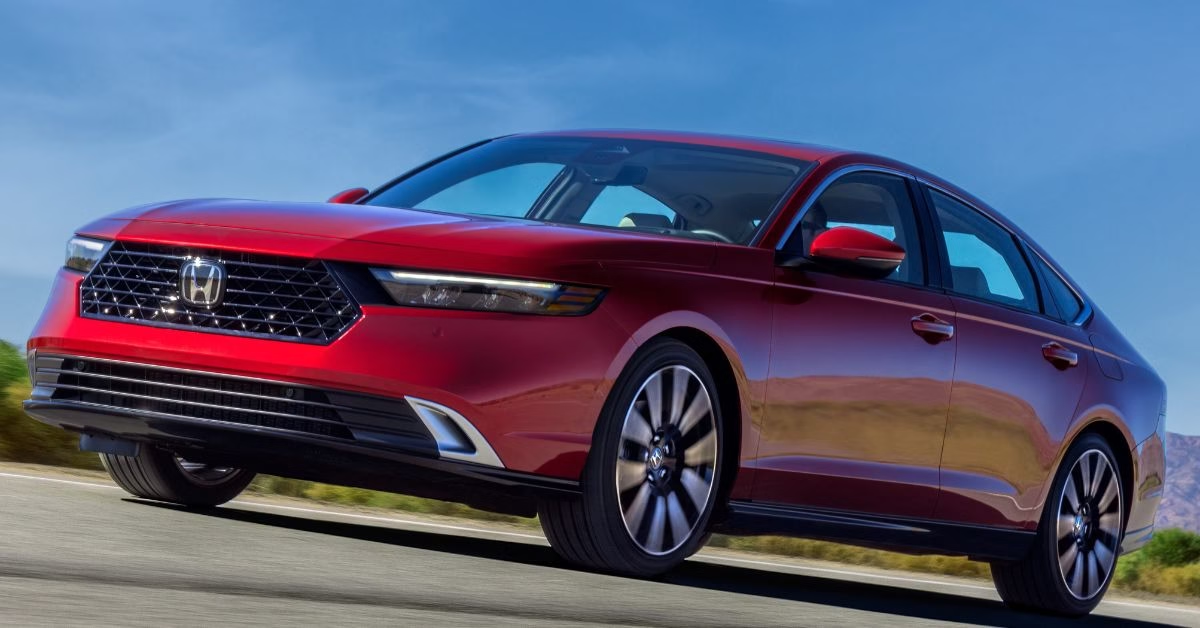
The Accord Hybrid is the most capable midsize car on this list, and one of the strongest arguments for hybrid technology you can make to a skeptical buyer. At 48 mpg combined, it outperforms many compact cars while offering full-size room for five adults and a trunk that handles checked-bag loads without complaint. Honda’s two-motor hybrid system has been refined across multiple generations, and in the Accord, it operates with a smoothness that belies how hard it works under the hood.
Its city efficiency is especially worth noting. At 51 mpg in stop-and-go traffic, the Accord Hybrid is one of only a handful of midsize cars in automotive history to reach that mark. Buyers who spend most of their time in urban or suburban traffic will often see real-world numbers that meet or exceed the EPA city estimate. Highway efficiency narrows the gap slightly at 44 mpg, but that is still well above the mainstream midsize sedan average and a figure that translates to meaningful annual savings.
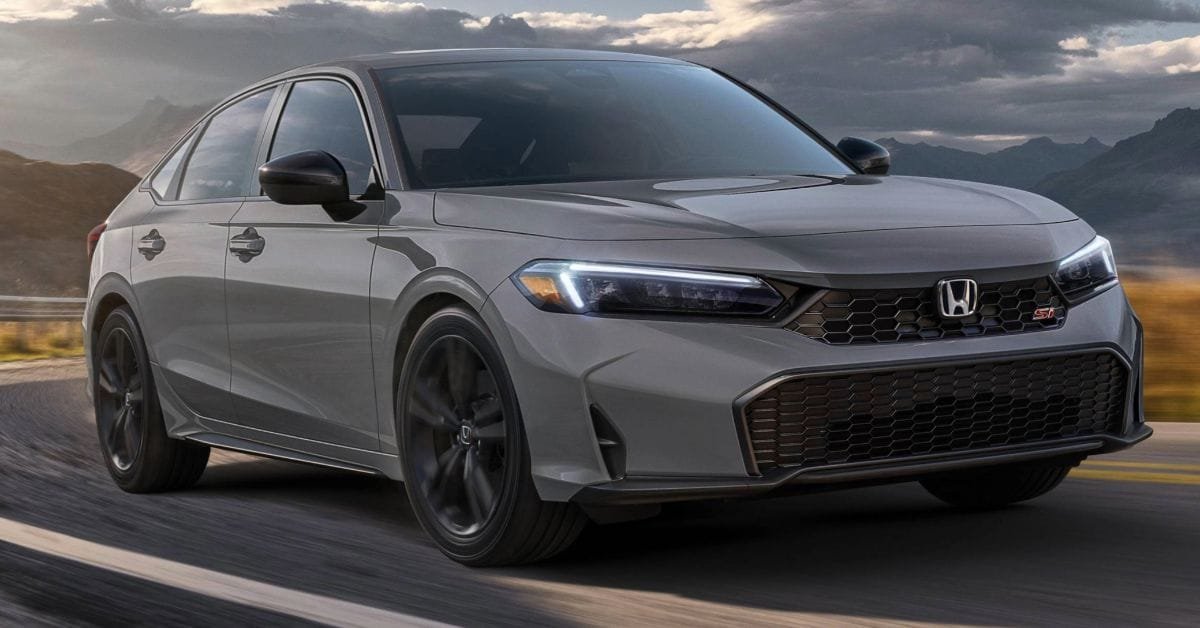
7. Honda Civic Hybrid — 49 MPG Combined
| Specification | Detail |
|---|---|
| EPA Rating | 50 city / 47 highway / 49 combined |
| Powertrain | 2.0L hybrid system, 200 hp |
| Drive | FWD |
| Starting MSRP | $29,395 |
| Est. Annual Fuel Cost | $1,200 |
The Civic Hybrid tends to get overlooked in broader hybrid conversations because it competes in the same mental space as the legendary Prius. That is a mistake. At 49 mpg combined, the Civic Hybrid sits near the top of the non-plug-in class while delivering a sharper, more engaging driving experience than either Toyota at a comparable price. The interior quality has received consistent praise from reviewers across the board, and the 200-hp hybrid powertrain makes the Civic Hybrid meaningfully quicker off the line than its gas-only sibling.
One technical point worth understanding: the Civic Hybrid’s system runs on electricity alone at low speeds, with the gasoline engine rarely needed below approximately 25 mph. That characteristic benefits city commuters most, with efficiency in real-world urban driving often exceeding the EPA city estimate. For someone who covers 30 miles or fewer of mostly urban driving daily, the Civic Hybrid can feel nearly electric in practice, with the engine stepping in primarily for highway speeds and harder acceleration.
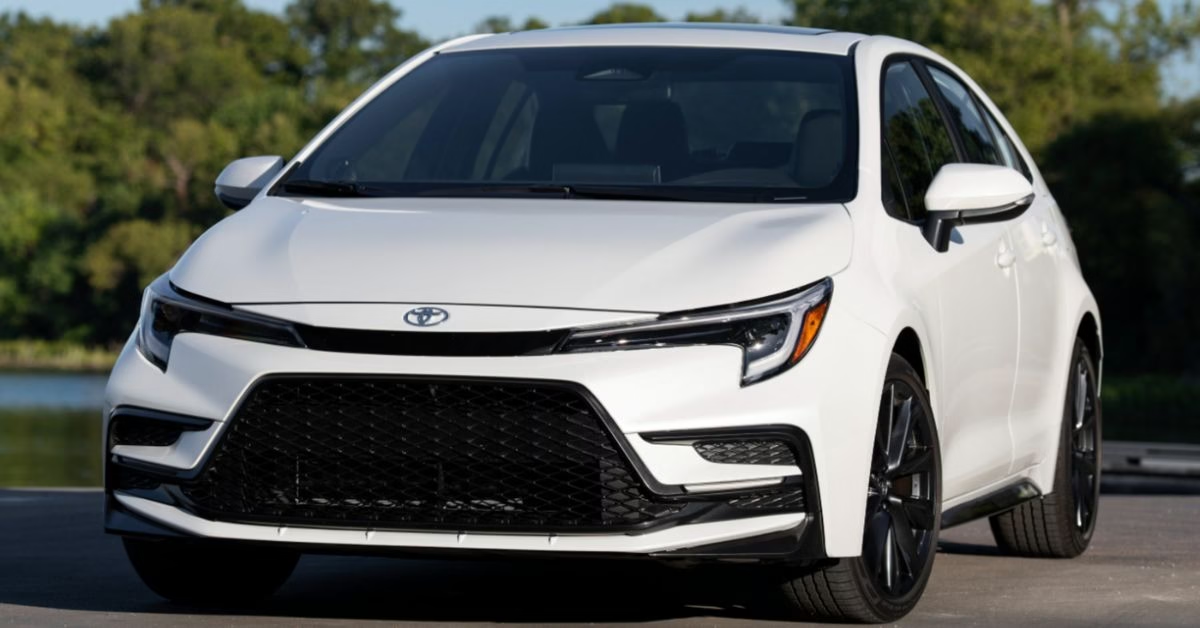
6. Toyota Corolla Hybrid — 50 MPG Combined
| Specification | Detail |
|---|---|
| EPA Rating | 53 city / 46 highway / 50 combined |
| Powertrain | 1.8L hybrid system, 96 hp |
| Drive | FWD standard, AWD optional |
| Starting MSRP | $24,975 |
| Est. Annual Fuel Cost | $1,200 |
The Toyota Corolla Hybrid is the most affordable car on this entire list, and by a meaningful margin. Starting under $25,000, it delivers 50 mpg combined at a price point that most efficiency-focused buyers can realistically reach without financial strain. That combination is genuinely rare. Toyota’s hybrid technology has been refined across decades of production, and the Corolla version benefits from the same fundamental engineering that powers more expensive Toyota and Lexus hybrids, which means proven long-term durability alongside the fuel economy figure.
The available all-wheel drive is the detail worth underlining here. AWD is rare at this price and fuel economy level, and while opting for it does reduce the combined rating slightly, it substantially broadens the Corolla Hybrid’s usefulness for buyers in colder climates or on unpaved roads. The 53 mpg city rating is also notable, meaning urban commuters extract disproportionate value from this powertrain. For pure value per dollar spent, nothing on this list comes close.
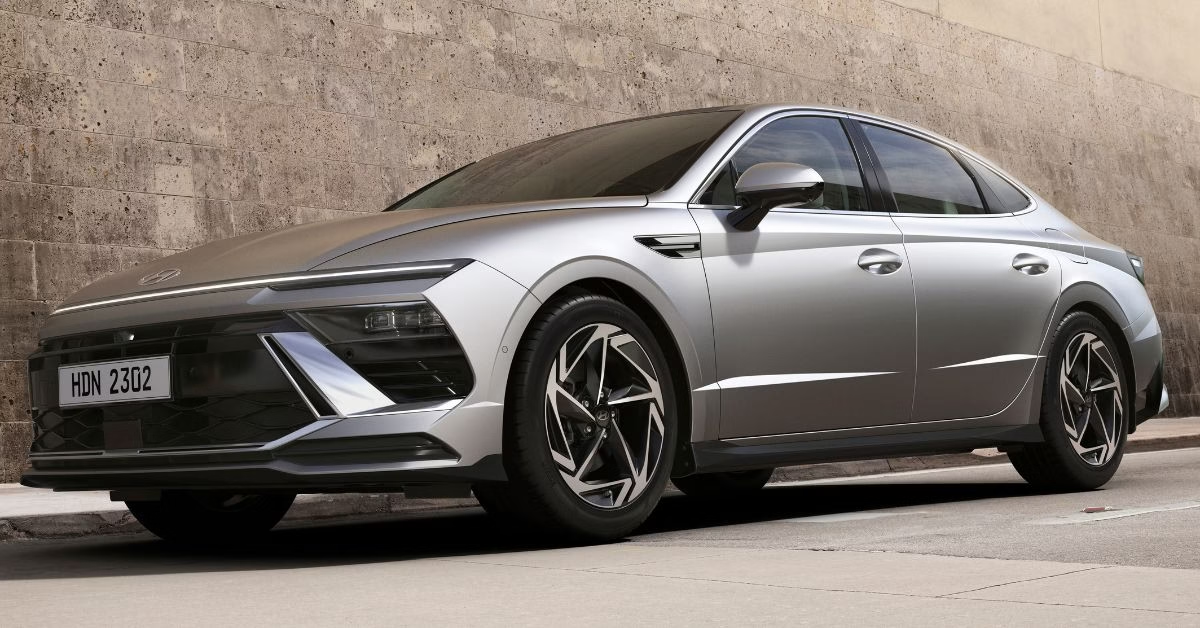
5. Hyundai Sonata Hybrid Blue — 51 MPG Combined
| Specification | Detail |
|---|---|
| EPA Rating | 47 city / 56 highway / 51 combined |
| Powertrain | 2.0L hybrid, six-speed dual-clutch, 192 hp |
| Drive | FWD |
| Starting MSRP | $29,200 |
| Est. Annual Fuel Cost | $1,150 |
The Sonata Hybrid Blue is consistently underestimated. While Toyota and Honda dominate the hybrid conversation at this mpg level, Hyundai’s midsize entry matches the Toyota Camry’s 51 mpg combined while offering a more distinctive exterior design, a more driver-focused interior layout, and an unusual six-speed dual-clutch transmission that gives the Sonata a more engaged feel than most CVT-equipped rivals in this space. Hyundai has also refreshed the 2026 interior with a cleaner dashboard design and improved screen resolution.
The highway figure is what sets the Sonata Hybrid apart from most of the cars around it: 56 mpg on the interstate is the second-highest highway rating on this entire list, making this the strongest choice for buyers whose driving is predominantly long-distance highway commuting. The rear seat is genuinely spacious, the trunk is competitive with the Camry, and the overall value proposition from Hyundai’s standard equipment list is difficult to dismiss at the asking price.
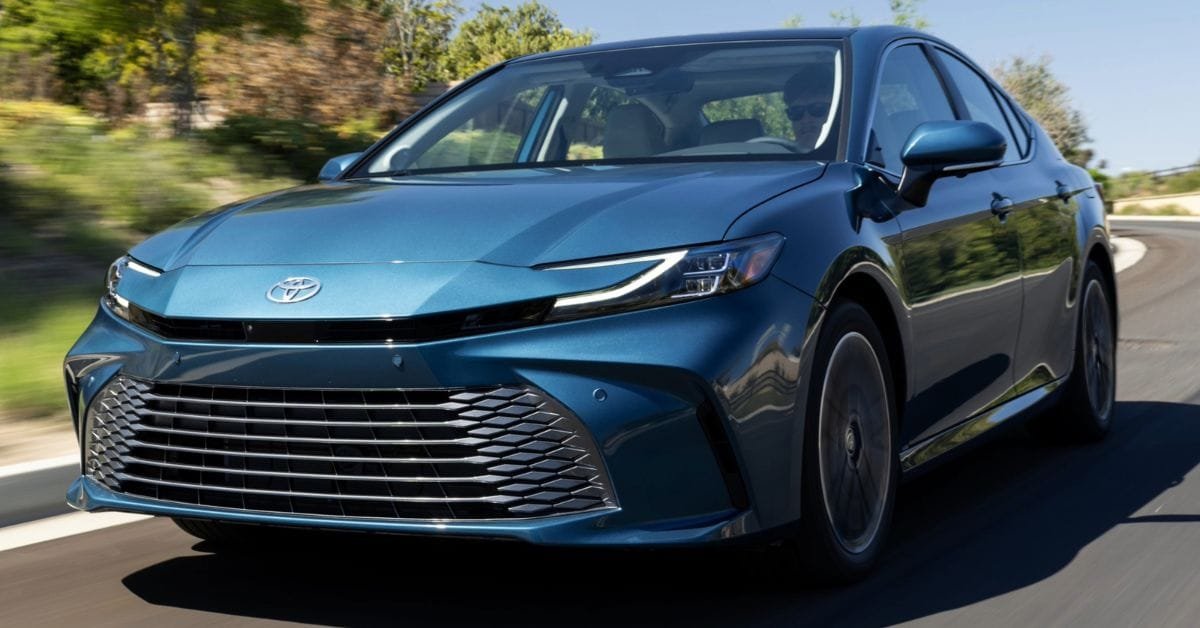
4. Toyota Camry LE — 51 MPG Combined
| Specification | Detail |
|---|---|
| EPA Rating | 52 city / 49 highway / 51 combined |
| Powertrain | 2.5L four-cylinder + Toyota Hybrid System II, 225 hp |
| Drive | FWD standard, AWD optional |
| Starting MSRP | $29,300 |
| Est. Annual Fuel Cost | $1,150 |
Starting with the 2025 model year, Toyota made a landmark call: the Camry would be sold exclusively as a hybrid. For 2026, that commitment holds, and what it means in practice is that the base version of one of the best-selling cars in America now returns 51 mpg combined as standard, without any premium charged for the hybrid powertrain. The Camry LE starts at $29,300 and is well-equipped at that price, which makes the fuel economy feel less like a bonus and more like the baseline expectation.
The Camry has also received the top safety marks among cars on this list, earning a 9.9 out of 10 from U.S. News for safety. Available AWD adds all-season confidence without a crippling mpg penalty. If you are weighing Toyota and Honda across their respective fuel-efficient lineups, our brand reliability comparison for 2026 goes deep on the long-term dependability differences. For buyers who prioritize a combination of reliability reputation, safety scores, and proven resale value, the Camry remains one of the most complete packages on the market.
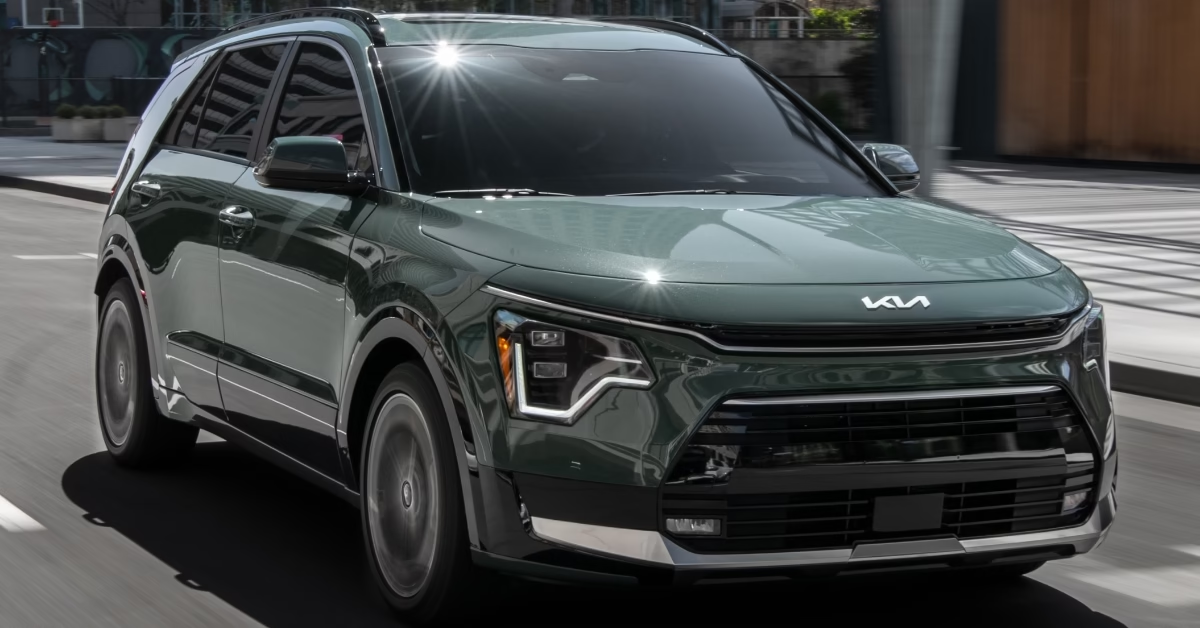
3. Kia Niro Hybrid — 53 MPG Combined
| Specification | Detail |
|---|---|
| EPA Rating | 53 city / 54 highway / 53 combined |
| Powertrain | 1.6L hybrid, six-speed dual-clutch, 139 hp |
| Drive | FWD |
| Starting MSRP | $27,390 (including destination) |
| Est. Annual Fuel Cost | $1,150 |
The Kia Niro Hybrid occupies a unique and genuinely valuable position on this list: it is the most fuel-efficient SUV you can buy in 2026. With 53 mpg combined and a base price just above $27,000, it undercuts virtually every other option near the top of these rankings on cost while offering the elevated ride height and practical cargo utility of a crossover. That combination is rare enough that it resolves a tension most efficient car shoppers face, the choice between the best mpg numbers and the utility of an SUV footprint.
The Niro in person feels more substantial than the numbers suggest. The interior is well-organized with a modern dashboard layout and comfortable seating for four adults. The six-speed dual-clutch can feel slightly hesitant in low-speed parking lot maneuvers, a characteristic common to DCT transmissions generally, but at normal city and highway paces, it is smooth and well-calibrated. Kia also equips the base Niro generously with standard driver-assistance features. For anyone who crosses between ‘I want efficiency’ and ‘I also need crossover practicality,’ the Niro Hybrid resolves that tension more convincingly than any car near it on this list.
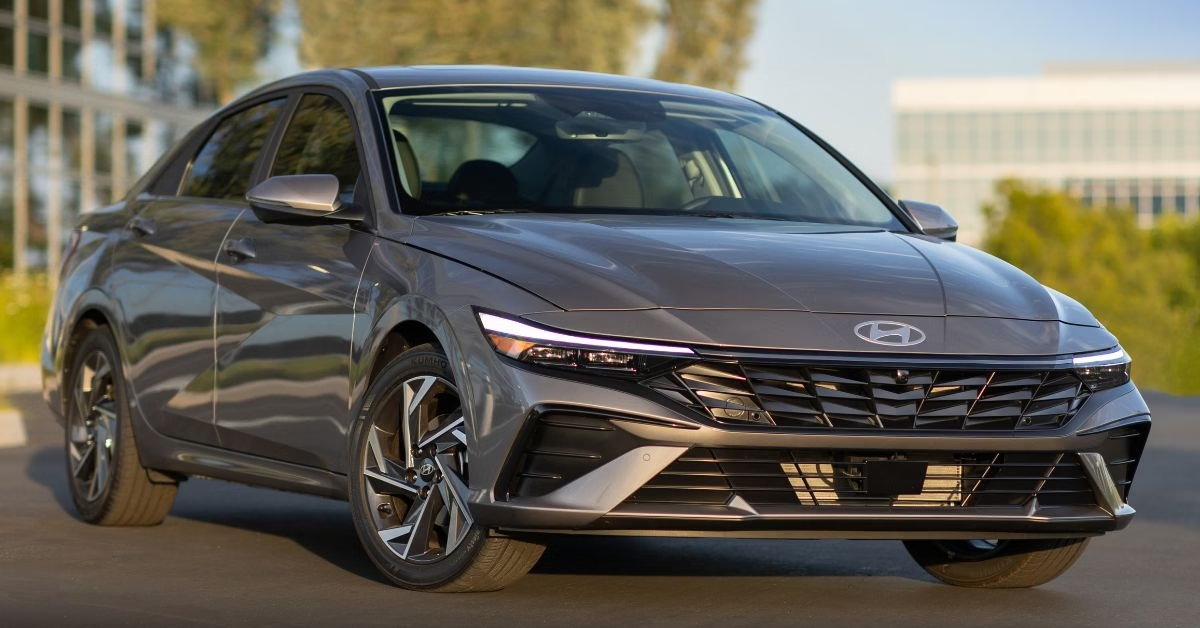
2. Hyundai Elantra Hybrid Blue — 54 MPG Combined
| Specification | Detail |
|---|---|
| EPA Rating | 51 city / 58 highway / 54 combined |
| Powertrain | 1.6L hybrid, six-speed dual-clutch, 139 hp |
| Drive | FWD |
| Starting MSRP | $25,450 |
| Est. Annual Fuel Cost | $1,100 |
The Hyundai Elantra Hybrid Blue is a genuine efficiency revelation. The Blue trim designation is Hyundai’s way of flagging their most fuel-optimized configuration, and the Elantra earns it through a combination of smaller wheels, narrower tires, and precise aerodynamic calibration. The result is 58 mpg on the highway, the highest highway rating of any non-plug-in hybrid currently on sale in the US, including the Prius. For highway-heavy commuters, that number changes the calculus considerably.
At $25,450, the Elantra Hybrid Blue is also among the most affordable ways into a genuinely modern hybrid. The interior is not as spartan as efficiency-focused vehicles sometimes are. The standard 8-inch infotainment screen, comprehensive driver-assistance suite, and comfortable seating reflect Hyundai’s broader push to make efficiency mainstream rather than a premium add-on. The six-speed dual-clutch transmission delivers a more responsive, animated feel than most CVT-equipped competitors, making this one of the more enjoyable cars to drive on a daily basis at any mpg number.
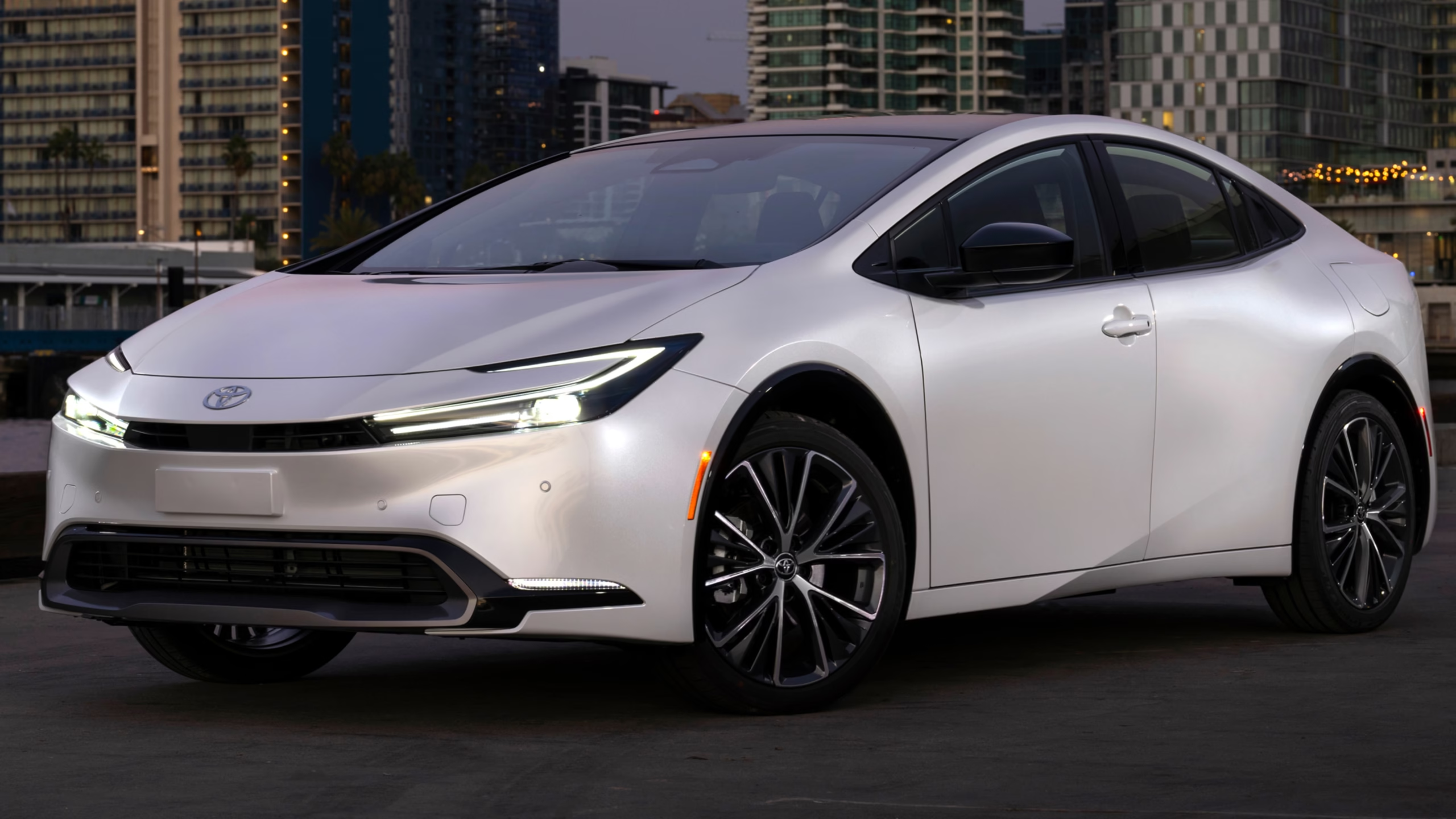
1. Toyota Prius LE — 57 MPG Combined
| Specification | Detail |
|---|---|
| EPA Rating | 56 city / 57 highway / 57 combined |
| Powertrain | 2.0L hybrid system, 194 hp |
| Drive | FWD (AWD optional at 49 mpg combined) |
| Starting MSRP | $28,550 |
| Est. Annual Fuel Cost | $1,050 |
The Toyota Prius has led this list in virtually every year since it arrived in the US for the 2001 model year, and the 2026 edition gives no reason to change that. The generation redesigned for 2023 shed the polarizing styling and timid driving character that defined earlier versions. Today’s Prius is genuinely striking to look at, with a low, swooping roofline and an interior that Car and Driver placed on its 2026 Editors’ Choice list for its combination of driving engagement and real-world livability.
At 57 mpg combined, nothing with a gasoline-only tank comes close. To put that in concrete terms: a driver who covers 15,000 miles annually in a Prius spends roughly $1,050 on fuel at $4.00 per gallon, versus approximately $1,667 in the already-frugal gas-only Honda Civic. That is more than $600 saved every year from day one, compounding toward $3,000 over five years without accounting for any further increases in fuel costs.
Toyota also offers an AWD version using a dedicated rear electric motor rather than a mechanical connection, which maintains an impressive 49 mpg combined, making all-weather traction available without a serious efficiency penalty. The standard Prius also has available rear headroom as a known limitation, but for the target buyer, those are reasonable trade-offs for the most efficient non-plug-in vehicle on the American market.
What About Gas-Only Cars?
Not every buyer wants a hybrid. Whether the concern is the upfront price premium, uncertainty about long-term battery servicing, or a preference for a simpler powertrain, conventional gasoline cars still make sense for a meaningful segment of buyers. The best options for 2026 remain the Honda Civic LX Sedan at 36 mpg combined, the Toyota Corolla LE at 35 mpg, and the Hyundai Elantra SE at 35 mpg, with the Volkswagen Jetta and Nissan Sentra close behind at 34 mpg each.
None of the gas-only options crack 40 mpg the way their hybrid siblings do, but all five are excellent, reliable transportation with lower entry prices and powertrains that most mechanics nationwide can service without specialized tooling. If you are choosing between a Toyota and Honda on this list and want to go deeper on the dependability side before deciding, our brand-level reliability comparison covers both in detail.
Frequently Asked Questions
What is the most fuel-efficient car you can buy in 2026?
The 2026 Toyota Prius LE is the most fuel-efficient non-plug-in car available in the US, with an EPA combined rating of 57 mpg. It is also available with all-wheel drive at 49 mpg combined. Among SUVs specifically, the 2026 Kia Niro Hybrid leads at 53 mpg combined.
Are hybrid cars worth buying in 2026?
With national average gas prices above $4.00 per gallon as of spring 2026, hybrids are recouping their price premium faster than in prior years. A driver covering 15,000 miles annually in a top-ranked hybrid can save $400 to $700 per year compared to a comparable gas car, closing the hybrid price gap within three to four years for most buyers.
What is the most fuel-efficient SUV in 2026?
The 2026 Kia Niro Hybrid holds the title of most fuel-efficient SUV on the US market with an EPA combined rating of 53 mpg. It is classified as a subcompact crossover and offers genuine cargo utility alongside that efficiency figure, with a base price just above $28,000.
Do hybrids need special maintenance or different service schedules?
Modern hybrids do not require significantly different maintenance than conventional gas cars. Oil changes, tire rotations, and brake inspections follow similar schedules. Hybrid batteries are engineered to last the life of the vehicle. One practical benefit is that regenerative braking significantly extends brake pad life compared to gas-only vehicles, which can reduce one common service cost over time.
How does the EPA calculate fuel economy?
The EPA calculates combined mpg by blending city and highway test results with a 55/45 weighting: 55% of the city rating plus 45% of the highway rating. The tests are conducted in a controlled laboratory environment under standardized conditions, which is why real-world mileage can vary depending on driving style, climate, load, and terrain.
Does choosing AWD hurt fuel economy on a hybrid?
Yes, but the penalty is generally modest with modern hybrid AWD systems. The Toyota Prius AWD-e drops from 57 mpg combined (FWD) to 49 mpg, a meaningful but not dramatic reduction. Most hybrid AWD systems use a separate rear electric motor rather than a traditional mechanical connection, which keeps the efficiency penalty lower than you would see adding AWD to a gas-only vehicle.