
The used car market in 2026 is still running hot, but the best used sedans under $20k remain within reach if you know where to look. Sedans have lost foot traffic to SUVs, and that works in our favor: less demand means better deals, and the used cars market is loaded with excellent options that have aged well. In this guide, we cut through the noise and rank the top picks you can actually find on US lots right now, with realistic pricing, reliability context, and a clear-eyed look at what each car does best.
Table of Contents
Why Used Sedans Are the Smarter Buy Right Now
SUVs dominate new car sales, but that crossover craze has quietly created one of the best buyers’ markets in years for anyone willing to look at a traditional four-door. Sedans depreciate faster than their SUV counterparts because demand is lower, which translates directly into lower asking prices on the used market.
At the $20,000 ceiling in 2026, we can access model years that were praised by critics when new and have had time to prove their reliability. These are cars with complete ownership histories available, recall-free examples to choose from, and established repair cost data. That information advantage matters.
We are also seeing some of the best sedan generations age into this budget. The 2019-2022 period produced some standout redesigns across nearly every major nameplate, including the Honda Accord, Toyota Camry, and Mazda6, so there are strong picks across compact and midsize segments alike.
What to Know Before You Start Shopping
Set your actual ceiling at $18,500, not $20,000. Budget roughly $500-$1,500 for a pre-purchase inspection by an independent mechanic, a vehicle history report, and any immediate maintenance items like tires or brakes. Arriving at a dealership with a hard $20k budget and no buffer is a losing position.
Certified pre-owned (CPO) programs from Honda, Toyota, and Hyundai are worth seeking at this price point. CPO vehicles carry a manufacturer-backed inspection and extended warranty, which materially reduces your risk on a used purchase. Private-party deals can offer lower prices but come with no safety net.
Also check the model year carefully. A 2019 Accord, for instance, is a fundamentally different car from a 2017 Accord because Honda fully redesigned it for 2018. Year-over-year pricing differences within a generation are often small, so it usually makes sense to buy as recent as the budget allows.
Quick Comparison: Best Used Sedans Under $20k
Prices reflect approximate market ranges as of spring 2026 based on CarGurus and similar listing data. Actual prices vary by mileage, trim, region, and condition.
| Model | Year Range | Used Price | MPG | Key Strength |
|---|---|---|---|---|
| Honda Civic | 2020-2022 | $15,000-$19,500 | 32 comb. | Best-in-class reliability, low cost to own |
| Toyota Camry | 2018-2020 | $17,000-$20,000 | 29 comb. | Midsize benchmark, excellent resale |
| Honda Accord | 2019-2021 | $16,000-$20,000 | 30 comb. | Spacious cabin, sporty composure |
| Mazda6 | 2018-2021 | $14,000-$19,000 | 28 comb. | Enthusiast’s pick, premium interior |
| Hyundai Sonata | 2019-2021 | $13,000-$18,000 | 28 comb. | Boldest styling, best value |
| Subaru Legacy | 2018-2020 | $15,000-$19,500 | 27 comb. | Only sedan with standard AWD |
| Nissan Altima | 2019-2021 | $13,000-$17,000 | 32 comb. | AWD option, strong highway MPG |
| Kia Optima/K5 | 2018-2021 | $13,000-$18,000 | 28 comb. | Turbocharged option, sharp looks |
2020-2022 Honda Civic
Best Overall: Low Ownership Costs, Proven Reliability
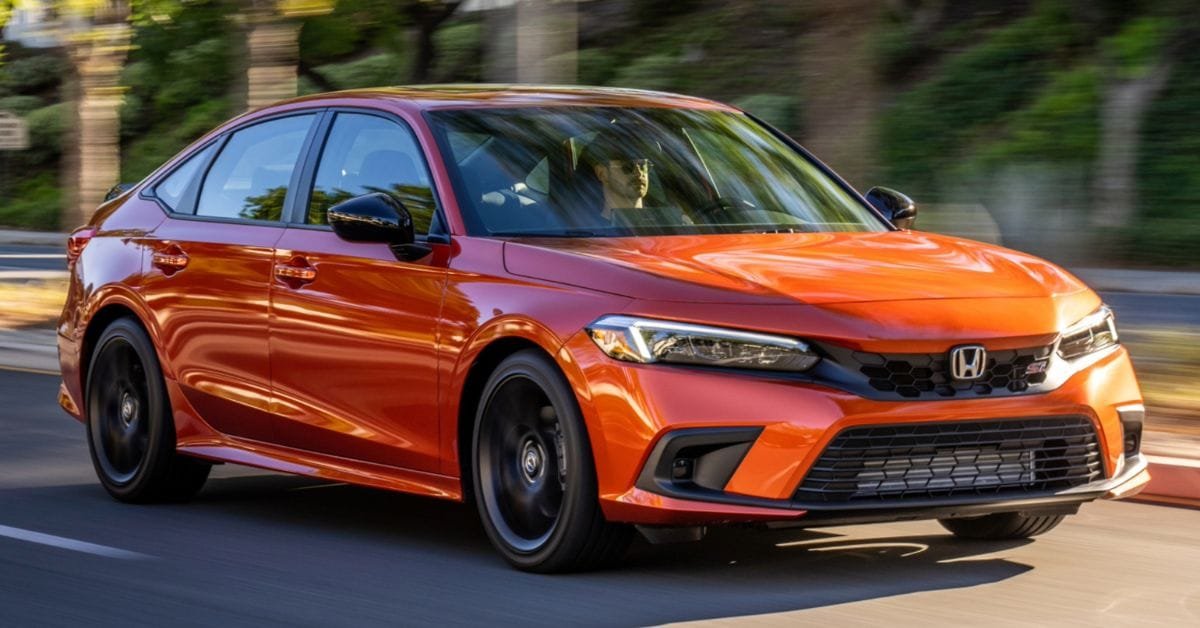
The Civic is the benchmark for a reason. Its long-term reliability record is among the best in any segment, and the 10th-generation Civic (2016-2021) is now well into its maturity, which means repair costs are predictable and aftermarket parts are plentiful. The 2020-2022 sweet spot brings Honda Sensing as standard equipment across all trims, which includes adaptive cruise control, lane-keeping assist, and automatic emergency braking.
Fuel economy runs around 32 mpg combined on the standard 2.0-liter four-cylinder. The turbocharged 1.5-liter in Sport and higher trims is more engaging but requires premium fuel, so factor that into your cost-of-ownership math. Look for EX or EX-L trim levels if the budget allows: they add a moonroof, heated front seats, and a more refined feel.
CVT hesitation is a known complaint on some 2020-2021 Civic models. Test the throttle response at various speeds before buying. Also inspect the paint around the door handles on dark-colored cars, where minor chipping is common.
2018-2020 Toyota Camry
Midsize Benchmark: The Safe Choice That Keeps Delivering
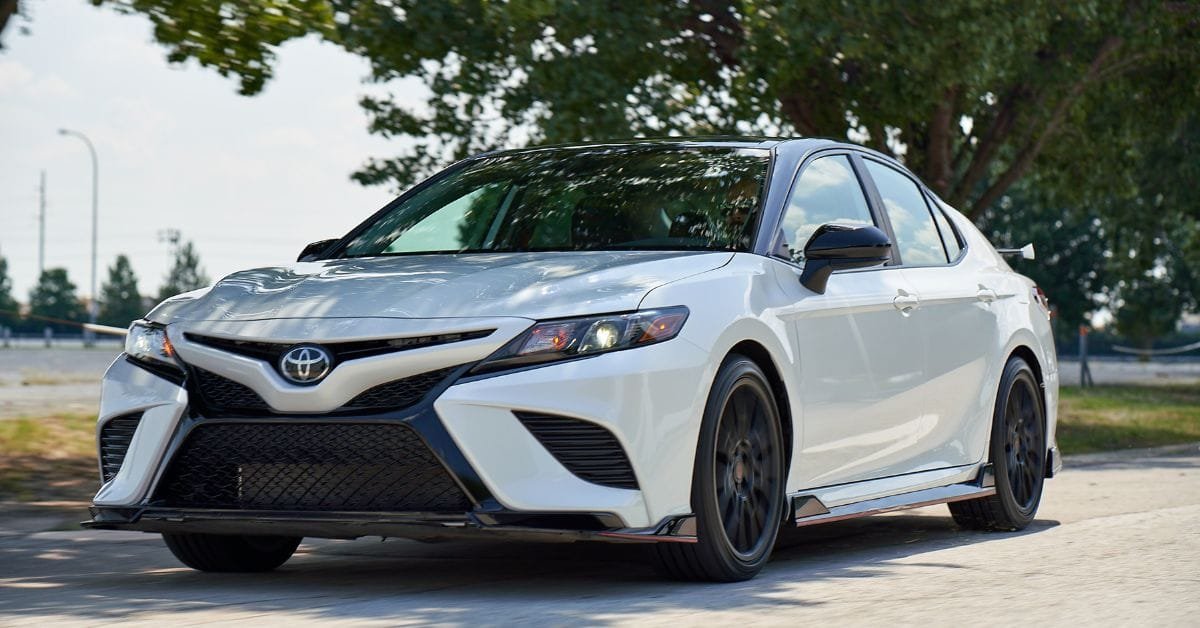
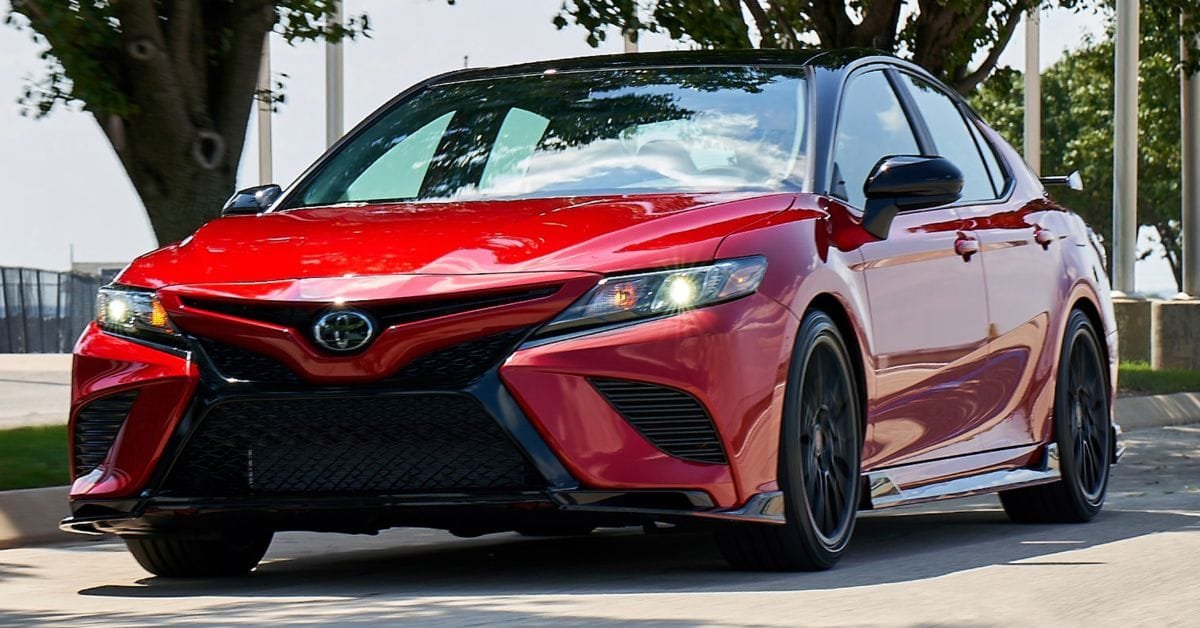
Toyota’s eighth-generation Camry arrived in 2018 and immediately redefined what a mainstream midsize sedan could look like. The interior quality, ride refinement, and standard safety technology all took significant steps forward compared to its predecessor. Toyota Safety Sense P, which covers automatic emergency braking, lane departure warning, and adaptive cruise, is standard on all trims.
The 2.5-liter four-cylinder produces 203 horsepower and returns around 29 mpg combined. If a V6 falls within budget, the 301-hp 3.5-liter is smooth and capable, though it nudges the price to the top of our range. The XSE trim stands out for its sportier suspension tuning and blacked-out exterior trim. Resale value on the Camry is strong even at this age, which reflects how well-regarded these cars are.
The 2018-2019 Camry’s infotainment system was criticized for sluggishness. If that matters to you, prioritize 2020 models, which received an updated system. Also request the full service history; Toyota recommends 5,000-mile oil change intervals and these engines reward consistent maintenance.
2019-2021 Honda Accord
Best Midsize Value: Room, Refinement, and Road Manners
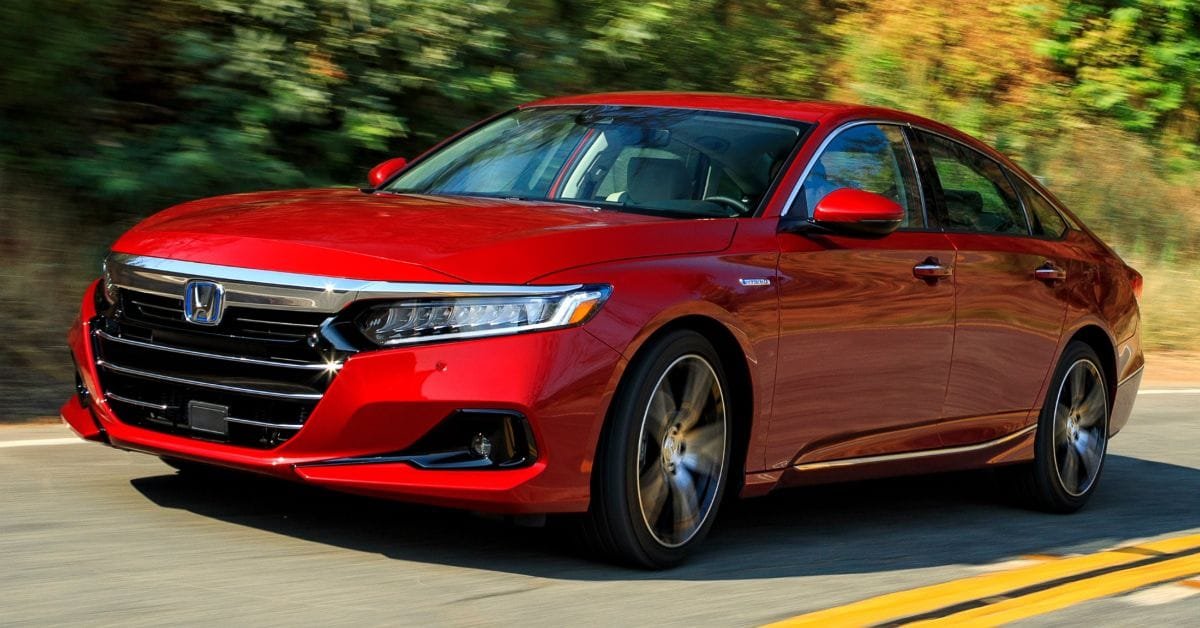
The 10th-generation Accord is genuinely one of the best cars Honda has made in decades, full stop. Its interior feels a class above the Camry in terms of materials and layout, it handles with more precision than most family sedans have any right to, and Honda Sensing is standard across the lineup. The 1.5-liter turbo produces 192 horsepower, while the 2.0-liter turbo bumps that to 252 hp.
Trunk space at 16.7 cubic feet is generous, and rear passenger room is excellent for a car its size. The Accord slots above the Civic in terms of price on the used market, but the gap is narrower than you might expect. For $16,000 to $20,000, you can find Sport and EX-L trims with heated seats, wireless phone charging, and a 10-way power driver’s seat.
The 1.5-liter turbocharged engine in 2018-2019 models has a documented oil dilution concern in cold climates. If you live somewhere that sees genuine winter, the 2.0-liter turbo or a 2020+ 1.5-liter are the safer choices. Honda addressed this in later production.
2018-2021 Mazda6
The Hidden Gem: Genuine Driver’s Car at a Bargain Price
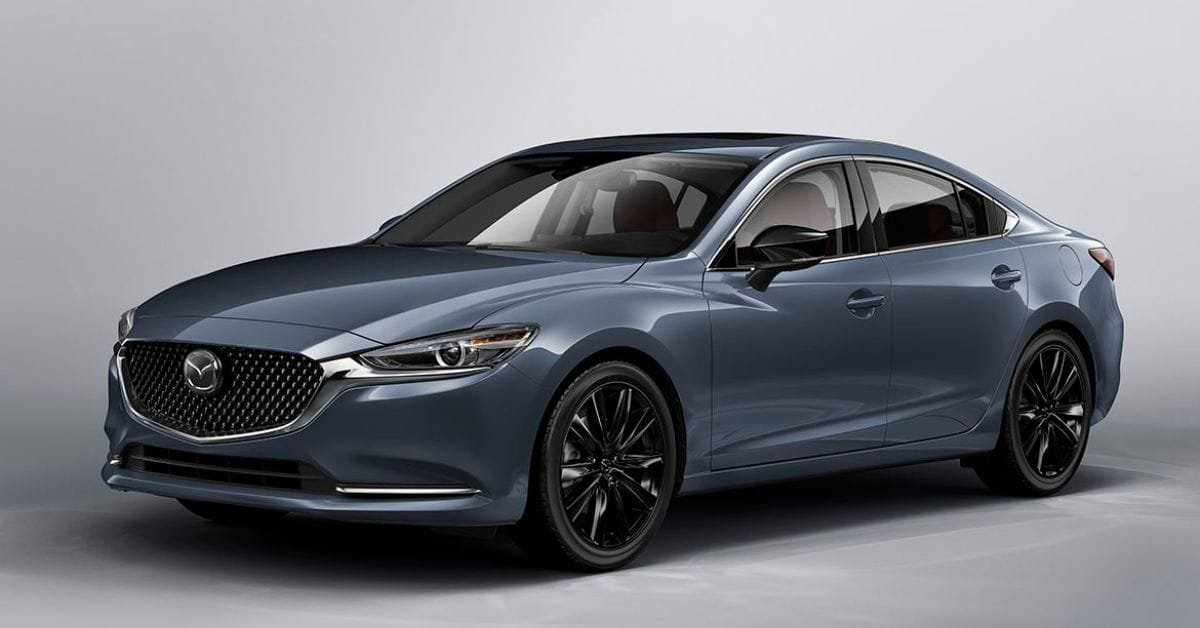
The Mazda6 is the car on this list that most shoppers overlook, which is exactly why it belongs near the top of your shortlist. Mazda sells fewer sedans than Toyota or Honda, which means used examples are undershopped and often priced below what the quality justifies. The interior uses real stitched surfaces, soft-touch materials, and an understated elegance that rivals some entry-level luxury competitors.
The 2.5-liter four-cylinder produces 187 horsepower, and the turbocharged version (available in Signature trim) pushes that to 250 horsepower on premium fuel. Mazda’s Skyactiv chassis tuning gives the car a connected, alert feel that most family sedans deliberately tune out. It handles with a directness that enthusiast drivers will appreciate. IIHS Top Safety Pick+ ratings were common across this generation.
Mazda6 production ended in the US after 2021, meaning long-term parts availability is worth considering if you keep cars for many years. The infotainment system is not touchscreen-only while the car is moving (controls route through a rotary dial), which some find unintuitive at first.
2019-2021 Hyundai Sonata
Best Value Package: Bold Styling and Strong Standard Features
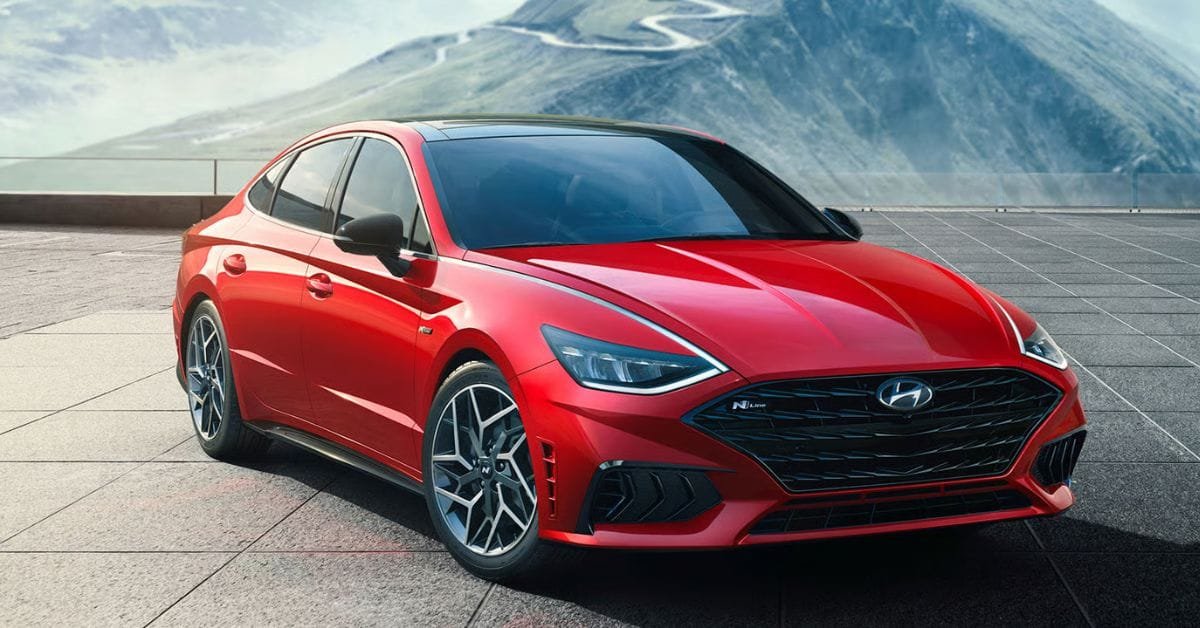
Hyundai’s eighth-generation Sonata is the value proposition on this list, and it over-delivers at its price point. Starting well under $15,000 for base-model examples and topping out around $18,000 for limited trims, the Sonata offers a feature list that makes comparably priced Camrys and Accords look sparse. Standard equipment on mid-level SEL trim includes an 8-inch touchscreen, wireless Apple CarPlay and Android Auto, a 10.25-inch digital cluster, and a Bose audio system.
The standard 2.5-liter engine produces 191 horsepower and handles everyday driving competently. A 1.6-liter turbocharged option in the SEL Plus trim adds 180 horsepower with better low-end torque. Hyundai’s reliability story has genuinely improved over this generation; J.D. Power Initial Quality scores for the 2019-2021 Sonata were well above segment average.
Check for evidence of the Theta II engine recall on 2019 model-year Sonatas. Hyundai issued a software update and inspection process; confirm the work was completed. The 2020 and 2021 models avoid this concern entirely and are the recommended years in this range.
2018-2020 Subaru Legacy
The AWD Differentiator: Standard All-Wheel Drive at No Extra Cost
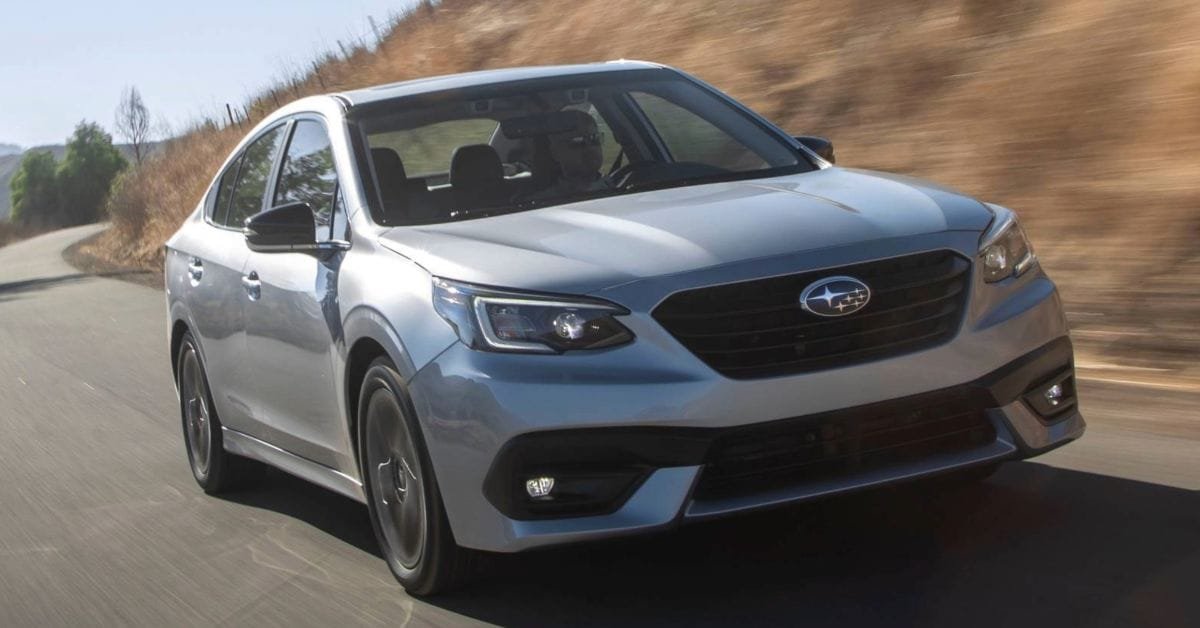
Every single Subaru Legacy comes with standard symmetrical all-wheel drive. At no extra charge, no trim-level negotiation required. That makes it the only car on this list that provides genuine year-round all-weather traction as a base feature, which is a meaningful advantage for anyone in the Northeast, Pacific Northwest, or mountain states.
The 2.5-liter four-cylinder produces 175 horsepower in the base Legacy, while a 3.6-liter six-cylinder with 256 horsepower is available in Limited and Sport trims. Cabin space is generous for the segment, and Subaru’s EyeSight driver assist system, standard on most trims, is well-regarded for real-world effectiveness. The Legacy does not win on outright fuel economy (27 mpg combined), but for buyers who need AWD and would otherwise cross-shop an AWD-equipped SUV, the Legacy offers the same capability in a package that is cheaper and easier to live with daily.
The 3.6-liter six-cylinder is a capable engine but drinks more fuel and costs more to service. Most buyers are better served by the 2.5-liter four-cylinder. EyeSight camera calibration is dealer-specific after windshield replacement; factor that into your maintenance expectations.
2019-2021 Nissan Altima
AWD Option and Highway Efficiency: A Practical Commuter Pick
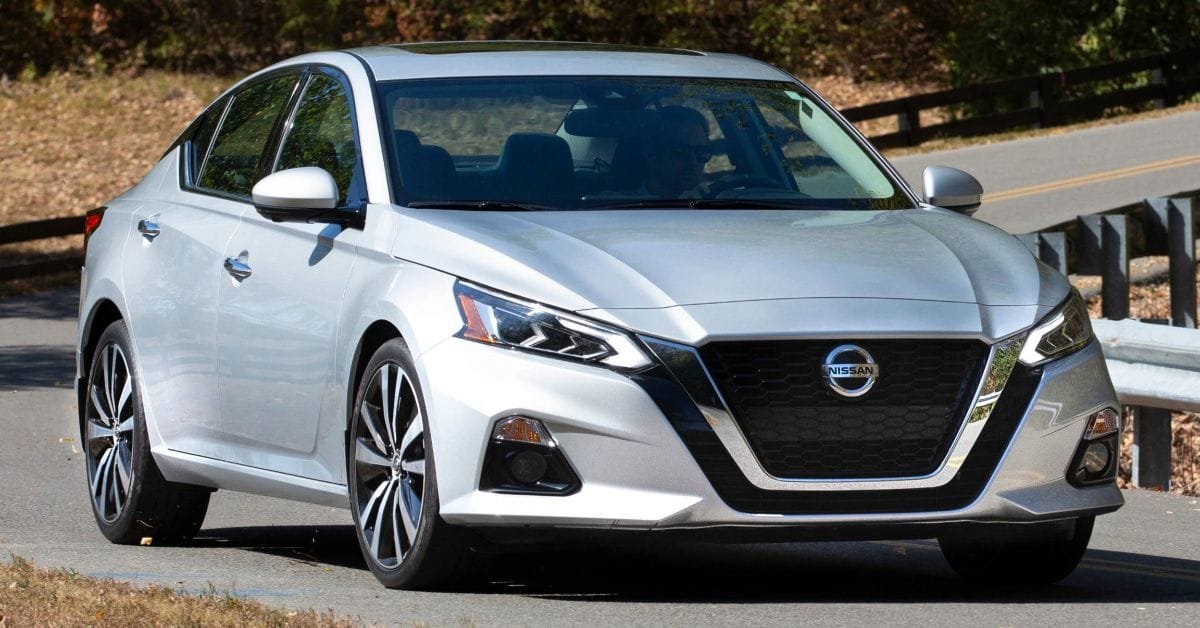
The 2019 Altima was a full redesign, and Nissan did enough to make it genuinely competitive again after years of the segment passing it by. The 2.5-liter four-cylinder now returns an impressive 32 mpg combined, which is best-in-class for a non-hybrid midsize sedan. A 2.0-liter turbocharged engine with 248 horsepower is available on Platinum trim and is one of the better sporting options in this segment.
The 2019 redesign also brought an optional all-wheel drive system to the Altima lineup for the first time, available on SR and SL trims with the 2.5-liter engine. That widens its appeal considerably for buyers who want a midsize sedan with wet or snowy weather confidence. Pricing for AWD-equipped examples lands between $15,000 and $18,000 for clean 2019-2020 examples, which makes the AWD Altima one of the most accessible all-weather midsize deals available.
Nissan’s CVT transmission has a variable reliability record across its lineup. The 2019-onward CVT in the Altima is generally considered more robust than older units, but confirm there are no shifting complaints or hesitation in your test drive. Check for the ProPilot Assist package on SL trims if adaptive cruise is important to you.
2018-2021 Kia Optima / Kia K5
Style and Turbocharged Performance at a Price the Others Cannot Match
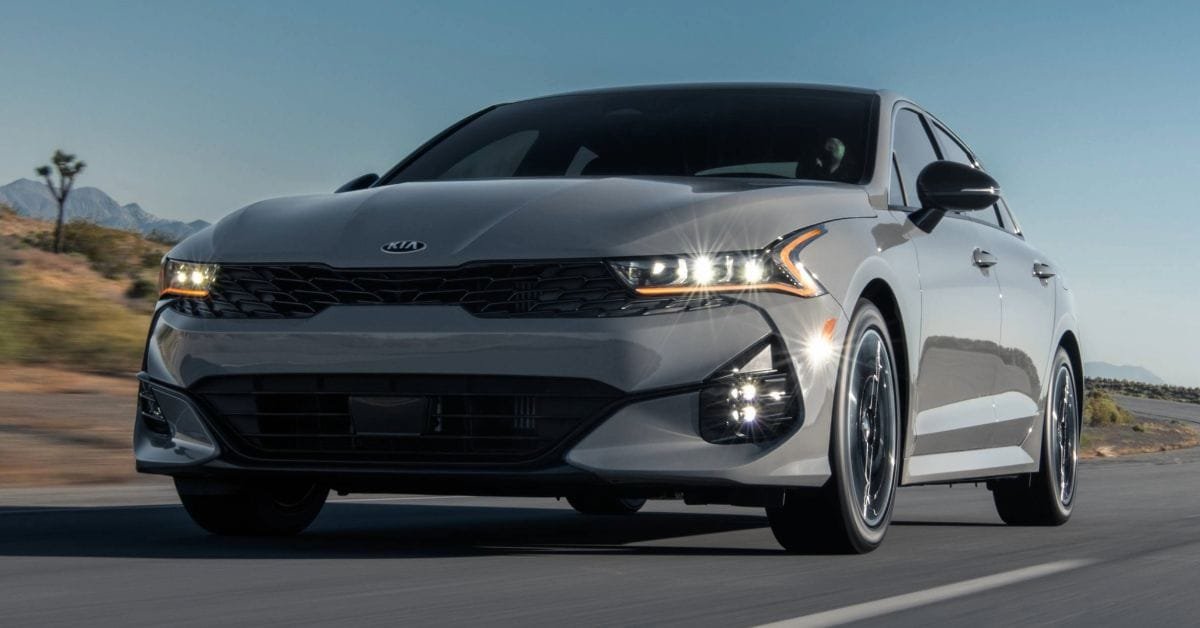
The Kia Optima (renamed K5 for 2021) is the most underpriced car on this list, and that gap continues to exist because the brand carries less cachet than Honda or Toyota. That represents opportunity for the informed buyer. The 2020 Optima and 2021 K5 are especially compelling: Kia completed a ground-up redesign for 2021, bringing sharp new styling, a more upscale interior, and a standard 1.6-liter turbocharged engine producing 180 horsepower.
The 2.0-liter turbocharged GT trim, available on 2018-2020 Optima models, produces 245 horsepower and makes a genuine case as the most engaging non-luxury performance sedan in this price range. Kia’s 10-year/100,000-mile powertrain warranty transfers to subsequent owners within the original warranty window, which at 2018-2021 model years can still carry meaningful remaining coverage.
The 2019-2020 Kia Optima was subject to a Theta II engine recall similar to the Hyundai Sonata. Confirm recall work was completed before purchase. The 2021 K5 uses a different engine architecture and is not affected. Sunroof drain clogs on higher-spec trims can cause water intrusion if neglected.
What to Check Before You Buy Any Used Sedan
Pull a vehicle history report (Carfax or AutoCheck) for every serious candidate. It takes five minutes and can surface accident history, odometer rollbacks, or title issues that would otherwise be invisible. Never skip this step even on CPO vehicles.
Hire an independent mechanic for a pre-purchase inspection if buying from a private party. Most shops charge $100-$150 for a thorough check, and it is the best money you can spend on a used car purchase. Even at certified dealerships, an independent inspection is not unreasonable to request.
Bring the car to highway speeds during the test drive. Many mechanical issues, including transmission shudder, wheel bearing noise, and brake vibration, only reveal themselves above 55 mph. A parking lot test drive tells you almost nothing.
Finally, check that all recalls have been completed. The NHTSA website (nhtsa.gov) allows you to enter a VIN and see open recalls for free. An unaddressed recall on a used car is a known issue the previous owner declined to fix, and it shifts liability to you.
If fuel economy is a top priority, also check our guide to the 10 hybrid sedans with the longest range, which covers used-market hybrid options that can push well past 50 mpg combined.
Frequently Asked Questions
What is the most reliable used sedan under $20k?
The Honda Civic and Toyota Camry consistently top reliability rankings from Consumer Reports and J.D. Power. For a compact, the 2020-2022 Civic is the safest reliability bet. For a midsize with more space, the 2018-2020 Camry is difficult to fault.
Is it better to buy a used sedan or a used SUV at this price?
At the $20,000 price point, a used sedan typically gets you a newer model year, lower mileage, better fuel economy, and lower maintenance costs than a comparably priced used SUV. The trade-off is cargo capacity and ride height. If you do not specifically need those things, the sedan often represents the better mechanical value.
What mileage is acceptable on a used sedan under $20k?
For models like the Civic, Camry, or Accord, 60,000-90,000 miles is a reasonable range that balances price against remaining life. These platforms are commonly reliable well past 150,000 miles with proper maintenance. Avoid high-mileage examples without a verifiable service history.
Should I buy CPO or private party for a used sedan?
CPO is generally the better move at this budget if the price difference is reasonable, typically $500 to $1,500 more than a private-party equivalent. The manufacturer-backed warranty and multi-point inspection reduce your downside risk meaningfully. Private-party deals make more sense if you are mechanically knowledgeable or willing to pay for a thorough independent inspection.
Does the Mazda6 still have good resale value?
Resale value on the Mazda6 is moderate; because Mazda discontinued it in the US after 2021, there is no successor driving used demand upward. That actually benefits buyers right now, since examples are priced below their quality level. Long-term parts availability is worth considering if you plan to keep the car 8-plus years.
What is the fuel economy difference between the Altima and Civic on the used market?
Both the 2019-2021 Altima 2.5-liter and the 2020-2022 Civic 2.0-liter return around 32 mpg combined in regular driving. The Civic has a slight city economy advantage; the Altima pulls ahead slightly on highway. For most commuting patterns, the real-world difference is under two mpg.